

Break Your Weight Loss Plateau: Strategies That Work
You've followed the plan carefully. Meals are organised, workouts are scheduled, and the early drop on the scales gave you confidence. Then the number stops changing. You add another walk, tighten portions, and wonder whether your body has decided to ignore all your effort.
That frustration is understandable, but a weight loss plateau isn't proof that you've failed. It's usually a signal that the relationship between your food intake, body mass, movement, and recovery has changed. Treat it as a data problem, not a character judgement. The practical question isn't “Why can't I be more disciplined?” It's “What has changed, and which lever should I adjust first?”
For Irish adults, weight management is already a common and persistent challenge. The 2022 Healthy Ireland Survey information provided by the HSE found that 34% of adults were currently trying to lose weight, while 42% reported a weight change since COVID-19 restrictions began. Among those who gained weight, 66% said they were trying to lose it, which helps explain why so many people experience repeated starts, stalls, and restarts.
The way forward is measured rather than extreme. You'll need to confirm whether the stall is real, protect lean tissue, review your eating pattern, and increase energy expenditure in a way you can repeat. The HSE's guidance on losing weight consistently is useful context, but the same principle applies to any plan: consistency matters more than dramatic short-term effort.
Why Your Weight Loss Has Stalled The Science Explained
A plateau happens because your body is smaller and more efficient than it was at the beginning of the process. The calorie intake that created a deficit earlier may now be close to your current energy needs. That doesn't mean metabolism has “broken”. It means the system has reached a new balance.
The body spends less as mass falls
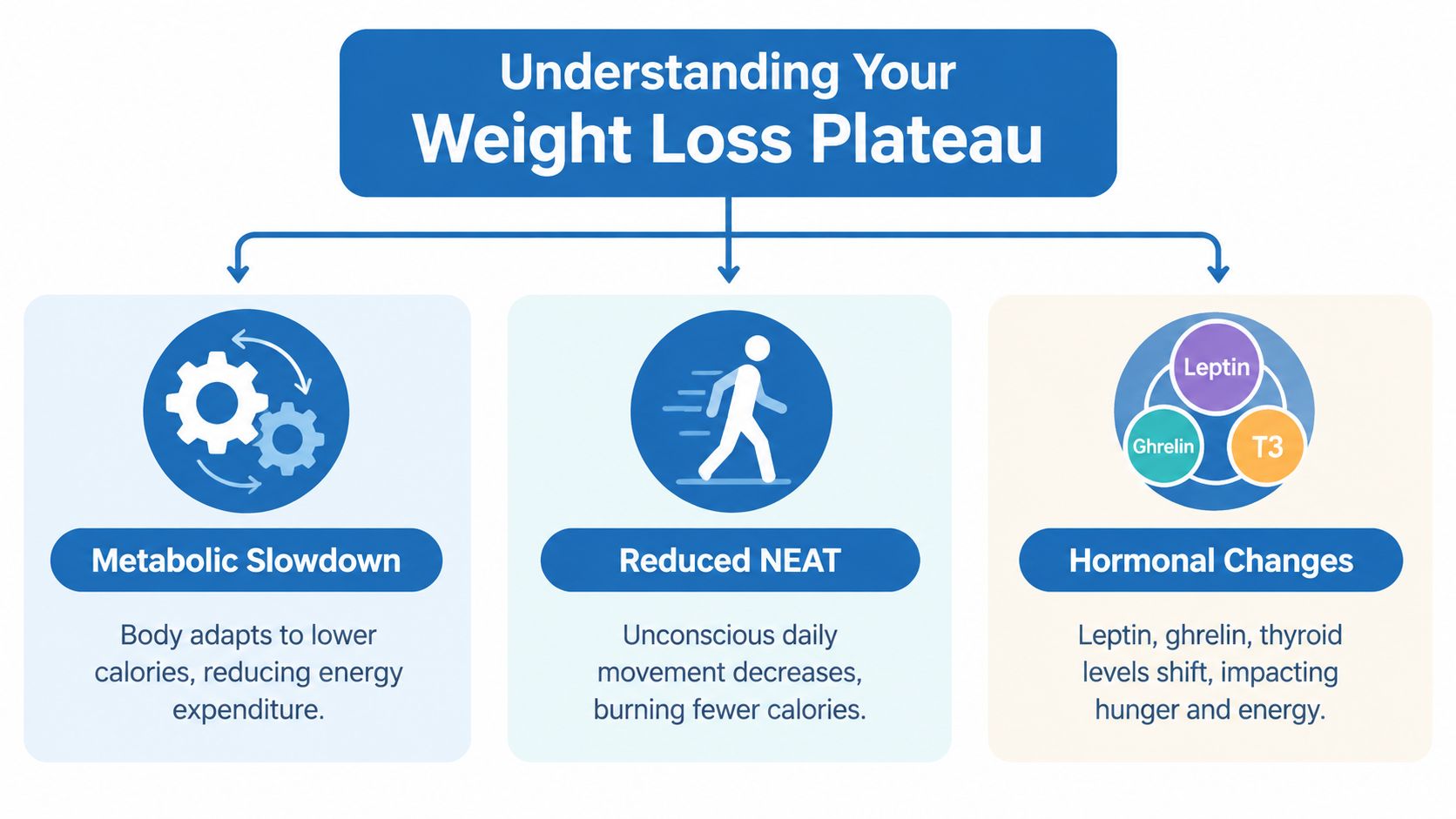
The main physiological driver is adaptive thermogenesis. As body mass decreases, resting energy expenditure, or REE, declines. Your body has less tissue to maintain, and it may also adapt by reducing energy use beyond what would be expected from weight change alone.
The same effect applies to daily movement. Non-exercise activity thermogenesis, known as NEAT, includes walking around the house, standing, fidgeting, household tasks, and other movement outside formal exercise. During a prolonged calorie deficit, people often move less without consciously deciding to do so. The result is a smaller gap between energy consumed and energy used.
Practical rule: Don't respond to a plateau by assuming you need maximum restriction. First identify whether your body is using less energy, whether your intake has drifted, or whether both are happening.
Lean mass changes the equation
Weight loss can include fat mass and lean mass. When lean tissue declines, your daily energy requirements can fall further. That's why preserving muscle through adequate nutrition and resistance-based work matters, especially when your main goal is fat loss rather than just a lower scale reading.
This is also why plateau management rarely succeeds through one intervention alone. Ireland's adapted obesity guideline frames obesity management as chronic care, with nutrition, physical activity, psychological support, rehabilitation, medication, and surgery all potentially relevant depending on the person. That broader approach is consistent with the evidence-based weight loss solutions from Empire Medical Wellness, particularly for people who need more support than a self-directed plan can provide.
Hormonal changes can influence hunger, satiety, and energy regulation as weight falls. You don't need to diagnose every mechanism yourself. You do need to recognise that a stall is a predictable response to a changing body, not evidence that your effort has become worthless.
Are You Really in a Plateau A Two Week Diagnostic Check
Before cutting food or adding punishing workouts, run a short audit. A true plateau means your underlying trend has stopped, but daily scale readings can be distorted by fluid shifts, digestion, sodium intake, menstrual-cycle changes, and recent training stress.
The HSE model of care uses 0.5–1 kg per week as a sustainable weight-loss range and identifies an initial target of 5% weight loss in the first 3 months. If your progress has remained below that expected rate for several weeks despite genuine adherence, a plateau becomes more plausible, but one isolated weigh-in tells you very little. You can also use the basal metabolic rate calculator as an estimate, not a diagnosis, when reviewing your energy needs.
Run the audit consistently
For the next 10–14 days, keep the conditions as similar as practical. Don't try to be perfect. Try to be accurate.
- Log everything you consume: Include cooking oils, sauces, snacks, drinks, tasting while cooking, and less structured weekend meals.
- Record the full week: A weekday-only log can hide the point where your average intake has risen.
- Weigh under similar conditions: Use the same scale and a consistent routine, then assess the trend rather than reacting to each result.
- Track waist measurements: A changing waist alongside a stable scale can indicate body-composition progress or fluid variation.
- Note sleep and stress: Poor recovery can affect appetite, training quality, and spontaneous movement.
- Count movement thoroughly: Look at walking, standing, chores, and time spent sitting, not just formal workouts.
At the end of the audit, compare your weekly averages and waist measurement with your logged behaviour. If intake has drifted, correct the drift before making a new restriction. If adherence is strong and the trend remains flat, change one variable only, then observe the response rather than redesigning everything overnight.
Recalibrating Your Diet for Renewed Progress
A confirmed plateau calls for a modest recalibration, not a punishment. Severe restriction can make hunger harder to manage, reduce training quality, and increase the risk of losing lean mass. The goal is to restore a manageable energy deficit while keeping meals satisfying enough to repeat.
Start with food quality and protein
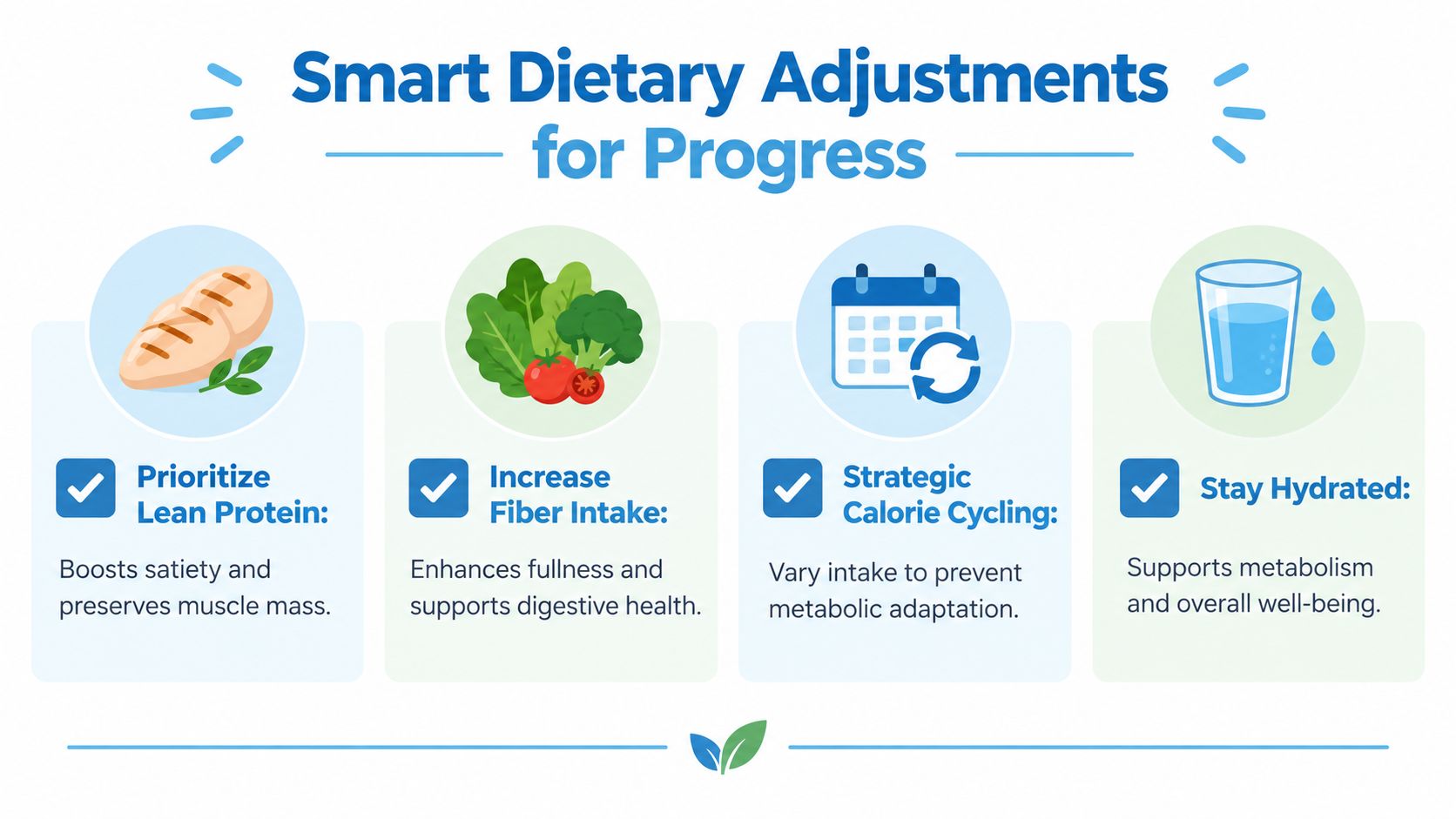
Build each main meal around a clear protein source, then add vegetables, fruit, fibre-rich carbohydrates, and appropriate fats. Protein can support satiety and help preserve muscle during weight loss, while minimally processed foods generally make portions easier to manage because they provide more volume and nutrients for the energy they contain.
You don't need to eliminate entire food groups unless a qualified clinician has given you a specific reason. Look instead for the foods that have become less visible in your tracking. A generous pour of oil, a handful of snacks, or a relaxed restaurant meal can erase a deficit without making you feel that you've overeaten.
Adjust one lever at a time
After your audit, make a small change to either intake or activity. A useful approach is to reduce energy-dense extras while keeping the meal structure intact. You might replace a high-calorie snack with a more filling option, reduce cooking fats, or make portions more consistent across the week.
Hydration and meal timing can also affect how easy the plan feels, but they won't override energy balance. Strategic calorie cycling may suit some people psychologically or around training, yet it doesn't remove the need for an overall deficit. The calorie deficit guide from BionicGym is a helpful companion to this principle.
Medication conversations deserve care. If you're researching treatment pathways, the semaglutide usage statistics compiled by OneTwenty may help you understand the wider discussion, but online information shouldn't replace an assessment from your GP or prescribing clinician. A plateau while following a structured treatment plan may reflect adherence, side effects, access, nutrition, movement, or the need for professional review.
The useful adjustment is the one you can still follow when motivation is ordinary.
Upgrading Your Exercise to Overcome Adaptation
Exercise helps address the other side of the energy equation, but “more” isn't automatically better. The most effective progression increases expenditure without making recovery, joint comfort, or adherence collapse.
Traditional training gives you several routes. Add resistance gradually, improve technique, increase walking, extend a session, or raise intensity in selected intervals. The progressive overload training guide explains the basic idea: give your body a reason to adapt, then allow enough recovery for that adaptation to occur.

Irish HSE guidance says people trying to lose weight may need 60–75 minutes of brisk walking per day, while very inactive people or those with a very high BMI should begin with shorter bouts and build gradually. That target can be difficult for someone who works at a desk, cares for family, or has limited tolerance for weight-bearing exercise. It's also important to keep the HSE's ordinary activity guidance in view, including 2 hours and 30 minutes of moderate-intensity aerobic activity each week and muscle-strengthening work on at least 2 days a week. These figures come from the Irish physical activity guidance and the HSE obesity treatment guidance.
A tool for adding repeatable expenditure
BionicGym is a wearable cardio system that uses app-guided electrical impulses through leg wraps to stimulate the muscles, allowing exercise while sitting or completing safe household tasks. It's designed as a sugar-hungry form of exercise, and trained users can reach a typical vigorous level of about 500 calories per hour, although actual results depend on intensity, conditioning, duration, and nutrition.
The important trade-off is convenience versus control. You still need to learn the settings, tolerate the sensation, and use it consistently. It doesn't guarantee weight loss, because a calorie deficit requires diet plus exercise. It can, however, add vigorous cardio without loading or flexing the joints, which may make longer sessions more practical for some users.
The Standard Kit is suited to sustained sessions, while the BionicGym PRO+HIIT offers more intense interval-focused training. The BionicGym Standard Kit is another option for people who want a gentler entry point. Both should be used as part of a broader plan that includes a healthy diet, movement, and muscle-preserving training where appropriate.
Watch for objective signs that the session is exercise. At a vigorous setting, heart rate and breathing should rise, and a user may sweat or become breathless. The device was invented and developed by a medical doctor, and it is an FDA-cleared medical device, not an FDA-approved drug.
BionicGym is a great way to exercise. It is not a medical treatment. Consult your doctor if you have a serious condition. Anybody with a serious medical condition or injury should consult with their medical practitioner before starting any new exercise programme.
Plan Your Next Steps with the Weight Loss Calculator
A plateau becomes easier to manage when you replace vague hopes with a repeatable plan. Start with your current food intake, choose an activity schedule you can maintain, and decide how often you'll review the trend. Don't change the plan after every weigh-in. Give the adjustment enough time to produce interpretable data.
The BionicGym Weight Loss Calculator can help you model how exercise sessions may contribute to your energy expenditure over time. It isn't a guarantee or a substitute for nutritional assessment. Its value is that it turns a proposed routine into something visible, making it easier to compare a short, intense approach with longer, lower-intensity sessions.

Long sessions can create meaningful cumulative expenditure when they're comfortable enough to repeat. BionicGym guidance describes 4–6 hours of low-intensity use as capable of producing a cumulative burn of 1,000–2,000 calories in a day, but that isn't a typical requirement, and it doesn't make diet irrelevant. Individuals should begin at a manageable level, monitor how they feel, and increase duration or intensity gradually.
Use the BionicGym calculator guidance alongside your two-week audit. Choose one routine, record sessions and food intake, and review weekly averages. If your energy, sleep, or training quality deteriorates, the plan needs adjusting rather than more pressure.
Conclusion Turning a Plateau into a Launchpad
A weight loss plateau is a measurement, not a verdict. As your body becomes lighter, resting energy expenditure can fall, NEAT can decline, and lean mass may be lost if nutrition and training aren't managed carefully. The answer isn't to attack yourself or slash food indefinitely.
Confirm the stall with a structured audit. Check the weekly trend, waist measurement, food record, movement, sleep, and recovery. Then make one modest dietary adjustment, prioritise protein and whole foods, and increase activity in a way you can sustain. Resistance training remains valuable for preserving function and lean tissue, while cardio gives you another route to raise energy expenditure.
Some people will benefit from a dietitian, GP, or specialist service. Irish public-health guidance treats weight management as long-term care, and resources such as ProMD Health Bel Air's medical weight management information can illustrate the kind of structured support people may explore with qualified professionals. Anyone with a serious medical condition or injury should consult their medical practitioner before starting a new exercise programme.
A plateau is often the point where a generic plan stops matching your current physiology. That's useful information. Adjust the inputs, keep the process calm, and judge the result from trends rather than emotion.
BionicGym offers a wearable way to add vigorous, joint-friendly cardio while sitting or doing safe household tasks, with Standard and PRO+HIIT options for different training needs. Combine it with a healthy diet and your existing exercise, then use the BionicGym resources and calculator to build a realistic plan for moving beyond your plateau.