

How to Lose Weight Consistently and Actually Keep It Off
Don't fail at weight loss because you don't know the basics. You fail because the basics were never built for a real week, with work pressure, social meals, tired evenings, and zero appetite for another perfect plan that collapses by Friday. How to lose weight consistently is really a question about building a routine that survives boredom, stress, and imperfect days, because that's where diets break.
The old advice says eat less and move more, then leaves people to figure out the rest. The harder truth is that consistency beats intensity, and maintenance beats enthusiasm. In long-term weight control, exercise plus calorie control has the strongest track record, and increased physical activity is the most consistent positive correlate of keeping weight off, with successful maintainers often sustaining 60 minutes per day of exercise or 2,000 to 3,000 kcal per week of activity expenditure (NCBI review). That's why the winning plan isn't a heroic detox. It's a repeatable system that lowers intake, protects movement, and makes relapse harder.
If you've already tried and stopped, that doesn't mean you lack discipline. It usually means the plan was too aggressive, too vague, or too incompatible with your lifestyle. A Harvard review of long-term studies found that more than half of lost weight was regained within 2 years, and more than 80% was regained by 5 years (CDC data brief summary of long-term patterns). That's the core problem this article tackles, not just losing weight, but keeping the routine intact long enough for the result to stick.
Why Most Weight Loss Plans Fail After Week Three
The standard advice sounds neat on paper, but it falls apart the moment real life gets noisy. People don't usually quit because they forgot that calories matter. They quit because the plan demanded a level of attention they can't sustain after the novelty wears off.
The first drop is easy, the second month is harder
Early progress often comes from structure, not magic. You're paying attention, meals are cleaner, and the scale moves enough to feel encouraging. Then the hidden costs show up, hunger gets louder, social plans interrupt the routine, and the little decisions start adding up.
Practical rule: if a plan needs perfect motivation to work, it's already too fragile.
The maintenance literature makes the pattern obvious. Successful long-term weight control is tied to frequent self-monitoring, regular weighing, and high volumes of moderate-to-vigorous physical activity (NCBI maintenance review). In other words, people who keep weight off don't rely on mood. They rely on systems.
A common mistake is treating weight loss like a short project. That mindset invites a “push hard now, sort it out later” approach, which is exactly where rebound begins. Short-term intensity can work briefly, but the long game depends on habits you can repeat on a tired Tuesday, not just a motivated Monday.
The more honest framing is this. Consistency is a behaviour problem before it's a nutrition problem. If the routine doesn't fit your day, it will eventually lose to work, family, travel, fatigue, or hunger.
Why generic advice isn't enough
Most advice repeats the same words, eat less and move more, without explaining how to make that repeatable. The useful version is more specific. Set a food pattern you can live with, pair it with activity you can sustain, and track enough to catch drift before it becomes regain.
That's the logic behind a smarter approach to weight loss, and it's why a diet-only strategy usually disappoints. You can read a deeper breakdown of that issue in why dieting alone fails. The lesson is simple, if the process doesn't match the life you live, the plan will lose.
Setting a Deficit You Can Actually Sustain
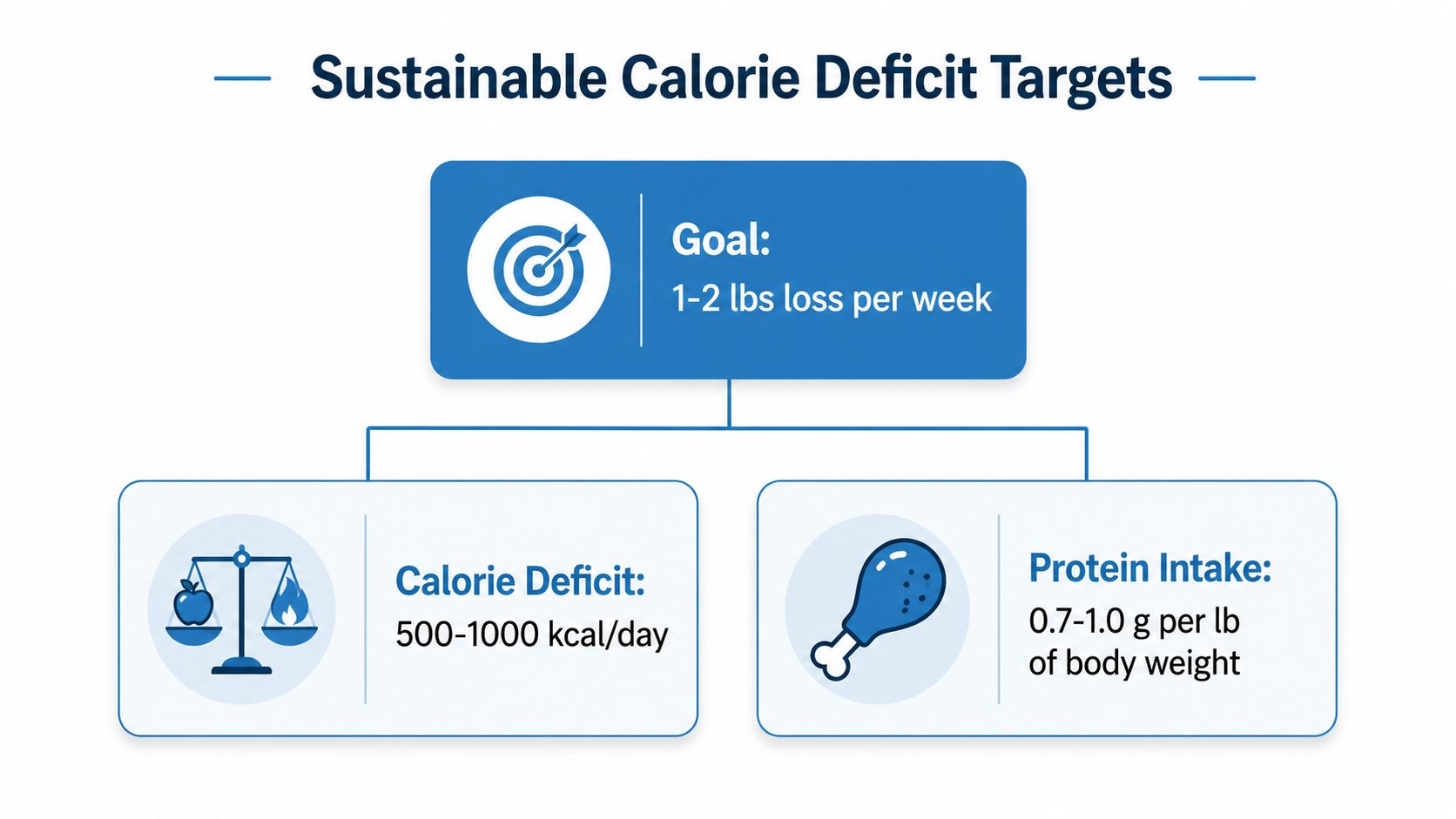
The cleanest target is still the most practical one. Aim for 1 to 2 lb per week, or 0.5 to 1 kg per week, using a daily 500 to 1,000 kcal deficit as your working range, a method Yale uses in its weight-management guidance (Yale weight management strategies). That pace is slower than the fantasy people want, but it's far more livable.
Build the deficit without wrecking your day
Start with a normal week, not a perfect one. If your job is desk-bound, your meals are fairly regular, and your activity is low, choose one intake target that feels modest, not punishing. Then hold that target steady for two weeks before judging it.
A useful check is how you feel between meals. If you're constantly white-knuckling hunger, the deficit is probably too steep, or the meal pattern is too chaotic. UC Davis notes that skipping meals can trigger extreme hunger and poor food choices, which is why regular eating patterns matter more than heroic restraint.
Here's a simple way to think about it. One person may need a smaller deficit on training days, especially if workouts are longer or harder. Another may do better with the same calorie target every day because it removes decision fatigue. The best choice is the one you can repeat without constant negotiation.
Keep protein high enough to protect lean mass
The research brief doesn't give a protein number, so the safest guidance is qualitative. Keep protein high enough to support muscle retention and satiety, especially if you're training while losing fat. In practice, that means including a clear protein source at each meal instead of treating lunch as a snack and dinner as a gamble.
Useful benchmark: if a calorie target makes you ravenous, the problem is often meal structure, not willpower.
A weekly example makes this clearer. A desk worker who eats three structured meals, keeps snacks planned, and adds regular movement can usually maintain a moderate deficit more easily than someone who skips breakfast, under-eats all day, and then raids the fridge at night. Yale's guidance stresses steady progress, not aggressive restriction, and Mayo Clinic's similar target of a daily deficit around 500 to 750 calories points in the same direction (CDC weight loss guidance).
If you want a more personalised starting point, use the Weight Loss Calculator to model a routine against your own schedule. For a broader calorie-reference check, the basal metabolic rate calculator guidance can help you sanity-check whether your target is too low to sustain.
Tracking the Inputs That Drive Consistency
The fastest way to drift is to stop measuring the things that matter. Scale weight is useful, but it is only one signal. The stronger habit is to track the behaviours that create the result, then review them often enough to catch problems before a bad week turns into a lost month.
Keep the routine short enough to survive a busy night
A 10-minute evening routine is enough. Log your food, note your activity, and check whether the day matched the plan you set. It does not need to look polished. It just has to be accurate.
Daily calorie logging remains one of the strongest habits tied to weight-loss outcomes, and more frequent self-monitoring is consistently associated with better results than checking less often (systematic review of dietary self-monitoring). The goal is not to become obsessive. The goal is to stop guessing when your routine gets messy, which is where consistency usually breaks between weeks 2 and 8.
Use this split:
- Daily: calorie intake, protein pattern, and activity completed.
- Weekly: body weight under the same conditions, waist or clothing fit, and whether the plan felt manageable.
- Review every two weeks: whether the deficit needs a small adjustment, whether meals are too random, and whether activity has slipped.
That kind of simple log helps on nights when work runs late, kids need attention, or you are trying to clear a homework stack and keep dinner from turning into a shrug. It gives you a quick record you can use without turning the process into another job.
Weigh under the same conditions
Weekly weigh-ins work best when you keep the conditions the same. Use the same day, the same time, similar clothing, and similar hydration. If you step on the scale after a salty meal or a poor night's sleep, you are reading noise, not trend.
That is why the scale should never be your only feedback tool. A week of water retention can hide good adherence, and a sharp drop can hide a routine that is too aggressive to keep. The maintenance research points to regular weighing and food logging as strong correlates of success, but the value comes from using them together, not separately (NIH/NCBI maintenance review).
If tracking makes you anxious, use it as a temporary training wheel. Track tightly for 12 weeks, then taper to maintenance checks instead of dropping it completely. That keeps the habit useful without letting it take over your day.
You do not need perfect data. You need enough data to stop lying to yourself.
For a more customized look at starting calories and activity, the basal metabolic rate calculator is a useful companion when your estimates need pressure-testing.
Breaking Through Plateaus Without Burning Out
A stall is usually a signal that your intake, activity, recovery, or tracking needs a small correction. The mistake is reacting like the whole plan has collapsed after one disappointing weigh-in.
Separate true plateaus from scale noise
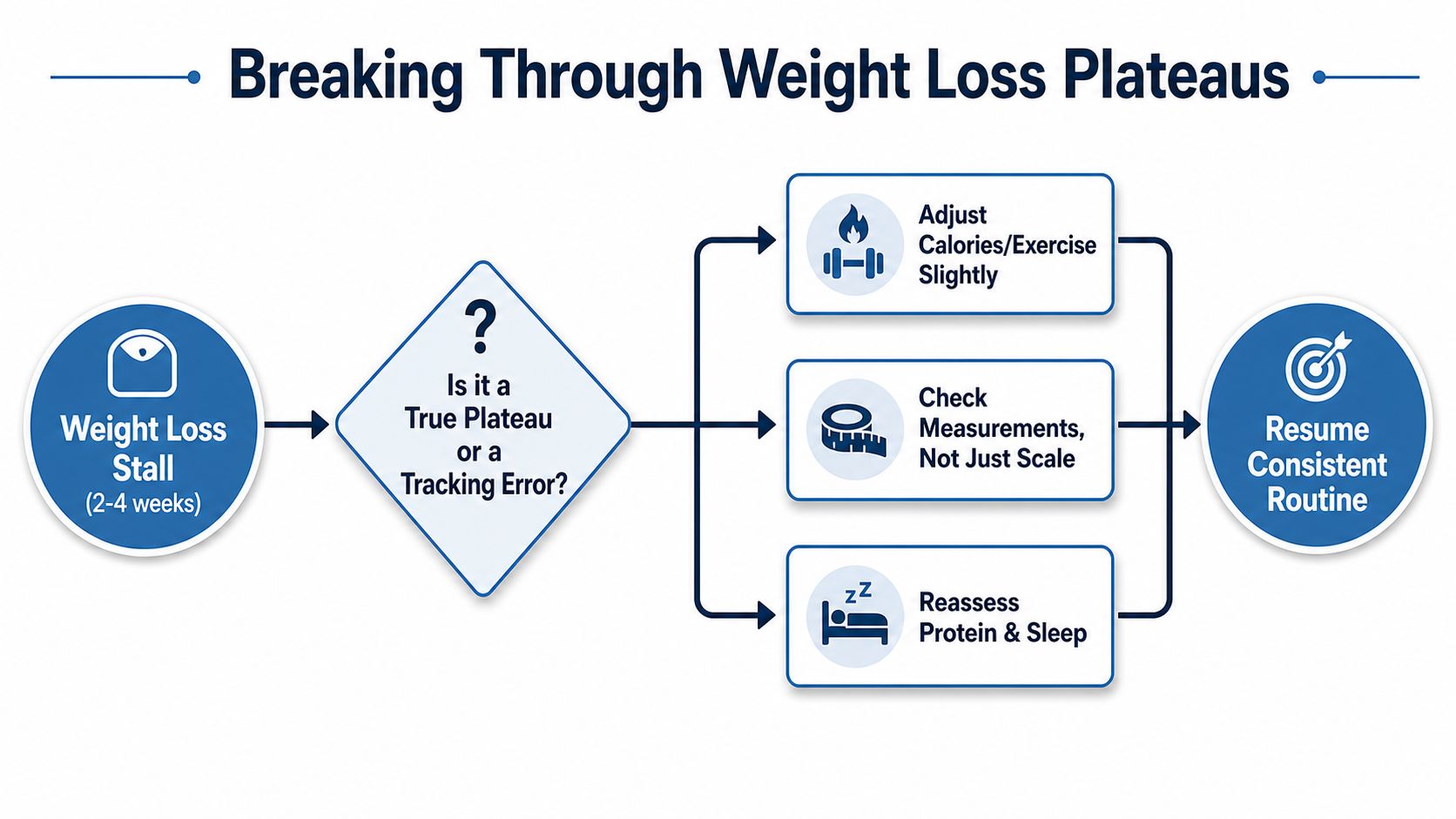
Weight can stall for reasons that have nothing to do with fat gain. Training stress, sleep changes, and sodium can all shift water balance enough to flatten the scale for a while. If the last few weeks have been inconsistent, the first job is to check whether you are looking at a true plateau or a measurement blur.
Early consistency matters more than people think. A study reported in CNN found that greater weekly weight variability in the first 6 to 12 weeks was linked to lower weight loss at the 12- and 24-month marks (CNN report on early variability). Steady trends beat dramatic swings.
A practical response is to make one small adjustment, not five. Slightly reduce calories, add a bit more movement, or tighten logging accuracy. Then give that change time to show up before changing again.
Use a reset instead of a rebound
If the scale has not moved for two to four weeks, do not slash food and double training at the same time. That is how people burn out and rebound. Use a reset:
- Audit tracking accuracy. Re-check portions, snacks, drinks, and weekend eating.
- Adjust one variable. Trim intake a little or increase steps and movement.
- Protect recovery. Sleep, hydration, and normal meals matter more than panic.
- Return to routine. Keep the plan boring long enough to work.
A simple way to stay grounded during a rough patch is to pair the scale with another task-based reset. Even a clear a homework stack routine helps here, because the goal is the same, remove clutter, make the next action obvious, and finish the day with less friction.
For a closer look at the training side of stalls, how to avoid workout and weight-loss plateaus is useful when effort starts feeling stale.
Choosing Cardio That Fits Your Joints and Your Day
The best cardio is the one you'll still do when your calendar gets ugly. If running hurts, if the gym commute kills the mood, or if your job leaves you too flat to start from scratch every day, the answer isn't more guilt. It's a better fit.
Compare the options by repeatability, not ego
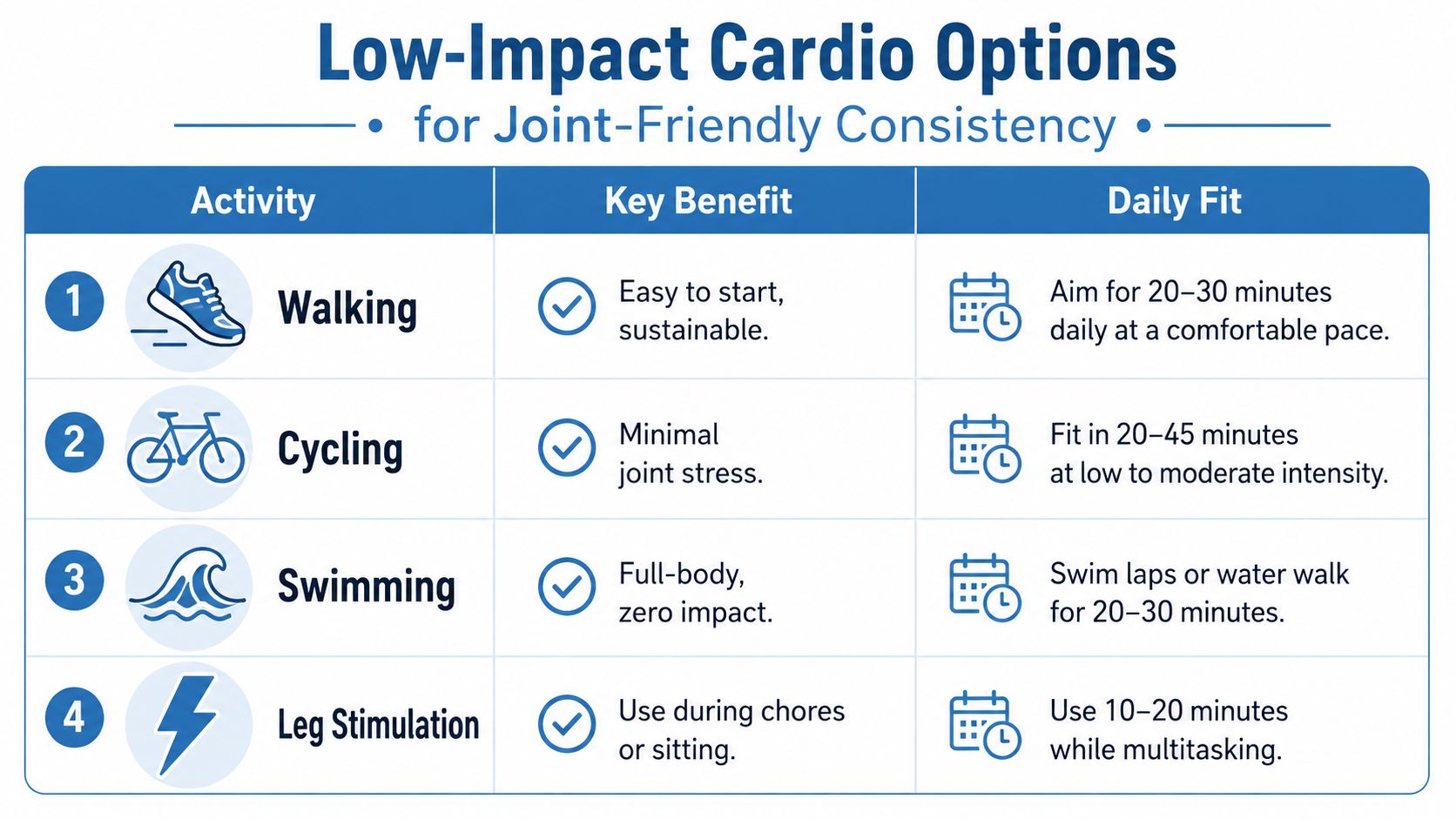
Walking is easy to start and easy to repeat. Cycling reduces joint stress and works well for people who prefer a seated format. Swimming gives you a full-body option with zero impact, although access is the limiting factor. These are all valid, but none of them matter if they don't fit your actual schedule.
For some people, the problem is joint sensitivity. For others, it's time. A low-impact, no-impact, or multitasking-friendly option can be the difference between a plan that survives and one that dies by Thursday.
A few useful distinctions:
- Walking: easiest entry point, but it depends on weather, time, and footwear.
- Cycling: low joint load, useful if you can tolerate the setup and access.
- Swimming: excellent if available, but not the most convenient daily habit.
- Electrical muscle stimulation: can be used while seated or doing chores, and it avoids joint loading.
Match the method to the person
For a desk-bound worker, the most sustainable choice is usually the one that doesn't demand a second life. For someone rebuilding after injury or dealing with arthritis, low-impact or no-impact movement is often the only route that stays tolerable. That's where options like BionicGym can be relevant, because it's an FDA-cleared wearable cardio system that uses electrical stimulation to deliver exercise while letting the user stay seated or move around the house, and it can be used without loading or flexing the joints.
A sensible weekly split is simple. Do two or three focused cardio sessions, then keep daily movement light and steady. The exact tool matters less than the fact that you can repeat it without feeling wrecked.
Practical rule: if cardio leaves you dreading the next session, it's too costly for consistency.
That trade-off is the whole game. Better to choose a method you'll still use in month six than chase a trend you can't maintain in week three.
Burning Extra Calories While You Work and Relax
The desk-bound lifestyle is only a problem if you treat it like a dead zone. The better move is to turn sitting time, chores, and low-focus tasks into opportunities for extra activity, because the people who maintain weight loss usually build movement into ordinary days rather than waiting for ideal workout windows (NCBI maintenance review).
Make the day do some of the work
A remote worker can answer emails during a seated cardio session, then keep the day moving with a short walk later. A parent can stack activity onto cleaning, tidying, or pottering around the house. A gamer can use a long sitting block more productively by pairing it with a safe, seated exercise option instead of assuming the whole evening is lost.
That's the appeal of multitasking fitness. It doesn't try to replace deliberate training. It just gives you more total movement without asking for more time.
The key is safety. No use while driving, using heavy machinery, crossing roads, or going up and down steps. The right context is seated work, watching TV, emailing, browsing, or light household chores. That keeps the session realistic and avoids stupid risks.
Make the calorie burn count without chasing extremes
The achievable vigorous level is about 500 calories per hour. That's a useful benchmark because it's strong enough to matter without leaning on fantasy numbers. It also means a couple of focused sessions can sit alongside a normal workday if the rest of the day is still structured.
Longer, lower-intensity use can also add up over time. Four to six hours of background activity can create meaningful cumulative burn across the day, especially when it's combined with a calorie deficit and regular movement. The point isn't to replace food control. The point is to widen the gap enough that consistency becomes easier.
For readers who like the idea of exercise on autopilot, the vigorous cardio on autopilot guide explains why passive, seated effort can fit into a normal routine without the usual friction.
Your 30-Day Consistency Plan and When to Get Help
The first month should feel structured, not heroic. Pick one calorie target, one tracking habit, and one cardio routine you can repeat even when the week gets messy. That is enough to build momentum without turning the process into a second job.
A simple four-week ramp
Use this as your starter pattern:
- Week 1: Set a realistic deficit, log meals, and weigh yourself under the same conditions.
- Week 2: Add two to three cardio sessions, each short enough that you'll finish them.
- Week 3: Tighten protein at meals and keep hydration steady.
- Week 4: Review the trend, adjust one variable if needed, and keep the routine boring.
The goal is not dramatic change in seven days. It is proof that the routine survives ordinary life, which is where most plans break. If you want to model your own setup, a structured estimate tool can help you test how different routines may play out without guessing.
You can also use the short video below as a reminder that training does not have to mean disappearing into a gym for an hour.
If you have already tried everything and still feel stuck, a specialist can help you check for hidden barriers and build a more personalised plan. For readers who want a clinical pathway alongside lifestyle change, life-changing weight loss solutions at LifeWorks is one example of a more structured support route worth reviewing.
When to get help: if your plan feels unworkable, your weight is not changing after several weeks of honest adherence, or you are dealing with a serious medical issue, bring in a professional instead of guessing.
Anybody with a serious medical condition or injury should consult with their medical practitioner before starting any new exercise program. BionicGym is a great way to exercise. It is not a medical treatment. Consult your doctor if you have a serious condition.
If you want a practical way to make consistency easier, start with BionicGym, compare it with your current routine, and see whether seated, joint-friendly cardio can help you stay in a deficit without fighting your schedule every day. Build the habit first, then make the plan smarter around it.