

EMS Training Explained: What It Is and How It Works
Ireland's emergency-care system already treats training as a structured pipeline, not a loose collection of courses. A 2017 workforce review recorded 518 non-consultant hospital doctors in emergency medicine, with 485 in training posts and 33 in non-training posts, which tells you how organised the pathway has been in practice HSE review. That same logic, staged progression, supervised practice, and measurable workload, is a useful way to think about EMS training too.
What EMS Training Actually Is
A lot of people hear EMS training and think it's just a gadget that “zaps” muscles. That's too vague. The clearer way to think about it is this, wearable electrodes send controlled electrical impulses into muscles, and those muscles contract without you having to consciously drive every rep. It's a bit like an external coach tapping the muscle fibres on the shoulder and saying, “work now.”
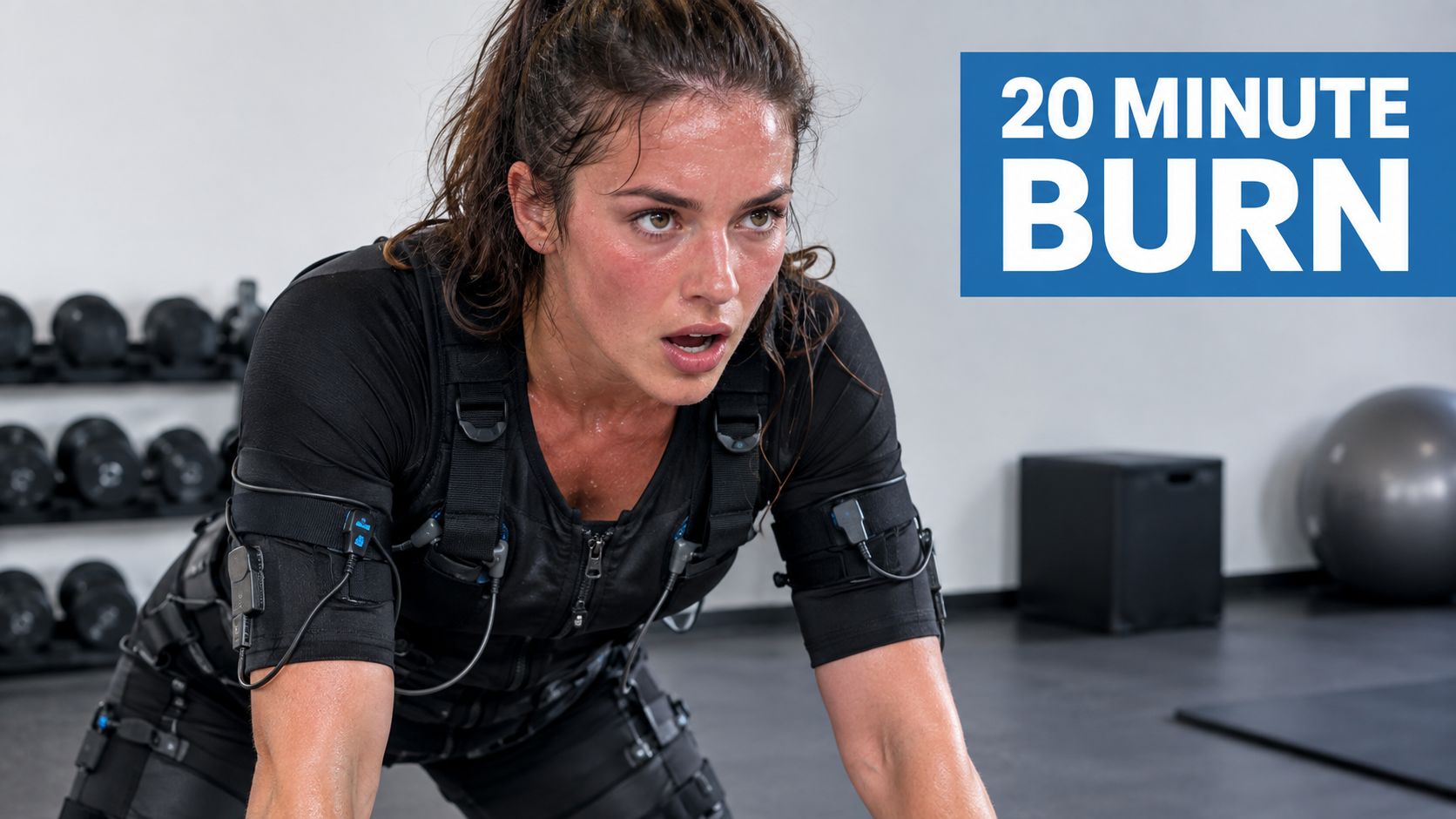
That's why people often compare it with shivering. In both cases, the body recruits muscle activity rapidly and rhythmically, and that raises energy demand. A BionicGym overview of electrical muscle stimulation sits well with this idea, because the device uses leg wraps and app-guided programs to trigger contraction patterns rather than asking the user to do conventional lifting or running every minute electric muscle stimulator.
The simplest way to separate it from other technologies
EMS is about muscle contraction. TENS is usually about pain relief and sensory stimulation. That difference matters because the goal of EMS is training, while TENS is commonly discussed in the context of comfort or symptom management.
Practical rule: if a device is marketed as training, ask what it's actually doing to the muscle, not just whether it tingles.
The history matters too. Electrical stimulation began in rehabilitation and physiotherapy settings, where clinicians used it to help activate muscles that were hard to recruit voluntarily. Over time, the hardware became more wearable, and whole-body suits made the format familiar to fitness users rather than just patients. That shift explains why the same broad technology can sit in both exercise and clinical conversations, as long as the claims stay honest and the use case is clear.
If you want a simple next step, a product page like BionicGym's electrical muscle stimulation guide helps you see how the wearable format differs from a tabletop stim unit or a pain device. The key is to treat it as a training tool first, and a novelty never.
How EMS Training Works Inside the Body
EMS bypasses voluntary recruitment and drives fast-twitch fibres directly, so the muscle starts demanding fuel before the body has gone through the usual warm-up pattern from running or jumping. That creates an effort response without the same joint impact, which is why the experience can feel unfamiliar at first.
Fast fibres, sugar demand, and a higher metabolic push
Because EMS recruits those fibres early, carbohydrate use rises quickly. Fast fibres depend heavily on quick energy, so the body becomes more sugar-hungry during a well-structured session. The practical result is simple, muscle contraction pulls more glucose into use to keep the work going.
One way scientists track that shift is through the respiratory exchange ratio, or RER. When RER moves upward, it suggests the body is leaning more on carbohydrate than on slower fuel sources. You do not need the acronym to use the idea. The point is that EMS can create a cardio-like metabolic response even without traditional running.
Lactate is not a sign that the session failed. It often means the muscle is working hard enough that metabolism has to move quickly.
Lactate and the signal it sends
People often treat lactate as a warning label because they connect it with the burn in hard workouts. A better way to read it is as part of the normal response to intense muscular work. It can also act as a signalling molecule, which matters because training adaptation depends on signals as much as on movement.
That is one reason researchers discuss BDNF, or brain-derived neurotrophic factor, in this context. BDNF is often linked with neuroplasticity, mood, and metabolic health. The chain is straightforward. EMS contraction raises energy demand, higher demand changes fuel use, and that metabolic stress helps trigger signals the body can adapt to over time.
For readers comparing formats, BionicGym's electrical stimulation machine overview is useful because it shows how the wearable setup is meant to create this cardio-style response, not just a brief muscle twitch.
What the Evidence on EMS Training Shows
A training method earns trust when it changes what the body can do, not just what a device can claim. In a University College Dublin-led study of healthy sedentary adults, prolonged EMS produced a cardiovascular exercise response without loading the limbs or joints, and training increased peak VO2 by 0.24 ± 0.16 L/min, walking distance by 36.6 ± 19.7 m, and quadriceps strength by 87.5 ± 55.9 N UCD study. The main point is simple, EMS produced adaptation, not just a brief muscle twitch.
What's measured, and what's inferred
The useful split is between oxygen consumption, heart rate, lactate, and marketing language that stretches beyond the evidence. A well-run EMS session can raise those physiological markers in a real exercise response. It cannot become every kind of cardio at once. It does not turn into running, and it does not train the whole body the way a long outdoor jog does, with impact and locomotion shaping the load.
A separate UCD paper described the EMS protocol as rapid, rhythmical contractions in the large leg muscles designed to mimic shivering and create oxygen demand, with submaximal stimulation previously shown to increase VO2, heart rate, and minute ventilation compared with rest UCD protocol paper. That mechanism matters because it explains why the method can feel like work even when the joints are spared.
For readers who want the practical version of that idea, this BionicGym article on muscle stimulation and aerobic conditioning shows how the same cardio-style response is framed in use. A desk worker who cannot tolerate impact may care most about the low joint loading. A runner may care more about whether it can support conditioning on lighter days. A strength-focused user may care that the protocol still asks the muscles to do real work.
| Metric | EMS Training 20 min | Conventional Cardio 45 min moderate | Study Type |
|---|---|---|---|
| Oxygen demand | Measurable exercise response | Measurable exercise response | UCD physiological study |
| Joint loading | Low | Higher, especially with impact | Mechanistic comparison |
| Strength stimulus | Present | Present, depending on modality | Training adaptation data |
| Time commitment | Short session | Longer session | Practical use comparison |
Bottom line: EMS can create a genuine training stimulus, but the result still depends on session quality, repetition, and realistic expectations.
Safety, FDA Clearance, and Sensible Use
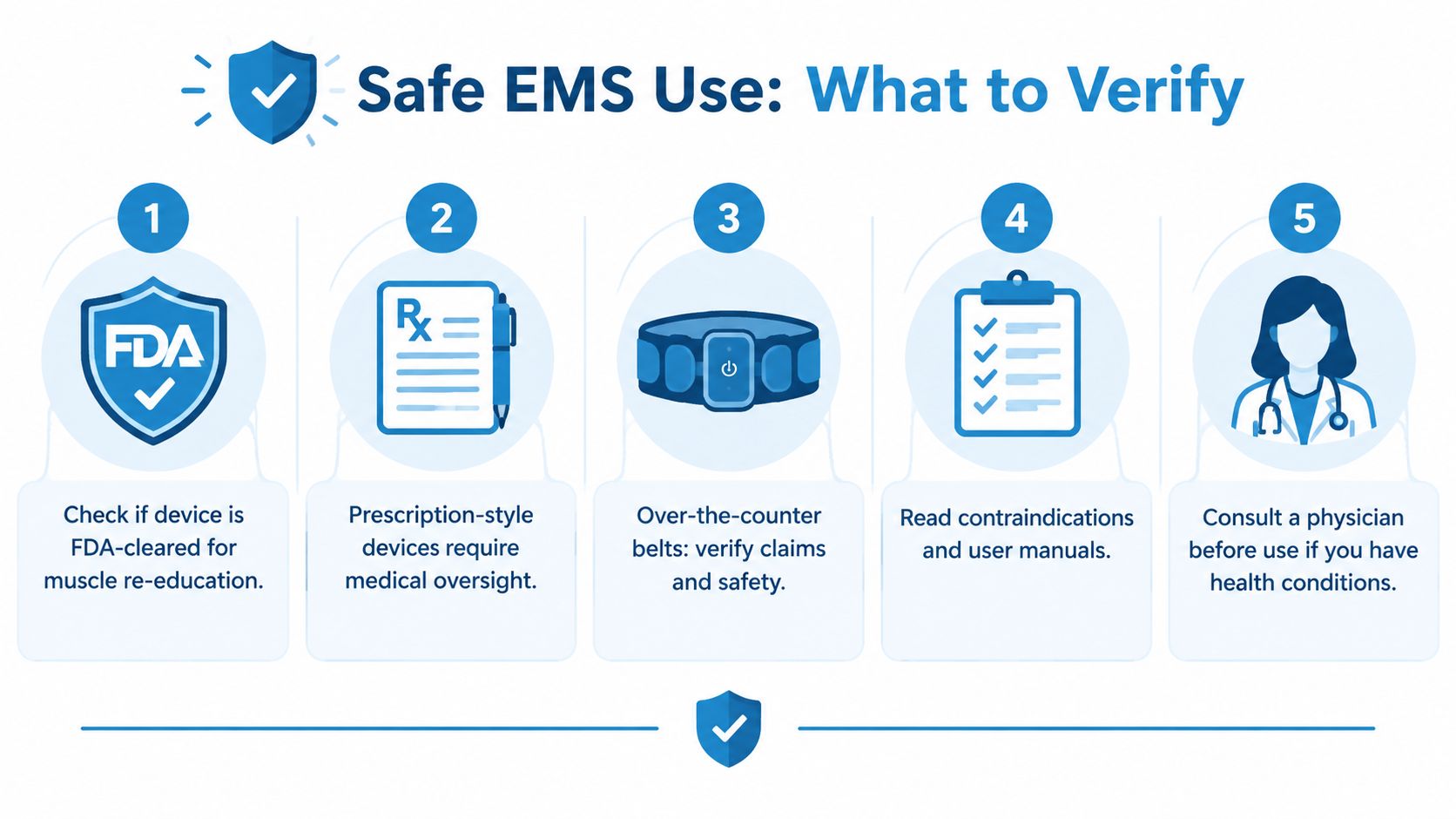
EMS belongs in the category of regulated devices when it's intended for diagnosis, prevention, monitoring, treatment, or alleviation of disease, injury, or handicap under Irish medical-device law Irish Statutory Instrument. That's why the wording matters. FDA-cleared is the right term for a cleared medical device, while casual language like “approved” can mislead people about what the device is and isn't.
What to check before you buy
- Clearance status: Confirm whether the device is FDA-cleared for the use it claims, especially if it's being sold as more than a generic wellness accessory.
- Intended use: Read whether it's described for muscle re-education, exercise, or another purpose, because intended use drives the safety expectations.
- Placement guidance: A serious device should explain exactly where electrodes go and where they shouldn't go.
- Contraindications: Check for warnings if you have a pacemaker, are pregnant, have epilepsy, or are recovering from surgery.
- Operator support: Clinical systems often expect trained supervision, while home systems should ship with clear manuals and intensity controls.
If you have a health condition or injury, the right advice is simple. Anybody with a serious medical condition or injury should consult with their medical practitioner before starting any new exercise program. And, more specifically, BionicGym is a great way to exercise. It is not a medical treatment. Consult your doctor if you have a serious condition.
A useful consumer rule is to start low, stay hydrated, avoid damaged skin, and stop if you feel pain or dizziness. If a seller skips those basics and only talks about dramatic results, that's a red flag. A careful explanation, like the one in this FDA-cleared wearable cardio overview, is usually more trustworthy than flashy language.
Who EMS Training Is Built For
The people who tend to benefit most from EMS are usually solving a practical problem. They may need a way to fit exercise into a packed day, reduce joint stress, or keep moving while recovery or deconditioning makes ordinary workouts harder to sustain. That is the use case.
The desk-bound professional
A remote worker or office employee can use EMS to give large muscle groups a session without building the whole day around a gym visit. A short block before work, between meetings, or after logging off can still feel purposeful because the stimulus is concentrated, not spread across a long workout. For someone comparing home-based options, the key question is whether the format fits a desk-heavy routine without adding friction.
The joint-sensitive reader
A person with arthritis, a history of heavy training, or simple sensitivity to pounding often needs movement that does not keep hammering the joints. That is why lower-impact choices like swimming, stationary cycling, yoga, Tai Chi, and Pilates show up in Arthritis Ireland guidance. EMS belongs in that same conversation because the muscles are doing work while the joints stay comparatively still. If walking or jogging feels like too much on a given day, a lower-impact session can keep the habit alive.
The person managing blood sugar and dietary strategy
The HSE says physical activity matters for managing and treating type 2 diabetes, and recommends at least 2 hours 30 minutes of moderate-intensity activity per week HSE diabetes exercise advice. That makes EMS appealing to people who want a session that feels metabolically active without needing a long run or a hard-impact circuit.
The practical detail here is not just “burning energy.” It is whether the session is easier to slot into a week that already has meals, work, and family demands. For someone following low-carb or fasting-style routines, that can matter more than chasing a longer workout. BionicGym is one option in this category, but it still sits inside an overall exercise plan, not outside it.
The post-injury or deconditioned user
Once a clinician has cleared movement, EMS can help a person practice muscle activation again when voluntary effort is weak, uneven, or limited by soreness. That is useful for rebuilding the feeling of a contraction before moving to more demanding training. It is also why conservative progression matters, especially if the body is still relearning what normal effort feels like.
Practical rule: the less ready your body feels, the more session length and intensity should be increased gradually.
For readers matching training mode to recovery stage, this low-impact cardio article for seniors gives a useful reference point because it stays focused on movement that is usable and easier on the body.
EMS Training Compared With Traditional Cardio
The easiest way to compare EMS with jogging or cycling is to ask four questions, how hard does it feel, how much does it load the joints, how much time does it take, and how easy is it to keep doing it? On those terms, EMS can be very attractive because a short session can produce a real metabolic push without the same impact cost as running.
| Dimension | EMS Training | Traditional Cardio |
|---|---|---|
| Calorie burn per minute | Can be high when sessions are structured well | Often lower per minute in easy steady-state work, higher in intervals |
| Joint load | Low, joints stay comparatively still | Higher in running, jumping, and other impact-based work |
| Time cost | Short sessions fit tight schedules | Usually longer unless you use high-intensity formats |
| Accessibility | Useful for home use and low-impact situations | Best when you can move freely and tolerate impact |
That said, the comparison isn't perfect. EMS doesn't train the cardiovascular system through the same central cardiac stress that comes from running, rowing, or brisk incline work. It gives you a training effect, but it isn't a full substitute for ordinary cardio in most healthy adults.
A balanced plan usually looks better than an either-or choice. EMS can support the week, especially when time is short or joints are irritated, while zone-2 and vigorous cardio still have their place for broader conditioning. If you're also thinking about strength work in the context of body composition, the article on strength workouts for GLP-1 patients is a helpful companion because it shows why muscle-focused work matters when weight loss is happening.
Practical EMS Training Questions Answered
The first question is usually where to put the electrodes. The short answer is, follow the manufacturer's placement map exactly, because placement changes which fibres are recruited and how strong the session feels. Random placement turns a structured workout into guesswork.
How often should you start? Begin conservatively and let your body adapt before you chase intensity. If a session leaves you shaky, sore, or wiped out for the rest of the day, the load was probably too aggressive for your current baseline.
A second common question is whether EMS stacks with regular workouts. Yes, but it should sit alongside your plan, not bulldoze it. If you already lift, walk, cycle, or swim, EMS can be an extra stimulus, but you still need recovery and ordinary movement to keep the plan balanced.
Hydration and skin prep matter more than people expect. Dry skin, poor contact, or a rushed setup can make the stimulation feel uneven, and that usually makes the session less useful and less comfortable. If you feel tingling where you shouldn't, or soreness that seems sharp rather than normal training fatigue, stop and check the fit before you continue.
One last distinction helps people spot quality. A well-made EMS session feels like controlled muscular work with a clear training structure. A generic vibration gadget mostly feels like shaking. Those aren't the same thing.
For measurable adaptation, be patient. The body responds to repeated sessions, not one dramatic demo. If you stop training altogether, those gains won't just keep climbing on their own, so consistency matters more than novelty.
If you want to compare structured options rather than guessing from ads, start with a device that explains its training logic plainly, shows you how to progress, and keeps safety central. That's the kind of setup that turns EMS training from a buzzword into a workable routine.
If you're ready to test a structured form of electrical stimulation training, visit BionicGym and look at how its wearable cardio sessions are organised, what the app controls, and how the product is positioned for home use. Start with the basics, compare the session styles, and choose the format that fits your schedule and your joints.