

Intermittent Fasting Workout Timing for Fat Loss
Training fasted isn't automatically the fastest route to fat loss. That popular rule confuses where fuel comes from during a workout with the result you get over weeks of consistent training, sensible eating, and recovery. The practical question isn't whether fasted exercise is “better”. It's whether the session's intensity matches the fuel available.
For individuals using the familiar 16:8 pattern, the answer is straightforward. Easy movement can sit comfortably near the end of the fast, while hard intervals, demanding resistance training, and performance-focused sessions usually work better after food. This approach to intermittent fasting workout timing gives you the metabolic flexibility of fasted exercise without turning every session into a test of willpower.
Why Fasted Training Is Not Always the Best Choice
The internet often presents an empty stomach as a metabolic advantage you should chase at every opportunity. That advice sounds persuasive because fasted exercise can increase fat mobilisation during the session. It becomes misleading when it implies that a higher rate of fat use automatically produces greater fat loss or a better workout.
Your body responds to exercise according to intensity, duration, training status, sleep, hydration, and recent food intake. A gentle walk at the end of a fast places a very different demand on your system than heavy squats, repeated sprints, or a hard circuit. Treating both sessions with the same fasted rule is poor coaching.
Low intensity and hard training need different decisions
Lower-intensity aerobic work generally places less demand on immediately available carbohydrate. Walking, gentle cycling, mobility work, and easy steady-state cardio can often fit into the fasting window, provided you feel well and can maintain the routine.
High-intensity work is different. Intervals and demanding strength sessions require you to produce force repeatedly, maintain concentration, and recover afterwards. If you start those sessions depleted, you may reduce the quality of the workout, cut the session short, or compensate later with excessive hunger. None of those outcomes helps your long-term plan.
Practical rule: Use the fasted window for work you can complete comfortably. Use the eating window to support work that needs power, speed, concentration, or substantial recovery.
Performance evidence supports a measured view. A 2017 systematic review and meta-analysis found that performance outcomes were generally not meaningfully different between fasted and fed exercise overall, although results varied across protocols and intensities (systematic review of fasted versus fed exercise). That doesn't make timing irrelevant. It means you shouldn't assume fasted training has a universal performance or fat-loss advantage.
The result comes from the whole routine
A fasted session can be useful, but it isn't a substitute for an appropriate weekly workload or adequate food quality. Exercise volume itself matters. The same meta-analysis reported that an additional 100 minutes of physical activity per week was associated with an average fasting glucose reduction of 2.75 mg/dL across 105 studies (PubMed summary of the meta-analysis). The useful lesson is that regular movement deserves more attention than a rigid obsession with the exact moment you train.
If preserving muscle matters, resistance work should receive your best energy and attention. Guidance on cardio without losing muscle is useful alongside fasting because the priority is not to burn fuel today. It's to build a routine you can repeat while supporting strength and recovery.
How Your Body Uses Fuel During Fasted and Fed Exercise
After a period without food, your body has less recently consumed carbohydrate available for immediate use. During exercise, it draws on stored carbohydrate and fat, with the balance changing according to intensity. At lower intensities, fat mobilisation can make a larger contribution. As intensity rises, the need for rapidly available carbohydrate becomes more pressing.
A 2018 meta-analysis found that fasted exercise increased post-exercise circulating free fatty acids compared with fed exercise, with a statistically significant effect of P = .023 (Healthline overview of exercising safely with intermittent fasting). That result shows a change in fuel handling. It doesn't prove that training harder while fasted creates superior body-composition results.
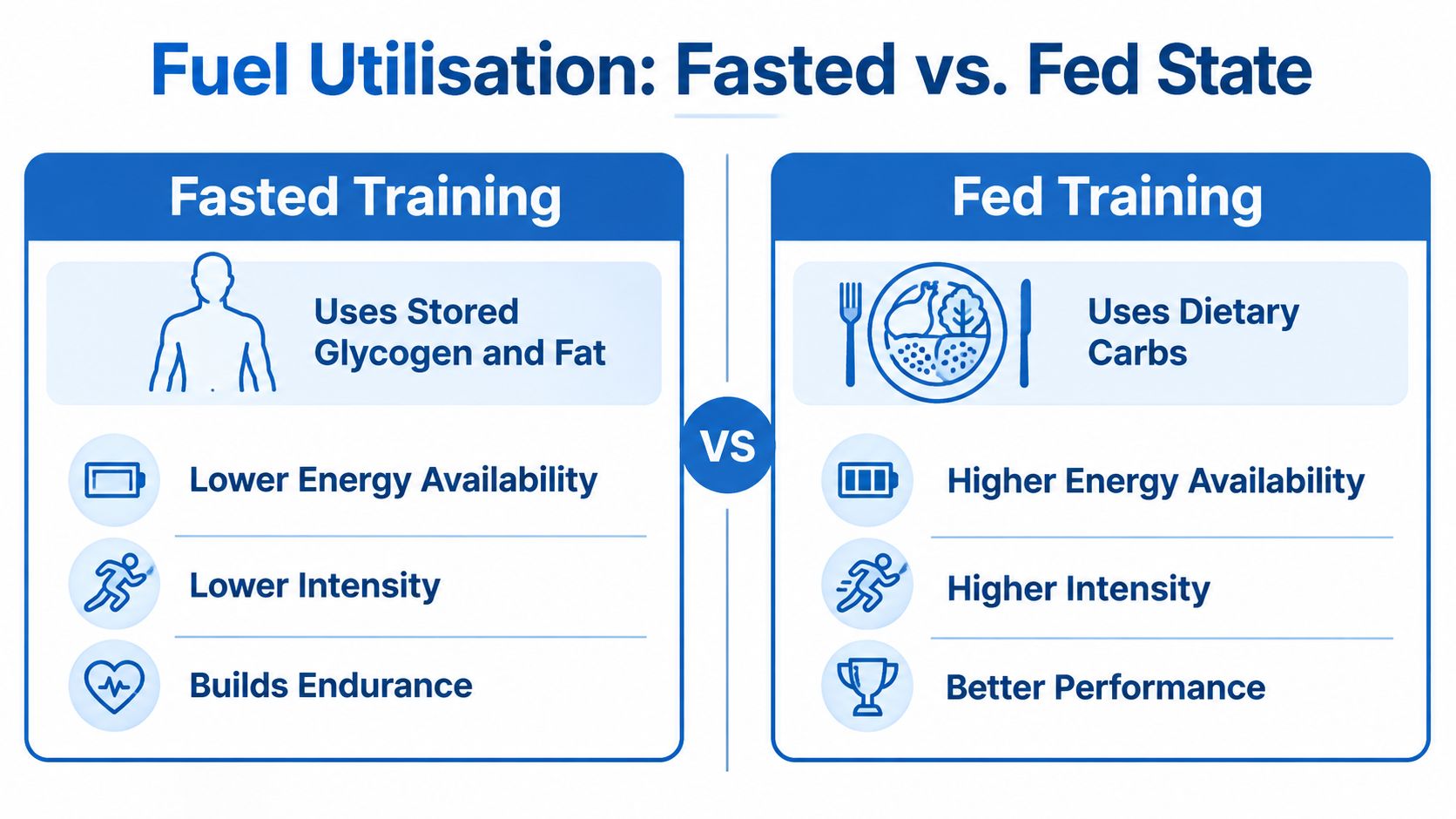
Fuel use isn't the same as fat loss
The body is constantly switching between fuel sources. A session that uses more fat in the moment can be followed by changes in appetite, activity, food intake, and later fuel use. Long-term fat loss still depends on the broader energy balance and the quality of the training you can sustain.
That's why I ask clients to track more than the feeling that a fasted workout is “working”. Look at whether the session was completed, whether strength is stable, whether recovery is acceptable, and whether the eating window supports the next workout. If fasted training leaves you flat for the rest of the day, it may be a poor trade even if the session increases fat mobilisation.
Sleep and recovery also influence tolerance. Readers balancing training with stress may find this resource on sleep and wellness for burnout helpful, because fasting and exercise aren't isolated decisions. Poor sleep can make hunger, perceived effort, and recovery more difficult to manage.
Fed exercise has a practical performance role
Food before training supplies dietary energy that can support harder work. A balanced meal containing carbohydrate and protein is especially relevant before sessions where you want to lift, accelerate, repeat intervals, or maintain technical quality.
This doesn't mean every workout needs a large meal. Some people prefer a small snack, while others train well after a normal meal has had time to settle. The point is to make fuel availability serve the session rather than forcing the session to serve a fasting rule.
A useful application is to reserve fasted work for easy aerobic activity and place more demanding training near food. For readers interested in how exercise intensity affects glucose use, high RER exercise for glucose disposal provides relevant context. The same principle applies here: intensity changes the fuel demand, so timing should change with it.
Timing Rules for Different Workout Types Within a 16:8 Schedule
A fasting clock should not decide every workout. Match the session's intensity to the fuel available, then place harder work where food can support performance. The 16:8 schedule involves 16 hours of fasting and an 8-hour eating window, and Beacon Hospital presents it as one practical way to start intermittent fasting in Ireland (Beacon Hospital's 16:8 fasting advice). Set those hours around work, sleep, and training. Noon to 8 pm is one option, not a rule.
Match the session to the window
Use these guidelines:
- Easy movement: Schedule walking, gentle cycling, mobility, or relaxed yoga during the fast if your energy stays steady. Morning sessions can suit people whose eating window begins later.
- Moderate aerobic work: Train before or after food based on comfort. A controlled pace may fit the fast if you remain alert and free from light-headedness.
- Intervals and hard conditioning: Put demanding conditioning inside the eating window. Fuel can help you maintain pace and technique instead of producing an uneven session. This includes high-intensity interval training, which places greater demands on repeatable effort.
- Resistance training: Aim for 1 to 4 hours after a balanced meal containing carbohydrate and protein, in line with guidance on intermittent fasting with workouts.
- Long sessions: Be cautious about extending a fasted workout beyond roughly an hour. Repeatable training and adequate recovery nutrition are more useful than turning a long session into a test of low energy, as discussed in the 2026 Frontiers in Nutrition review.
With a noon to 8 pm eating window, a 7 am walk fits the fast comfortably. A demanding strength session at 2 pm can follow food and leave time for recovery. An evening interval session should begin after a meal rather than being pushed into the final hours of the fast.
Use a simple daily template
Perfect timing is unnecessary. Consistency matters more than arranging every session around an exact minute.
| Time | State | Suitable training |
|---|---|---|
| Morning | Fasting window | Easy walk, mobility, gentle cardio |
| Early afternoon | Eating window | Strength training or intervals after food |
| Late afternoon | Eating window | Moderate or demanding session, followed by a recovery meal |
| Evening | Eating window or fast approaching | Easy movement, or finish harder work before the fast begins |
A recent narrative review in Nutrition supports individualising timing because the evidence does not establish one universal schedule (2024 narrative review in Nutrition). That matters for desk-bound workers who have only one realistic training slot. Choose the arrangement you can repeat without sacrificing session quality or recovery.
For practical reading on exercise selection and wellbeing, see these health topics. Use the eating window to support hard work, and reserve the fast for sessions that remain easy.
Matching Workout Timing to Your Specific Fitness Goals
Your goal should determine which compromise you accept. A person focused on fat loss may enjoy an easy fasted walk, while someone trying to preserve strength should protect the quality of fed resistance sessions. An athlete preparing for demanding performance can't afford to make every key workout a test of low energy.
The table below gives a starting point, not a rigid prescription.
| Primary Goal | Best Timing Approach | Recommended Intensity | Key Consideration |
|---|---|---|---|
| Fat loss | Use easy cardio near the end of the fast, then eat a balanced meal | Low to moderate | The calorie deficit comes from the overall diet plus activity, not from fasted timing alone |
| Muscle preservation | Place resistance training within the eating window, ideally after food | Moderate to high | Protect training quality and plan recovery nutrition |
| Athletic performance | Fuel key sessions before training and recover afterwards | High when programmed | Performance and repeatability matter more than maximising fat use during one session |
| General metabolic health | Choose the time that makes consistent weekly training easiest | Mixed | Regular volume and adherence outweigh a supposedly perfect clock |
A fat-loss client who enjoys morning walking may gain a useful routine from training before breakfast. That doesn't mean the client should also move every hard session into the fast. If the walk is comfortable and the eating pattern remains sensible, the timing supports consistency without adding unnecessary stress.
Someone prioritising muscle retention has a different decision. Resistance training near food makes it easier to bring focus and force to the session, then follow it with a recovery meal. The best exercise for fat loss still depends on what the person can perform and repeat, not on the most aggressive fasting protocol.
Where BionicGym may fit
For people who need low-impact movement while working or doing household tasks, BionicGym is a wearable cardio system using app-guided programmes and leg wraps that deliver tuned electrical impulses to stimulate the leg muscles. The Standard version is designed for gentler, sustained sessions, while PRO+HIIT provides more intense interval options. Its use should still match the goal and available energy. It isn't a reason to ignore meals, recovery, or medical advice.
The right timing is the one that lets you train with enough quality to repeat the session next week.
Weight loss isn't guaranteed by any device or fasting schedule. A healthy diet plus exercise remains the dependable route, and the BionicGym weight loss calculator can help you examine how activity and food choices fit together.
Sample Weekly Schedules You Can Adapt to Your Routine
Build the week around training quality, not fasting for its own sake. Keep demanding sessions near meals, and use the fasting window for movement that does not require peak output. A useful starting point is several moderate sessions spread across the week, then adjust the workload according to performance and recovery. The evidence-informed target described earlier is a guide, not a reason to force hard training while fasted.
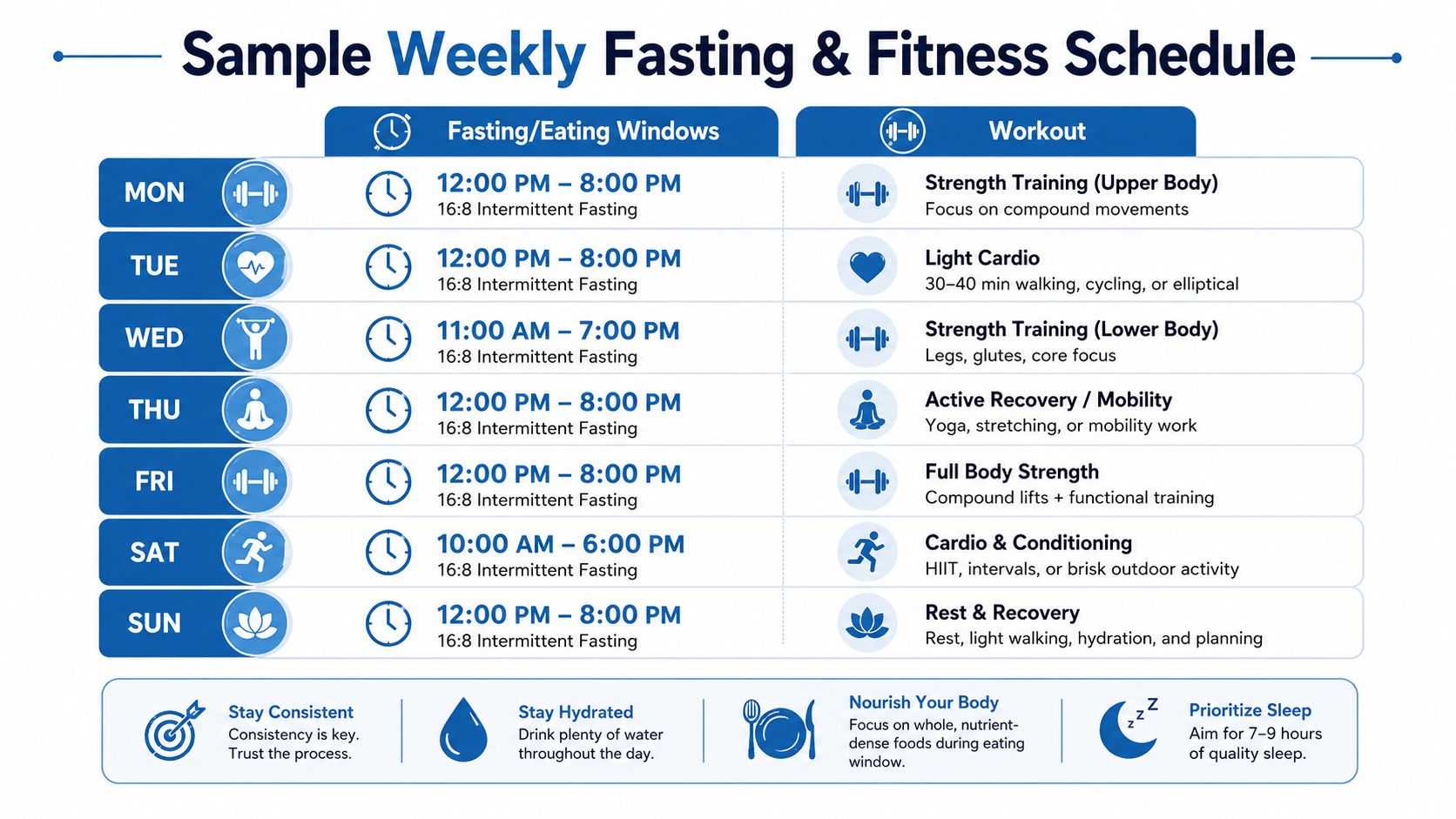
Desk-bound professional using a noon to 8 pm window
| Day | Fasted period | Fed-period training |
|---|---|---|
| Monday | Easy morning walk | Strength session after the first meal |
| Tuesday | Mobility or relaxed movement | Rest |
| Wednesday | Easy cardio before work | Strength session after food |
| Thursday | Morning walk | Rest or gentle movement |
| Friday | Mobility | Intervals or resistance training after a meal |
| Saturday | Comfortable aerobic session | Optional strength work if recovery is good |
| Sunday | Rest | Rest and meal preparation |
This template reserves food-supported energy for strength and interval work while keeping low-demand movement available before work. If mornings are rushed, shift the easy session to lunch or use a recovery day. Missing one walk is preferable to creating a routine that makes training difficult to repeat.
Variable hours and home-based training
Changing shifts do not require fixed workout times. Set the eating window around the main work period, then place resistance training beside the meal that best supports performance. Easy cardio can sit near the end of a fast when energy, hydration, and concentration remain normal.
BionicGym Standard may suit someone who wants to exercise while seated, emailing, watching television, or completing safe household chores. It still involves active participation and should be used at a sensible intensity, with realistic expectations. The practical goal is to accumulate useful movement, not to treat the session as effortless or risk-free.
Adjust the plan using feedback
Log session quality, hunger, sleep, and next-day recovery for one week. If strength or concentration declines more than once, move that workout closer to food or reduce its intensity. If easy fasted cardio feels comfortable and does not affect later training, retain it.
At the end of the week, mark each session as easy, manageable, or poorly timed. Keep the sessions that felt repeatable, shift the poorly timed ones into the eating window, and reassess after another week. This turns the template into a schedule based on your actual response rather than a fasting rule applied to every workout.
Safety Considerations and When to Consult a Doctor
Stop a fasted workout if you develop dizziness, unusual weakness, confusion, faintness, chest discomfort, or symptoms that feel unsafe. Sit down, hydrate, and eat if needed. Don't treat warning signs as evidence that the fast is working.
Hydration matters during fasting, particularly when your usual fluid intake comes from meals. Keep water available and consider whether your individual routine provides enough electrolytes. Medication timing can also matter, because some medicines need food or require clinical supervision when eating patterns change.
People with diabetes, a history of eating disorders, pregnancy, serious illness, or an injury shouldn't begin a combined fasting and exercise programme without professional advice. The same caution applies if you're frail, recovering from illness, or experiencing persistent fatigue. Guidance on preserving muscle during GLP-1 medication use may be relevant, but it doesn't replace personalised medical care.
Anybody with a serious medical condition or injury should consult with their medical practitioner before starting any new exercise program.
BionicGym is a great way to exercise. It is not a medical treatment. Consult your doctor if you have a serious condition.
BionicGym is an FDA-cleared medical device developed and invented by a medical doctor. It delivers electrical stimulation through leg wraps and can provide a sugar-hungry form of exercise, but results depend on consistent use and appropriate intensity. People considering it should review the BionicGym PRO+HIIT option for more demanding intervals, or choose the Standard model for gentler sustained sessions, while avoiding use during driving, on stairs, near dangerous objects, or anywhere a loss of attention could cause harm.
Visit BionicGym to compare its wearable cardio options and see how app-guided sessions can fit around a fasting window, desk work, or safe household activity. Pair any BionicGym programme with a healthy diet, realistic training targets, and professional advice when a medical condition or injury is involved.