

Best Home Rowing Machine: A 2026 Buyer's Guide
You're standing in a room that's already full. Maybe it's a spare bedroom with a desk shoved against one wall, maybe it's a flat where every square foot matters, or maybe it's a home gym where you've got room for equipment but not for noise. That's the starting point for the best home rowing machine decision, because the right rower isn't the one with the flashiest screen, it's the one that fits your room, your ears, your joints, and your training goal.
Most buyers make the wrong move first. They compare model names before they ask what the machine will do to the day-to-day reality of their home. A better shortlist starts with constraint first, model second, and that's the lens I'd use whether you're comparing the best rowing machines for home use or scanning the broader home exercise equipment for something you'll really use.
| What matters most | Best fit |
|---|---|
| Small space | Compact or foldable rower, often magnetic or hydraulic |
| Shared walls | Quiet resistance, lower vibration, careful floor setup |
| Performance training | Air resistance, standardised monitor, repeatable data |
| Sensitive joints | Low-impact cardio first, rower only if the motion feels good |
Indoor rowing earns its reputation in Ireland and the UK for a reason. Independent buyer guidance notes that a rower can engage about 85% of the body's muscles per stroke and a typical session can burn about 400 to 800 calories per hour depending on body weight and intensity, which is why the category keeps showing up as a compact, high-value cardio choice for home gyms in the region (RP3 Rowing). That said, those headline numbers mean nothing if the machine doesn't fit the room or the person using it.
Practical rule: buy the rower that matches your weakest constraint, not your best-case fantasy.
The four constraints I'd use on any shortlist are simple. Where will it live? Who will hear it? What does your body need? What outcome do you want? Answer those, and half the market falls away immediately.
Why the Right Home Rower Depends on Your Constraints
A buyer with a tidy garage can ignore problems that flatten a person living above neighbours. A beginner who wants 20-minute cardio sessions doesn't need the same machine as someone chasing repeatable splits and structured intervals. That's why the “best” rower is not a fixed model, it's a match between the machine and the life around it.
Space beats spec sheets in the real world
If the rower ends up blocking a doorway, leaning awkwardly in a hall, or requiring a ritual every time you want to use it, it stops being fitness equipment and becomes furniture with guilt attached. That's why room layout matters more than marketing language. A compact home office, a narrow flat, and a shared family space all create different failure points.
For a deeper consumer comparison, the best rowing machines for home use guide is useful because it reflects the way most buyers shop, by size, budget, and use case rather than by brand loyalty. The same logic applies here. You're not shopping for a trophy, you're shopping for repeat use.
Noise changes the category completely
Noise is not a side note. If you train early, late, or while someone else is working nearby, the wrong resistance type can make a rower socially unusable. Shared-wall living punishes loud machines and sloppy floor placement, even when the workout itself feels fine.
That's why the constraint-first frame is better than the usual “best overall” list. It forces you to ask whether you need a machine that feels closest to on-water rowing, or one that disappears into the background of the home. In apartment settings, those are different products with different trade-offs.
Your joints decide what counts as good cardio
Rowing is a strong option because it's low impact and full body, but low impact doesn't mean low effort. If your knees, back, or wrists are sensitive, the stroke has to feel smooth from the first pull. If it doesn't, it's the wrong cardio tool for you, regardless of how many glowing reviews it has.
The same is true for training goals. Some people want a sweat-heavy conditioning block, some want data they can track for months, and some just want a machine they can tolerate. Pick the outcome first, then pick the rower.
A useful question set is this.
- Will it stay set up, or will it need to be stored every session?
- Will the noise annoy someone else in the house?
- Does your body like the stroke, or are you forcing it?
- Do you care more about performance data, easy cardio, or easy ownership?
If you can answer those questions, the shortlist gets much shorter.
How Resistance Type Changes the Stroke You Actually Get
Resistance type is the biggest difference between home rowers, and most buyers misunderstand it because they focus on price before feel. Air, water, magnetic, and hydraulic systems don't just change the sound of the machine, they change the whole rhythm of the stroke and the kind of training you can do on it.
Air and water feel more athletic, magnetic and hydraulic feel more controlled
Air resistance is the benchmark feel for serious indoor rowing. Concept2 positions the RowErg as its indoor rowing reference point, and it uses air resistance with a flywheel damper that changes how much air enters the cage, which is what alters the stroke feel and resistance profile (Concept2 mechanism explanation). In plain English, the harder you pull, the more resistance you feel.
Water resistance is the closest in feel to rowing on actual water. It gives you a fluid, natural stroke and a softer sound profile, but it's still a mechanical system with real maintenance and a heavier tank footprint. If you like the sensation of the stroke more than the simplicity of the machine, water rowers have a clear appeal.
Magnetic resistance is the quiet, predictable option. It doesn't chase the same rowing realism, but it's often the better home choice when you care about apartments, early-morning use, or interval sessions that need a fixed resistance setting. The stroke is controlled and repeatable.
Hydraulic rowers are the compact budget answer. They take up less room and can be easier to stash, but the movement doesn't feel as natural as the other systems. If your only hard limit is space, they deserve a look. If you care about a proper rowing experience, they're the first compromise I'd question.
Read the trade-off before you buy
The same rower can be a great buy in one home and a poor one in another. A noisy air machine is fine in a garage, less fine in a thin-walled flat. A sleek water rower may look premium, but it still has to live somewhere and be maintained. A magnetic rower may be less thrilling on paper, but it can be the one you'll use without annoying everyone else.
| Resistance type | Noise | Feel | Maintenance | Best fit |
|---|---|---|---|---|
| Air | Louder | Athletic, progressive | Low to moderate | Performance-first buyers |
| Water | Moderate | Smooth, fluid | Moderate | People who care about stroke feel |
| Magnetic | Quiet | Controlled, consistent | Low | Apartments and shared homes |
| Hydraulic | Quiet to moderate | Compact but less natural | Moderate | Tight spaces and budget buyers |
If you live with other people, the loudest machine in the house is usually the one you stop using first.
That's why apartment-friendly rowers deserve a separate conversation from performance rowers. If you're trying to fit cardio around a real home layout, the best cardio equipment for small spaces angle often matters more than any single product ranking.
Noise, Footprint, and Apartment Living
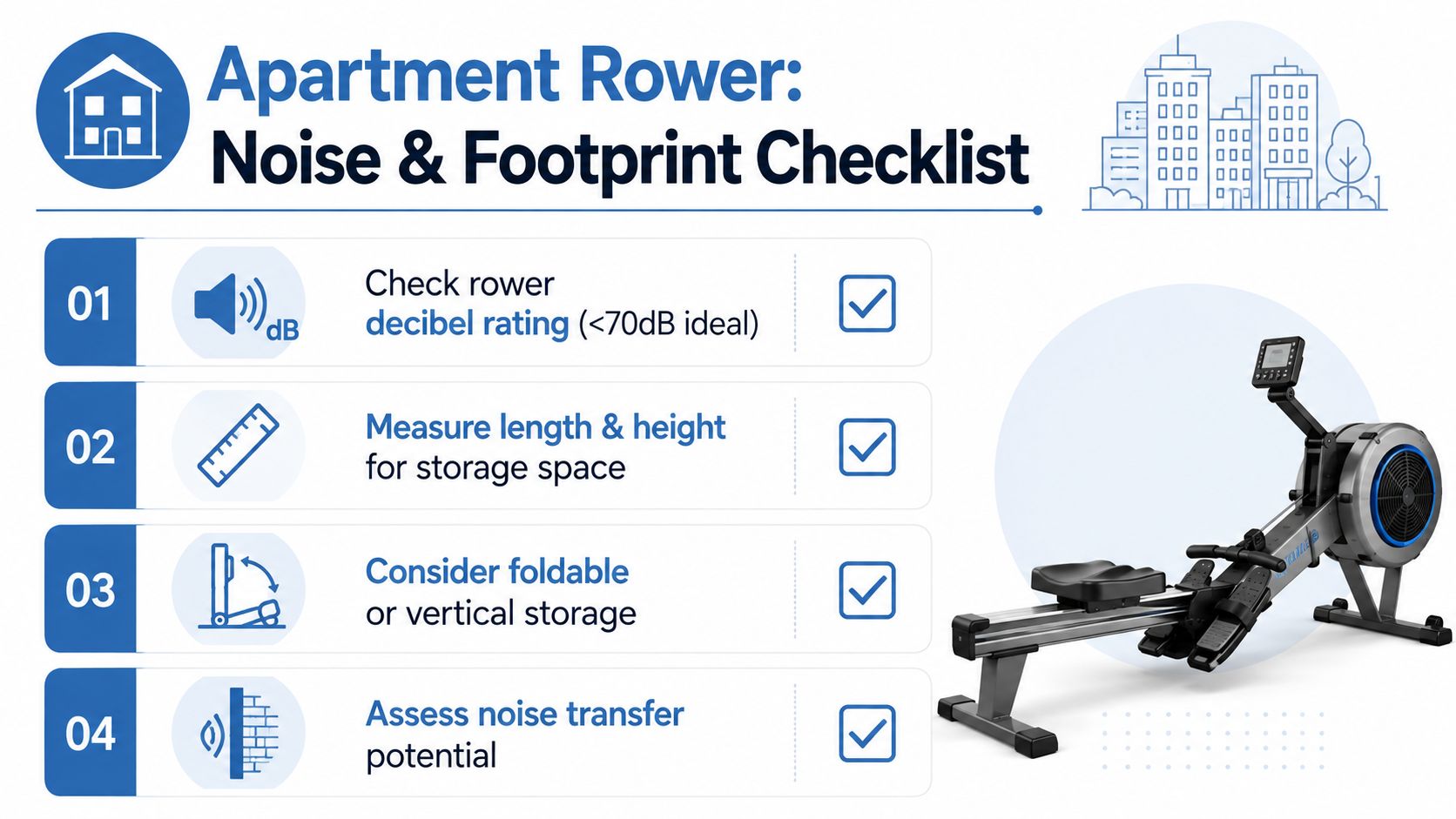
The best rower in a catalogue can still be the wrong rower for a flat. The question is not whether a machine is “good for apartments”, it is whether the people next door will tolerate it and whether you can store it without turning your room into an obstacle course. That is a very different test.
Measure the room, not the review score
Before you buy, check ceiling height, floor footprint, doorway width, and vertical storage tolerance. Those are the measurements that decide whether a rower becomes part of the room or a permanent annoyance. A lot of mainstream buyer's guides downplay storage, which is why compact and foldable comparisons keep getting more attention.
A rower's footprint is only part of the picture. You also need enough clearance for the rail and the stroke itself, especially if you are taller or if the machine sits in a narrow room. A machine can fit on paper and still feel awkward in use if the back end of the stroke ends up too close to a wall.
Quiet is a purchase decision, not a bonus
Magnetic and hydraulic rowers are usually the safer choice for noise-sensitive homes. Air rowers are louder, water rowers have their own tank sound, and both can carry farther than people expect through shared floors. The floor under the machine matters too, because vibration can be just as irritating as the raw sound.
That is the part most product pages skip. They talk about resistance and screen size, but not about whether your downstairs neighbour will hear every stroke. If you are in a flat, treat the room like part of the equipment spec.
The best cardio equipment for small spaces angle often matters more than any single product ranking when you are trying to fit cardio around a real home layout. The same logic applies to the ai front yard design page, planning a space properly changes how you use it.
Storage is a buying feature, not an afterthought
Foldability, vertical storage, and castors are not luxury extras in a real home. They decide whether the rower can disappear between sessions or whether it has to live in the middle of the room. If you cannot store it cleanly, you will start using it less.
Rule for apartment buyers: if you will not want to move it every time, do not buy it assuming you will.
That also explains why monitor design matters in small homes. A machine with a better display and clear workout feedback usually earns its space more easily, because it feels like a training tool rather than a bulky chore.
Monitor, Metrics, and Why a Standardised Readout Matters
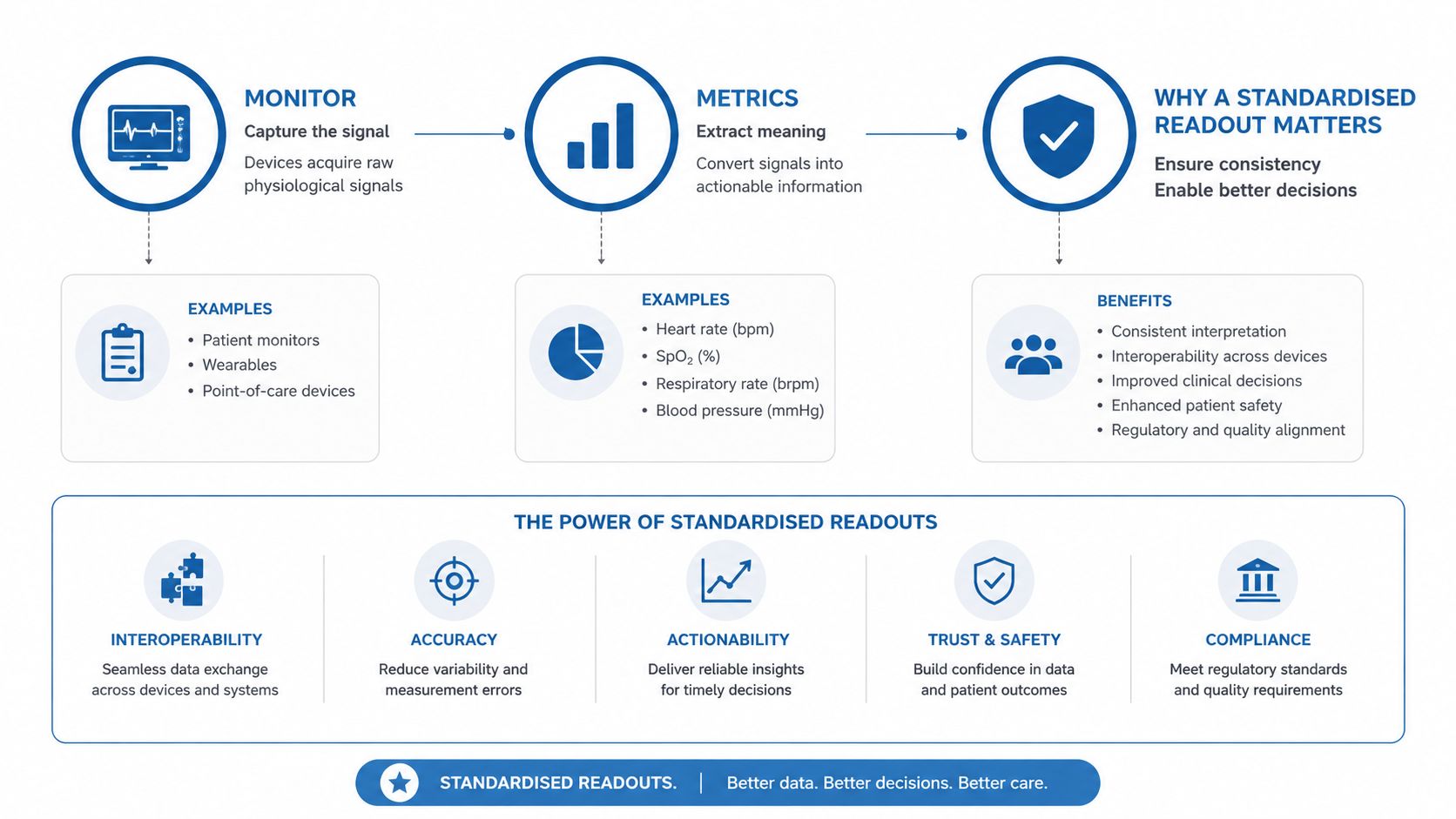
A rower can feel great and still be a poor training tool if its numbers are junk. The monitor is what turns the machine from a piece of cardio furniture into something you can progress on, compare against, and repeat. That matters if you care about measurable improvement instead of just sweating.
Split pace beats calorie estimates
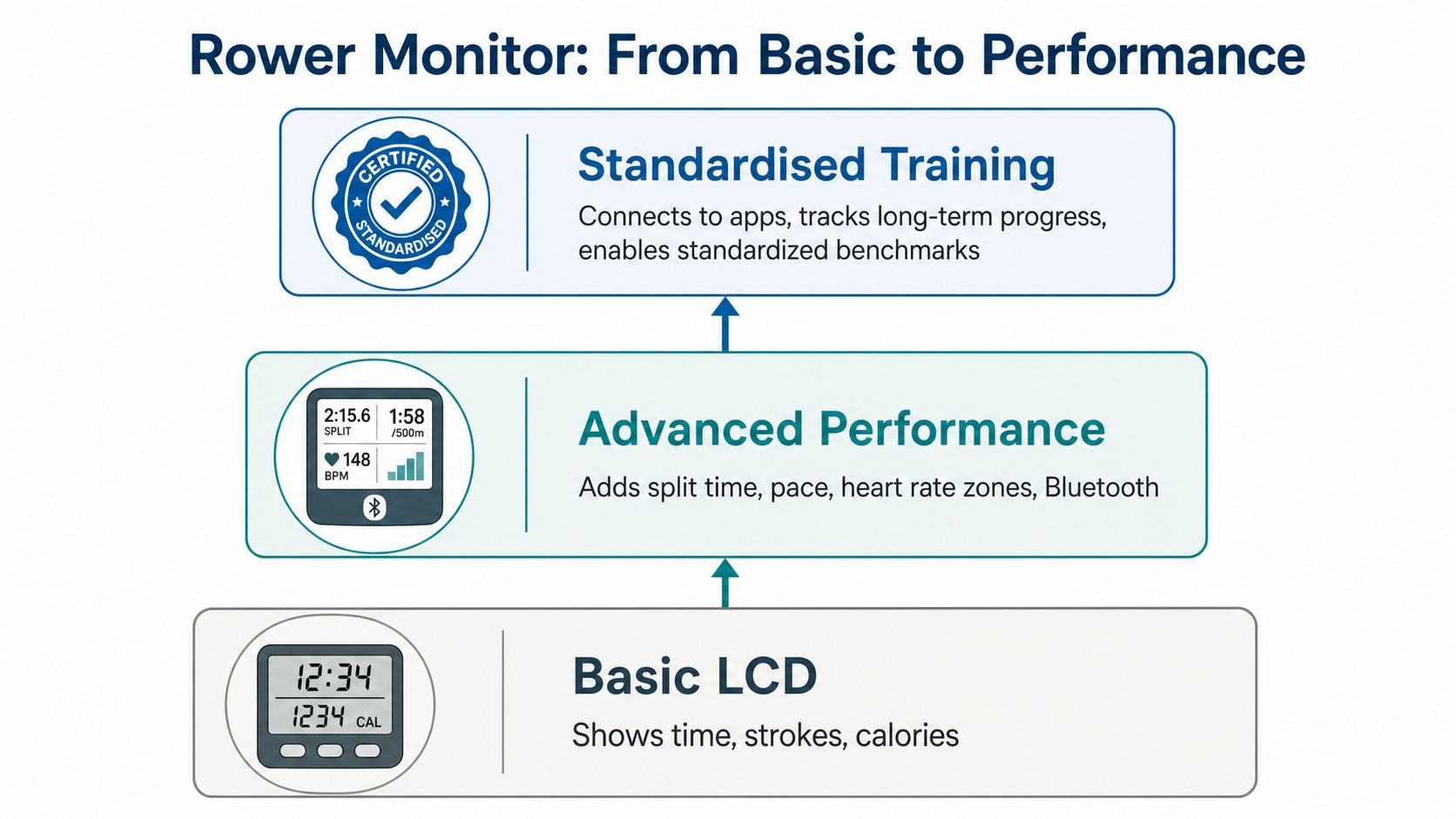
Basic LCD displays usually show time, distance, strokes, and a calorie estimate. That's enough for casual movement, but not enough for serious training. What matters more are split pace, stroke rate, and a readout that stays consistent from session to session.
The industry-standard example is the Concept2 RowErg. It's repeatedly used as the benchmark in home-rower reviews because it prioritises standardised performance tracking, not flashy hardware (Men's Health UK). That makes it useful for people who want repeatable data instead of a one-off workout summary.
Heart-rate compatibility is more useful than a prettier screen
If you train by effort, heart-rate compatibility matters. So does a clean display of stroke data, because it lets you see whether you're holding the same pace or just thinking you are. Buyer guides that focus on quality rowers keep coming back to this point for a reason, because a better monitor changes how you train, not just how the machine looks.
If your goal is structured conditioning, a machine that syncs well with apps and shows stable workout data is worth more than a bigger screen with gimmicks. If your goal is casual cardio, you can get away with less.
The heart rate training zones guide is useful here if you want to use monitor data more intelligently. Once you know what your heart rate is doing, the rower becomes a lot more than a calorie counter.
What to read first on any product page
- Split pace: this is the number that tells you how hard the work really is.
- Stroke rate: this helps you separate steady work from frantic pulling.
- Heart-rate compatibility: needed if you train by zones.
- Long-term readability: the monitor should be easy to read when you're tired.
The best monitor isn't the prettiest one, it's the one that tells the truth every session.
That's why a standardised readout matters more than brand gloss. If you want to compare one week to the next, or one model to the reference machine, the monitor has to make that comparison possible.
Price Tiers and Where the Extra Spend Helps
A lot of people overpay for the wrong things. They buy a screen, a subscription platform, or a glossy frame, then discover the row feels no better than a cheaper machine underneath it. The useful question is not “what's the most expensive rower I can afford?” It's “what upgrade will I still care about six months from now?”
| Tier | Typical Price Range | What You Get | Best For |
|---|---|---|---|
| Entry-level | Lower-cost budget options | Basic resistance, simpler monitor, lighter frame | Occasional use, tight budgets |
| Mid-range | Moderate spend | Better build, quieter operation, more useful metrics | Regular home users |
| Premium | Highest spend | Strong frame, standardised data, stronger monitor experience, sometimes connected classes | Serious training and long-term use |
Pay for structure, not spectacle
The upgrade at the mid and premium levels is the frame, the monitor, the resistance feel, and the confidence that the machine will stay planted instead of wobbling, creaking, or feeling sloppy after regular use. That is where extra money makes sense. If you row often, you feel those differences every session.
Consumer reviews still keep the Concept2 RowErg at the top of shortlists because the design has stayed the reference point for serious indoor rowing, not because it is the newest looking machine on the shelf. That longevity matters. It tells you the category's benchmark is built around repeatable performance, not novelty.
Subscriptions do not fix a weak machine
Connected classes can help habit formation, but they do not improve a bad stroke. If the rail, monitor, or resistance feel is poor, a library of workouts will not rescue the experience. Buy the machine first, then decide whether software is worth paying for.
The same logic applies to warranties and build quality. A longer warranty matters because it usually reflects confidence in the frame and the moving parts. A shiny subscription feature only matters if you plan to use it often.
If you are choosing between two models and one has a better monitor, sturdier rail, and clearer training data, that is usually the smarter spend. If the difference is mostly software branding, save your money.
Maintenance, Durability, and the Quiet Costs of Ownership
The price tag is only the start. A rowing machine sits on your floor and gets used with real force, so the ownership experience includes maintenance, storage friction, and the eventual wear of moving parts. Ignore that and you'll buy the wrong machine for how you live.
Each resistance type ages differently
Air rowers usually need the simplest routine care, but they still have moving parts that benefit from occasional attention. Water rowers bring tank upkeep into the picture, and that's an extra task most buyers only remember after the machine arrives. Magnetic rowers are the easiest in day-to-day upkeep because the resistance system has less contact wear. Hydraulic rowers stay compact, but the cylinders and seals are the part I'd watch most closely over time.
Durability matters just as much as maintenance. A frame that feels fine in week one can become annoying if it flexes, rattles, or starts to feel sloppy under regular use. That's one reason premium machines earn their place, they usually buy you a calmer ownership experience, not just a better workout.
Think in usage, not just purchase
A rower used several times a week needs to feel stable, predictable, and easy to live with. If it requires constant moving, fiddling, or cleaning, the hidden cost is your own willingness to use it. That's especially true in homes where the machine has to share space with work, family life, or limited storage.
Ownership rule: the quietest machine to live with is often the one that gets used the most.
That's why entry-level buyers should be careful. Cheap machines can make sense for occasional use, but they're the first place where durability compromises show up. Mid-range is often the sweet spot for most homes. Premium is for people who already know they'll row a lot and want the machine to disappear into routine.
If you want a rower that won't demand much attention, magnetic tends to be the cleanest fit. If you want the strongest performance reference, you pay for the benchmark frame and monitor. The extra spend only helps when it reduces friction, not when it buys more marketing.
When a Rower Is Not the Answer and a Low-Impact Alternative Fits Better
Some homes just aren't rower homes. If you can't tolerate the seat movement, if the noise will bother people in the next room, or if your body doesn't like the stroke, forcing a rower into the role is a bad plan. Real cardio is the goal, not loyalty to one type of machine.
Joint sensitivity changes the purchase decision
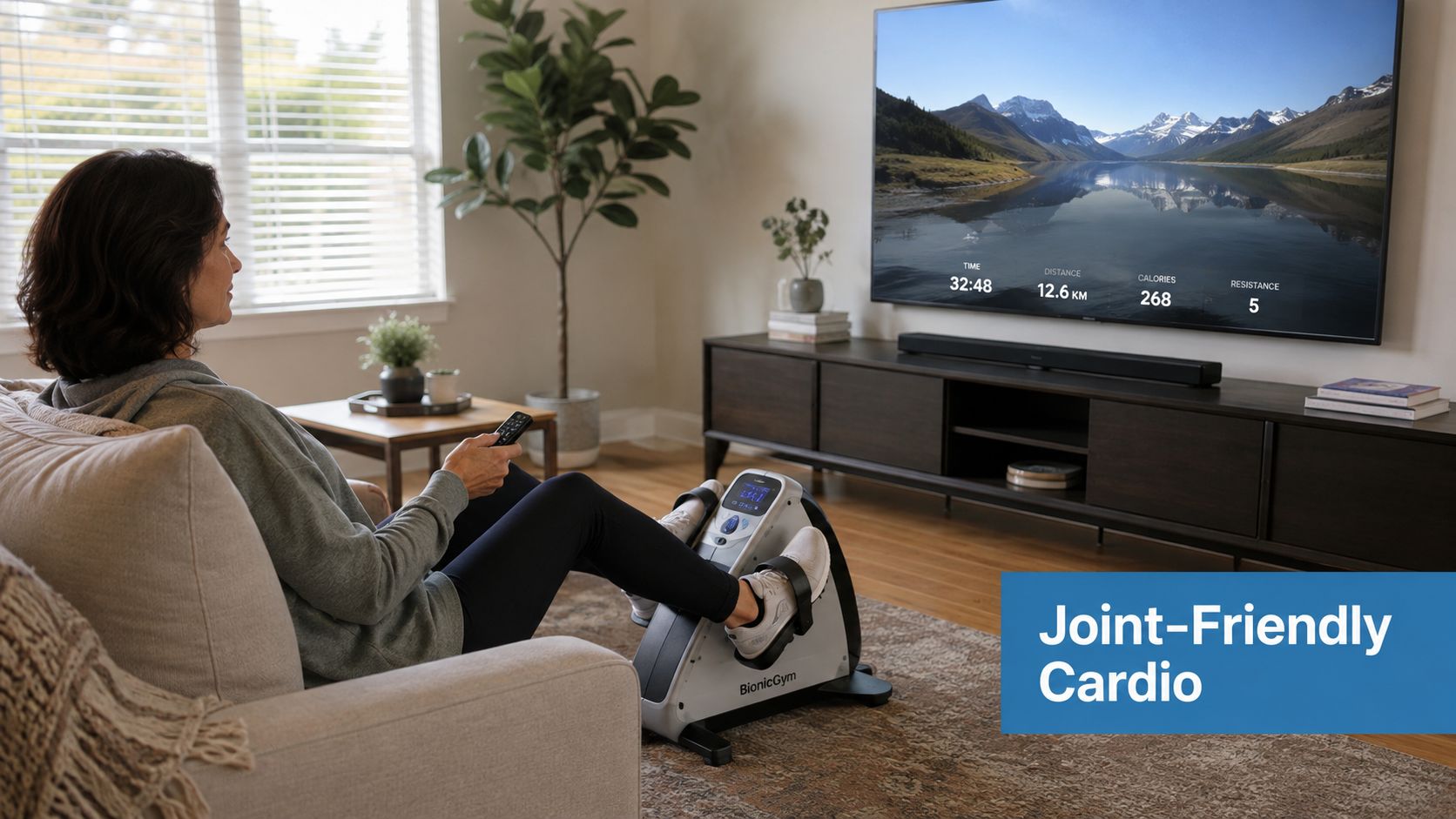
Rowing is low impact, but it still involves flexion, extension, and repeated loading through the stroke. That's fine for many people, and wrong for others. If you're dealing with a serious medical condition or injury, consult your medical practitioner before starting any new exercise programme. BionicGym is a great way to exercise. It is not a medical treatment. Consult your doctor if you have a serious condition.
For some readers, a better fit is a no-impact cardio option that still produces a measurable heart-rate response and real calorie burn. That's the standard I'd use: if it can't move your heart rate, doesn't fit into normal daily life, and doesn't respect joint limitations, it's not solving the problem.
Multitasking matters more than machine romance
A lot of people don't need a rowing “experience”. They need a way to get real exercise while sitting, working, or recovering. That's why some users look at EMS-based systems as an alternative when they want serious cardio without loading the joints. If that sounds like your situation, the alternative cardio guide gives a useful frame for comparing low-impact options.
The key is honesty. If you're desk-bound, post-injury, or just trying to keep momentum on days when a full workout won't happen, the best tool is the one you'll use consistently. A machine that lets you train while you're already in the chair can beat a rower that stays folded in the corner.
The video below is a useful reminder that not all cardio needs the same setup.
Choose cardio that survives real life
The right fallback is the one that fits the day you live, not the one you imagine on a perfect Monday. If a rower is too loud, too bulky, or too joint-demanding, pick a lower-friction alternative and move on. Cardio that gets done beats cardio that gets admired.
Matching the Rower to the Person Who Will Use It
Pick the rower for the person, not for the spec sheet. The right machine changes with the user, whether that means a beginner who needs simplicity, an apartment owner who needs quiet storage, an athlete who wants a known benchmark, or someone whose joints need less punishment.
Beginner
Choose a forgiving rower with a clear monitor and a stroke that feels easy to learn. Beginners need repeatability more than excitement, so a machine that sets up quickly and behaves the same way every session is the smart choice. If the first ten workouts feel straightforward, the rower is doing its job.
Small apartment user
Choose quiet resistance, compact storage, and a machine you can move without resenting it. Magnetic or hydraulic resistance makes the most sense here, and foldability or vertical storage should be treated as part of the purchase, not a nice extra. If the rower cannot disappear when you need floor space, it is the wrong fit.
High-performance athlete
Use the Concept2 RowErg benchmark. It remains the standard reference point for serious indoor rowing, with air resistance, a PM5 performance monitor, a 500 lb / 227 kg weight capacity, and a split-frame design for storage (Men's Health UK). If you care about consistent data and training against a known standard, that is the one to beat.
Joint-limited user
Skip the rower if the stroke does not suit your body or if the moving seat and pulling pattern clash with your recovery. A lower-impact alternative is the better call when you need cardio without aggravating the joints. For older adults or people returning to exercise, see our guide to exercise for older adults. The best machine is the one that lets you train without making symptoms worse.
Decision rule: if the machine does not fit the room, the noise level, or your body, it is not the best home rowing machine for you.
Use the constraint-first filter from the top of this guide and ignore the hype. If rowing is not the right fit, choose a low-impact cardio tool that still gives you real training, not just a polished screen.
If a rower is too loud, too bulky, or too hard on your joints, BionicGym is worth a serious look because it is built for real exercise without the usual setup friction. It gives you a way to train at home, stay consistent, and keep the cardio work practical on days when a rower is a bad fit. Visit BionicGym and see whether a no-impact cardio approach fits your routine better.