

8 Ways to Lose Weight Without Exercise in 2026
The most popular advice around fat loss still acts like the gym is the answer to everything. It isn't. The historical evidence is much clearer than the culture around it, when people deliberately try to lose weight, exercise alone usually produces only minimal loss, and the bigger lever is still energy intake (review in The American Journal of Clinical Nutrition). That doesn't mean movement is useless. It means the smartest path for many desk-bound adults is to build a system that reduces calories, protects muscle, improves sleep, lowers stress, and, when helpful, uses joint-friendly exercise on autopilot.
That's also why the phrase lose weight without exercise needs some nuance. You can absolutely lose body weight without formal workouts, but the results come mostly from a sustained calorie deficit, not from wishful thinking. Controlled research has shown diet-only loss can be substantial, while exercise-only loss is usually smaller, and adding exercise to a carefully matched calorie plan doesn't always change the outcome much (diet-only, exercise-only, and combined results). So if your goal is progress without spending hours in a gym, the winning move is a realistic, repeatable routine, not a punishment plan.
For people with long workdays, shifting priorities matters more than chasing perfection. That's where a device like BionicGym, an FDA-cleared wearable cardio system developed by a medical doctor, fits naturally into a broader plan. It's not a medical treatment, and it doesn't replace food choices, but it can provide vigorous exercise, raise heart rate, and help busy people create more total daily burn while they sit, work, or recover. Used well, it becomes one tool inside a practical system, not the whole system.
1. Caloric Deficit Through Dietary Adjustment
Weight loss begins with a basic energy rule, you need to eat less than you burn. For desk-bound adults, that is the most dependable way to lose weight without exercise, because diet usually controls the largest share of daily energy intake. A moderate calorie deficit can drive steady progress, and some people do well when they keep the gap in a realistic range rather than trying to force rapid change.
Make the deficit visible, not vague
Many people overeat because portions are larger than they seem, snacks happen without much thought, or convenience foods are more calorie dense than they look. Short-term tracking turns guesswork into something you can adjust. A professional who compares a high-calorie day with a more controlled one can usually find a few clear changes, smaller portions, better meal timing, and fewer defaults that add calories without much fullness.
Practical rule: Do not cut hard at the start. Reduce the calories you will not miss, then keep the new intake steady long enough for your body to settle into it.
Protein helps because it supports satiety and helps preserve lean tissue while calories come down. Meal prep matters for the same reason, because the biggest diet slips often happen when work runs late and dinner becomes whatever is quickest. A balanced meal guide for sustainable weight loss can help you shape meals that are filling without being excessive, while the calorie-deficit guide from BionicGym shows how diet and exercise can fit into one plan instead of competing with each other.
- Track for a short period: See what you eat before deciding what to cut.
- Trim the easiest excess first: Liquid calories, oversized snacks, and large late-night portions are common sources of surplus.
- Build meals around protein and whole foods: They usually keep you fuller longer than ultra-processed foods.
- Use meal prep as a guardrail: It reduces impulsive ordering when work gets busy.
A person who keeps the deficit consistent can lose weight without formal workouts. For time-poor professionals, that still leaves room for a tool like BionicGym, which can add activity while you sit, work, or recover, so the calorie gap is easier to maintain without relying on long gym sessions.
2. Intermittent Fasting and Time-Restricted Eating
Intermittent fasting works because it structures eating, not because it performs magic. For many people, a 16:8 schedule or a gentler 14:10 pattern reduces decision fatigue and makes a calorie deficit easier to maintain. The point isn't to starve yourself, it's to create fewer opportunities to snack mindlessly.
A remote worker who stops eating from dawn to bedtime and instead narrows food into a predictable window often finds the day simpler. Fewer eating decisions means fewer chances to drift into extra calories. That's especially useful for people who keep a laptop open all day and graze while answering emails.
Use fasting as a structure, not a test
Fasting works best when it stays flexible. If energy crashes, concentration drops, or you become so hungry that you overeat later, the window is too strict. Start with a schedule you can follow on ordinary workdays, then tighten it only if it feels manageable.
Hydration matters during fasting hours. Water, black coffee, and tea are common choices because they help people stay comfortable until the next meal. For some desk-bound adults, a calm morning routine and a clear eating window reduce the friction that usually leads to random snacking.
BionicGym can fit into this pattern because it lets users add exercise without turning the day upside down. For time-poor professionals, that makes it easier to keep the deficit intact while still getting cardiovascular work done. It's also where the phrase sugar-hungry form of exercise makes sense, because the device is designed to support active calorie burn without requiring a trip to the gym.
Consistency beats intensity here. A fasting pattern that feels ordinary after two weeks is more useful than a stricter one you abandon by Friday.
A busy professional can use fasting to simplify food choices, then rely on a tool like BionicGym for added movement later in the day. That combination is practical because it respects real schedules instead of pretending every day can be a perfect fitness day.
3. Mindful Eating and Behavioral Change
Mindful eating sounds gentle, but it can cut calories in a practical way without making meals feel punitive. The reason is straightforward, many people overeat because they are distracted, stressed, or eating too quickly, not because they are truly hungry. Slowing down, sitting at a table, and paying attention to hunger and fullness makes intake easier to control.
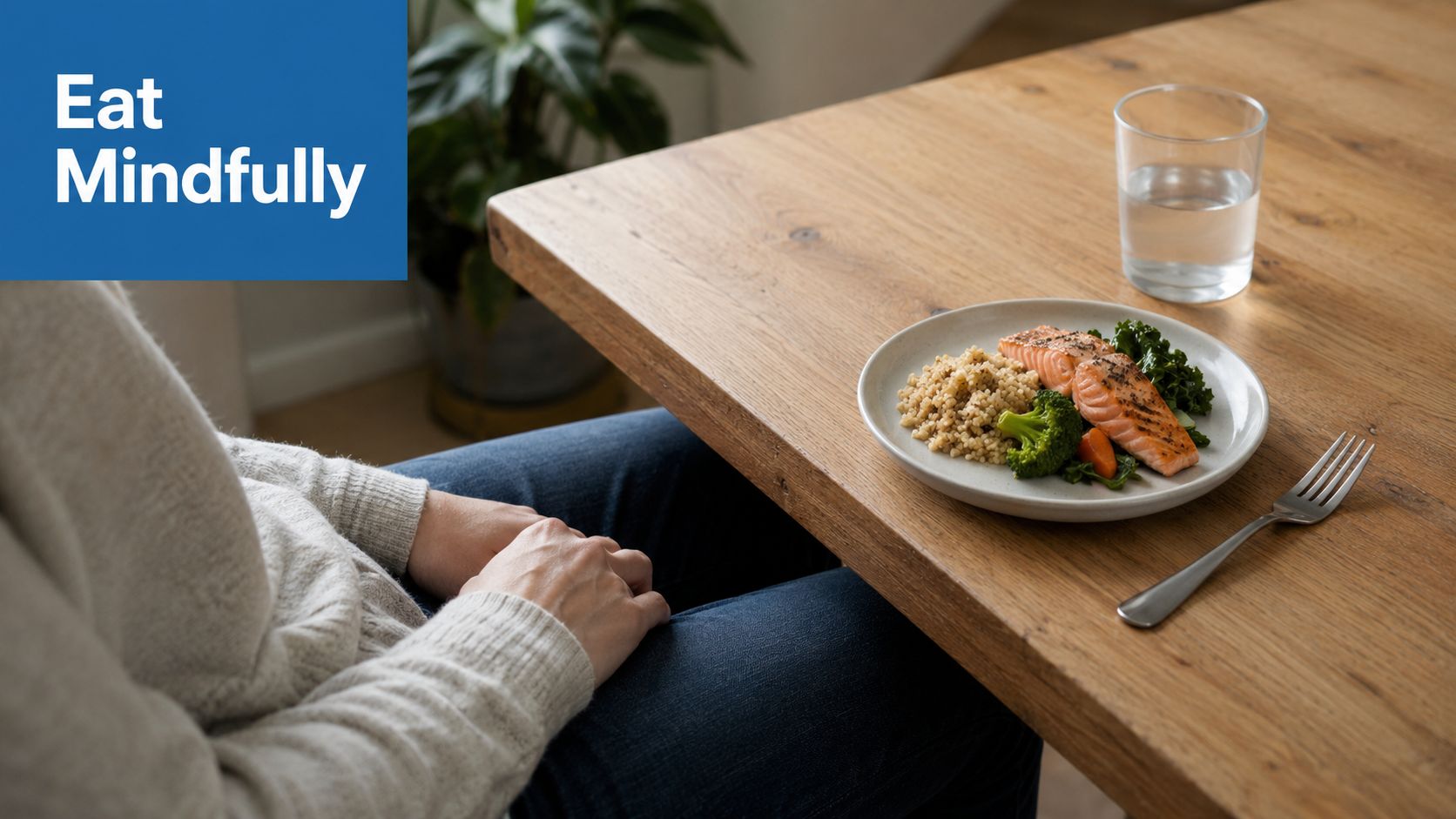
A remote worker who stops eating at the desk often finds that lunch feels more satisfying and the afternoon snack habit fades. The same pattern shows up with gamers who pause between sessions instead of eating continuously. The problem is usually the setup around food, not a lack of discipline.
Change the eating environment before you try to change appetite
Screens drive automatic eating. A table slows the pace. Putting the fork down between bites gives satiety time to register, and that small delay can prevent the next few bites from becoming extra calories.
The point is not to make meals ceremonial. The point is to make them noticeable.
BionicGym fits here for people who like to stay productive while avoiding long periods of idle snacking. A person can sit, answer emails, do light chores, or watch TV while still getting movement, which gives the hands and mind something other than food to focus on. That does not replace eating awareness, but it supports it by reducing boredom-driven grazing.
- Eat without screens: This reduces automatic overeating.
- Use smaller plates: They help portions look more complete.
- Notice triggers: Stress, boredom, and social eating each call for a different response.
- Pause before snacks: A short delay can show whether you are hungry or just reacting to the moment.
Midday eating becomes more deliberate when it stops running on autopilot. The payoff is not only fewer calories, but also a calmer relationship with food. That matters because any plan for lose weight without exercise has to work during ordinary workdays, not just on carefully controlled ones.
For time-poor professionals, the strongest approach is usually the one that fits real life. Mindful eating, paired with practical tools and habits, is easier to sustain than a strict plan that collapses the first time the day gets messy.
4. Hydration and Water Intake Optimisation
Water will not burn fat on its own, but it can make fat loss easier to stick to. Thirst is often mistaken for hunger, and that mix-up leads people to snack when a drink would have been enough. Drinking before meals can also support fullness, which makes hydration one of the simplest habits to keep in place during a busy day.
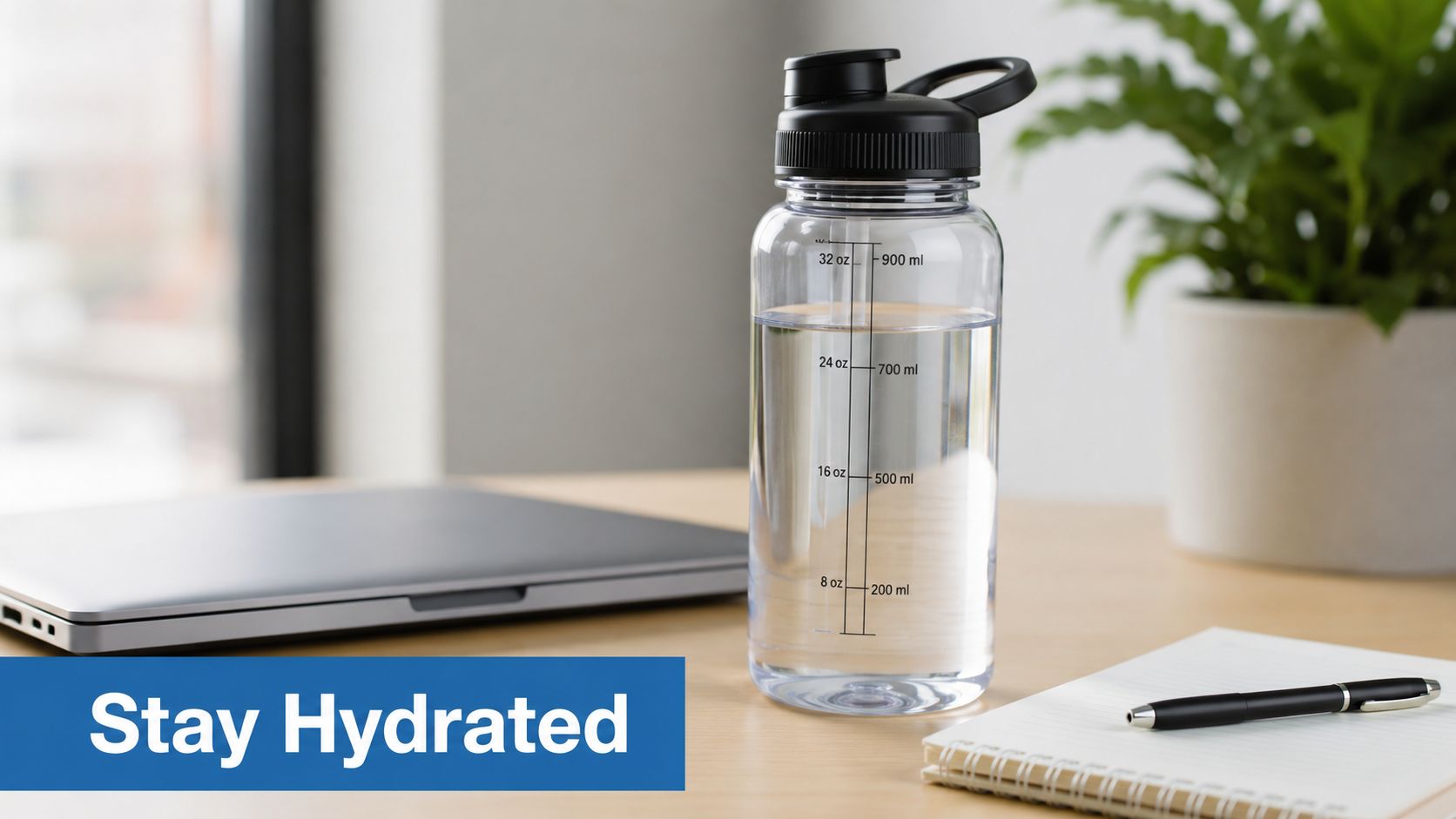
For office workers, a visible bottle on the desk works as a quiet cue. The goal is not a complicated protocol. The goal is repeated access, easy refills, and a habit that happens before the late-morning snack urge takes over.
A practical pattern is to drink after waking, before lunch, and again in the afternoon when energy dips. That timing supports satiety and can also keep people from reaching for calories when they are really tired or mildly dehydrated. It is a small shift, but small shifts matter when they happen every day.
A bottle on the desk helps, but the workday still sets the rhythm. Some people need a reminder at their screen, others do better with a bottle they refill whenever they stand up. For time-poor professionals, that kind of simple structure often matters more than perfect timing.
BionicGym fits this part of the plan in a practical way. Because it can produce vigorous activity while the user remains seated or does light tasks, hydration becomes part of the movement routine rather than something added only after the fact. The BionicGym metabolism guide gives useful context on how routine habits and movement work together.
- Drink on waking: It helps restore hydration after sleep.
- Use a marked bottle: Visual feedback makes the habit easier to keep.
- Sip before meals: It can help reduce overeating.
- Keep water within reach: Convenience matters more than intention.
Office workers who stay better hydrated often snack less and feel steadier through long meetings. That makes a real difference for people trying to lose weight without exercise, especially when paired with calorie control and better sleep. For evening wind-down routines, the psychiatrist-approved insomnia tips can also support the wider plan by making it easier to rest well and make cleaner food choices the next day.
5. Sleep Quality and Duration Optimisation
Sleep changes weight control in ways that are easy to miss. Poor sleep tends to raise cravings, weaken appetite control, and leave people too tired to make sensible food choices the next day. A plan that looks solid on paper becomes harder to follow when sleep is short or fragmented.
A lot of late-night eating has little to do with true hunger. Fatigue and reduced self-control after a long day often drive it instead. For a professional who is already stretched thin, an extra hour or two of proper sleep can improve progress without changing the rest of the plan very much. The body stops behaving as if it is under constant pressure.
Protect sleep like it belongs in the plan
Keep bedtime and wake time steady. Lower bright light in the evening. Stop caffeine early enough that it does not interfere with sleep onset. These are plain interventions, but they are dependable, and they work better than trying to force discipline the next day.
That matters alongside BionicGym use too. A user who trains too late may feel too activated at bedtime, so earlier sessions usually make more sense. The fatigue-management strategies page gives useful context for balancing activity with recovery, especially for people who need their routine to fit around work and family demands.
Better sleep does more than support recovery, it also makes food choices less impulsive the next day.
For some people, the simplest fix is also the most effective, go to bed earlier and make the bedroom quieter, darker, and cooler. For others, the problem is the after-hours scrolling that keeps the brain switched on. In those cases, cutting screen time before bed often helps more than trying to force relaxation. Sleep is a lever, not a luxury.
The trade-off is straightforward. Better sleep does not erase the need for calorie control, but it does make that control easier to maintain. When sleep improves, late-night grazing usually drops, adherence becomes easier, and the next day feels more manageable. For people who need practical support with insomnia, the psychiatrist-approved insomnia tips can fit into the same routine. That kind of recovery support also makes it easier to stick with a realistic path to lose weight without exercise over time.
6. Low-Carb and Ketogenic Diet Protocols
Low-carb eating works for many people because it lowers appetite and makes it easier to stay in a calorie deficit. Ketogenic approaches go a step further by keeping carbohydrate intake very low, which can simplify meal choices and reduce decision fatigue. The point is not food purity, it is easier appetite control and a plan that people can sustain.
That is part of why some desk-bound professionals do well with this pattern. They often feel less pulled toward snack foods during the workday, and meetings become easier to get through when food noise is lower. The trade-off is real, adaptation takes time, and some people feel flat, irritable, or less mentally sharp at the start.
Match the diet to the person, not the trend
Low-carb is not automatically the right answer for everyone. If it makes social eating difficult or leads to rebound overeating, it stops helping. The better version is the one that supports a steady deficit without turning every meal into a stress point.
BionicGym fits into that kind of plan because it can add movement while the user stays with a lower-carb pattern. For time-poor professionals, that matters. It gives them another way to support energy expenditure without asking for a traditional workout block, and it fits more naturally beside diet, sleep, and stress management than a rigid fitness routine often does.
For readers who want a practical explanation of how lower-carb eating and the device are positioned together, the BionicGym keto guide is a useful reference. If you want to keep the food side simple as well, the high satiety protein food guide pairs well with this approach.
A low-carb plan also works best when the basics are handled clearly. Meat, fish, eggs, vegetables, nuts, and healthy fats are easier to build around than mixed meals full of hidden starches. Sauces, drinks, and packaged snacks can add carbohydrates without notice, so reading labels matters more than people expect.
The adjustment phase should be expected. Early fatigue does not always mean the plan is failing, it often reflects a temporary shift as the body adapts to a different fuel pattern. That said, if the diet becomes socially isolating or mentally draining, it needs to be adjusted rather than defended.
People often want low-carb to behave like a shortcut. It is more useful as a structure that can reduce appetite and make the calorie deficit easier to hold across the week. For someone trying to lose weight without exercise, that structure can be enough to change daily eating patterns in a meaningful way.
7. Protein-Centric Eating and Muscle Preservation
Fast weight loss often strips away more than body fat if protein intake is too low. Muscle supports strength, day-to-day function, and metabolic health, so a weight-loss plan needs enough protein to protect lean tissue, especially when exercise is limited or inconsistent.
That concern matters even more for people using GLP-1 medications such as Ozempic, Wegovy, or Mounjaro. Appetite can fall quickly, and without a deliberate plan, food intake may drop far enough to increase the risk of muscle loss. The medication is not the problem. The problem is losing weight without a protein strategy that protects lean mass.
If you want a practical food-first reference, the high satiety protein food guide is a useful place to start. For readers managing appetite suppression on GLP-1s, the GLP-1 muscle-preservation guide explains how to keep lean tissue in focus while the scale moves down.
Build meals around protein first, not as an afterthought
A breakfast built around eggs, Greek yoghurt, or another high-protein option usually holds hunger better than pastry or cereal. The same pattern shows up at lunch and dinner. Lean meat, fish, legumes, or dairy can make the whole day easier to manage because they reduce the need to chase cravings later. When hunger stays steadier, snacking usually becomes more controlled as well.
Protein also changes the way the plan feels. People often expect weight loss to mean constant restraint, but a protein-centred menu can make eating feel more stable and less reactive. That matters for time-poor professionals who need a plan that fits around meetings, travel, family life, and long workdays. A simple routine works better than a perfect one that collapses by Thursday.
BionicGym fits into this picture because it adds exercise stimulus without requiring a traditional gym block, which can help support muscle retention while calories are lower. For someone already reducing food intake, that creates a more balanced setup. Protein supports the building blocks, and the device adds a practical way to keep some muscle activity in the plan even when time is tight.
Practical rule: Do not let the scale be the only target. Preserving muscle makes weight loss more useful, more sustainable, and easier to live with.
- Anchor each meal with protein: It helps reduce hunger later.
- Avoid long protein gaps: Extended stretches without it can make adherence harder.
- Use snacks with purpose: Choose options that support fullness, not just convenience.
- Keep some form of exercise in the plan: Even light or joint-friendly activity supports body composition.
A protein-centred approach is one of the most reliable ways to lose weight without exercise while still feeling physically capable. The goal is not only a lower number on the scale. It is a body that still functions well after the weight comes off, with enough muscle preserved to support energy, mobility, and day-to-day resilience.
8. Stress Management and Cortisol Regulation
Stress does not stop fat loss by itself, but it can make the process noisier and less predictable. Appetite tends to rise, sleep often gets worse, and convenience eating becomes more tempting when pressure stays high. A steadier routine matters more than adding another strict rule that falls apart under real-world demands.
For high-performers, the pressure is usually built into the day. Back-to-back meetings, long gaming sessions, and constant notifications can turn eating into a coping tool rather than a planned choice. The practical response is not to remove stress from life. It is to create small buffers that keep stress from driving food decisions.
A short breathing break before lunch can change the tone of the rest of the day. Time outdoors, meditation, and social connection help too, but convenience matters if the schedule is packed. BionicGym fits that reality because it can provide vigorous exercise without requiring a separate gym block, so a desk-bound professional can keep working or unwind at home while still adding a meaningful activity signal to the day.
That matters because the workout can act as a reset instead of another task to postpone. A brief midday session may reduce the urge to raid the kitchen later, especially when the evening is already busy or emotionally flat. For some users, the benefit is less about the calories burned and more about changing the pattern that leads to stress eating.
- Use short breathing breaks: They can reduce impulsive snacking.
- Protect one offline block each day: Constant input keeps stress high.
- Keep exercise easy to start: The fewer steps required, the more likely it gets done.
- Do not wait for low-stress weeks: They usually do not appear on their own.
A realistic stress plan does not have to be polished. It only has to lower the odds that tension turns into overeating and poor sleep. That is why BionicGym can fit naturally into a modern weight-loss routine, especially for people who want multitasking fitness instead of a separate gym appointment.
8-Point Comparison: Weight Loss Without Exercise
| Strategy | Implementation Complexity 🔄 | Resource Requirements ⚡ | Expected Outcomes 📊 ⭐ | Ideal Use Cases 💡 | Key Advantages ⭐ |
|---|---|---|---|---|---|
| Caloric Deficit Through Dietary Adjustment | Moderate 🔄, consistent planning & tracking required | Low ⚡, time for meal prep/tracking; no equipment | High 📊, primary driver (≈70–80%); measurable when adhered ⭐⭐⭐⭐ | Anyone seeking sustained fat loss; pairs with exercise | Most controllable variable; immediate measurable results |
| Intermittent Fasting & Time-Restricted Eating | Moderate 🔄, schedule adherence; adaptation period | Low ⚡, timing discipline; no special foods | Moderate–High 📊, reduces intake, improves insulin sensitivity ⭐⭐⭐ | Those preferring fewer meals, biohackers, BionicGym users | Simplifies decisions; promotes metabolic switching and fat oxidation |
| Mindful Eating & Behavioral Change | Moderate–High 🔄, requires practice (8–12 weeks) | Low ⚡, time/attention; may need coaching | Moderate 📊, gradual, sustainable intake reduction ⭐⭐ | Habitual/emotional eaters; desk workers/gamers who eat mindlessly | No food bans; reduces mindless snacking and improves satisfaction |
| Hydration & Water Intake Optimization | Low 🔄, simple habit formation (2–4 weeks) | Very Low ⚡, water, bottle, reminders; electrolytes if needed | Small–Moderate 📊, increased satiety, modest metabolic boost ⭐⭐ | Everyone; especially sedentary workers/gamers and exercisers | Cheap, immediate, supports satiety and exercise performance |
| Sleep Quality & Duration Optimization | Moderate 🔄, routine + environment changes needed | Low ⚡, behavioral changes; optional sleep aids/tech | Moderate–High 📊, better hormone balance, recovery, appetite control ⭐⭐⭐ | Poor sleepers; those combining diet with vigorous exercise | Passive systemic benefits; improves recovery and reduces cravings |
| Low‑Carb & Ketogenic Diet Protocols | High 🔄, strict tracking and metabolic adaptation (keto flu) | Moderate ⚡, planning, higher food cost, electrolytes | High 📊, rapid initial losses; improved insulin sensitivity ⭐⭐⭐⭐ | Committed individuals, biohackers, metabolic condition patients | Strong appetite suppression; enhances fat oxidation with exercise |
| Protein‑Centric Eating & Muscle Preservation | Moderate 🔄, meal planning and distribution required | Moderate ⚡, higher food cost; protein sources/supplements | High 📊, preserves lean mass and metabolic rate during deficit ⭐⭐⭐⭐ | GLP‑1 users, those prioritizing muscle retention or body composition | Increases satiety/TEF; critical for preserving muscle during weight loss |
| Stress Management & Cortisol Regulation | Moderate 🔄, consistent practices (meditation, breathwork) | Low ⚡, time, apps, possible therapy | Moderate 📊, reduces stress-driven eating and visceral fat ⭐⭐ | High‑stress professionals, emotional eaters; complements exercise | Improves mental health, adherence, and reduces cortisol-related fat storage |
Your Blueprint for Effortless, Sustainable Results
Losing weight without conventional exercise isn't about finding a loophole. It's about building a system that matches real life, especially if you're desk-bound, time-poor, or dealing with a schedule that leaves no room for traditional workouts. The strongest evidence still points to the same core idea, a sustained calorie deficit matters most, and that deficit usually comes from food choices first (clinical review, diet-led loss remains substantial).
The best results usually come from combining a few changes instead of leaning on one dramatic fix. A more controlled diet, a calmer eating pattern, better sleep, lower stress, and a clearer hydration routine can work together in a way that feels manageable. When that base is in place, tools that add convenient movement can help. BionicGym is one example because it offers FDA-cleared, joint-friendly, app-guided exercise that can fit into normal life rather than sitting outside it.
That's the shift in 2026. Not chasing extreme effort, but creating conditions where the right choices happen more often. If you're serious about making progress, start with one or two changes you can hold for a month, then build from there. If you want help estimating how diet and added exercise might fit your own timeline, the BionicGym Weight Loss Calculator can give you a clearer picture than guesswork ever will.
BionicGym gives you a way to add vigorous exercise without needing a gym slot in your calendar. If you want a practical support tool for a diet-first weight-loss plan, take a look at BionicGym and see how it fits into your day.