

How to Lose 5kg Safely and Keep It Off
Many individuals want to lose 5kg fast, then act surprised when the weight boomerangs back the moment real life shows up. That's because they're chasing a fantasy, not a fat-loss plan. If you want the honest answer on how to lose 5kg, stop thinking in terms of punishment and start thinking in terms of a repeatable deficit, better food choices, and enough movement to keep the result.
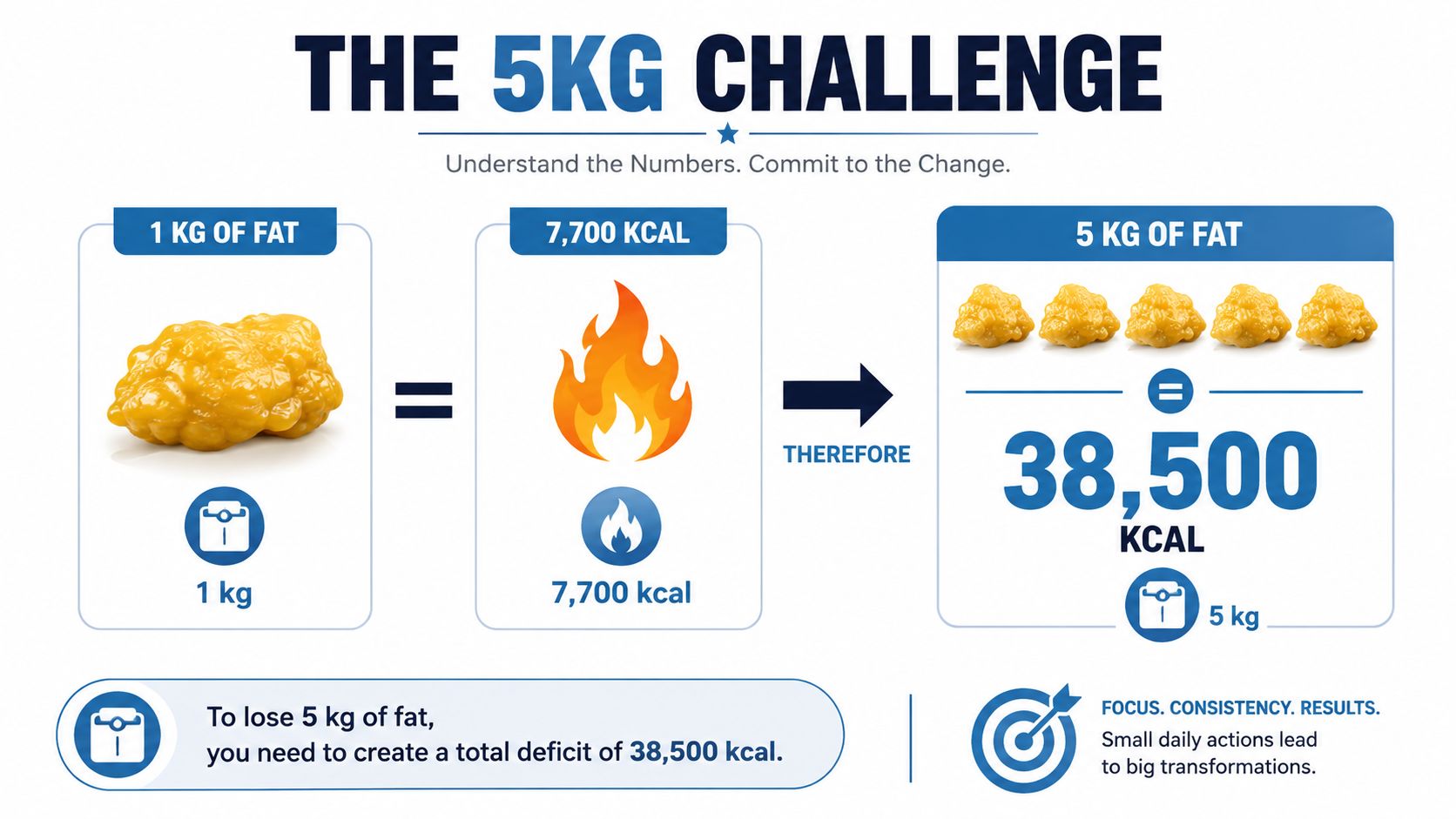
The maths is blunt. 1 kg of body fat stores about 7,700 kcal, so 5 kg of true fat loss needs a cumulative deficit of about 38,500 kcal (Paramount Health). That's why a 500 kcal/day deficit takes roughly 77 days, or about 11 weeks, not a long weekend. If someone promises a clean 5kg drop in a week, they're usually talking about water, glycogen, and gut contents, not fat, and that's why the rebound feels so irritating.
Why 5kg Is Harder Than It Sounds
The first mistake is treating 5kg like a small target. If you mean actual fat loss, it is a serious amount of work. 5 kg of body fat requires a total deficit of 38,500 kcal, using the common estimate that 1 kg stores about 7,700 kcal (An infographic showing that 5kg of fat equals a 38,500 kcal deficit to lose weight.).
That number matters because it strips away the crash-diet fantasy. Short-term scale drops are often driven by water, glycogen, and less food sitting in the gut, not by meaningful fat loss, so the weight can come back fast when normal eating returns (Alibaba Wellness). The scale moves. Your body fat may barely budge.
The timeline most people need
A 500 kcal/day deficit gets you there in about 77 days, which is roughly 11 weeks (Paramount Health). A 1,000 kcal/day deficit shortens that to about 38 days, or 5 to 6 weeks, but that pace is aggressive and much harder to keep up safely (WeightConsult).
Practical rule: if your plan sounds exciting for seven days but miserable for seven weeks, it is a bad plan.
That is why so many sensible guides land near 0.5 kg per week, which puts 5 kg at about 10 weeks instead of a month (WeightConsult). If you can accept that, you are already ahead of people chasing a shortcut.
For the broader energy math, see the BionicGym note on calories in a pound of fat, then keep one point in mind. You are not trying to win a sprint. You are trying to hold a deficit long enough for fat loss to happen.
Calculating Your Realistic Deficit and Timeline
Start with your maintenance intake, also called TDEE. If you do not know it, use a calculator, then compare the result with your body size and activity level instead of treating the first number as gospel. A rough check is bodyweight multiplied by about 30 to 33 kcal, which is usually close enough to tell you whether the calculator is way off. The BionicGym basal metabolic rate calculator is a useful place to start because it puts your planning on actual maintenance calories instead of guesswork.
Then subtract a deficit you can keep living with. 300 to 500 kcal/day is the range that works for weeks without turning every meal into a battle. That is the difference between a plan and a short-lived punishment routine.
Take a sedentary 80 kg office worker with a TDEE around 2,200 kcal. A 500 kcal/day deficit brings intake to about 1,700 kcal, and that lines up with roughly 10 to 11 weeks for 5 kg loss using the energy math above (eKcal). That is a realistic cut. Anything faster demands a lot more discipline and usually produces more frustration than progress.
Track weeks, not days
Daily scale changes are noisy. Water, sodium, poor sleep, and last night's meal can hide progress for a couple of days. Weekly averages are the cleanest way to see what is happening, and they stop you from overreacting to one bad reading.
If the weekly average is drifting down, keep going. If it is not, do not slash calories blindly, check the log first.
That is also why the Basal Metabolic Rate calculator can help as a planning tool, because it gets you thinking in maintenance calories instead of vibes. Pair that with a realistic deadline and a weekly weigh-in habit, and you get a plan that survives ordinary life.
The same logic applies if you want outside support. A service like Integrative Psychiatry of America weight loss can help people stay consistent, but the outcome still comes down to the same basics, a deficit you can repeat, food quality you can maintain, and an exercise routine you will not quit after the first rough week.
Basal Metabolic Rate calculator
Diet Strategies That Actually Stick
There's no secret fat-loss diet hiding behind a metabolic trick. There are only diets that make a deficit easier to hold. If you cannot stick to the food pattern, the numbers never get a chance to work.
Three approaches that survive real life
A higher-protein Mediterranean-style approach usually wins on flexibility. It gives you vegetables, lean protein, olive oil, and enough variety that you are less likely to fall apart after one stressful week. It fits people who cook at home and want a pattern they can keep after the cut.
A low-carb or keto-leaning approach helps some people because it can blunt hunger and remove the foods that make them keep grazing. That appeal is real, but the benefit comes from appetite control and adherence, not from breaking the laws of physics. If carbs push you past your calories, lower-carb can help. If you hate feeling boxed in, it will backfire.
A simple portion-controlled mixed diet works when you do not want a whole philosophy attached to every meal. It suits busy people, shift workers, and anyone who would rather measure portions than redesign the whole kitchen. It is boring, but boring often wins.
Protein targets matter more than food snobbery. Aim for 1.2 to 1.6 g protein per kg of bodyweight while you are in a deficit, because that helps protect lean mass when calories are lower. The exact food labels matter less than whether you keep that intake steady and can repeat it day after day.
If you want a broader view on how people structure the diet side of fat loss, this weight loss care resource gives a decent framework for thinking about support and adherence without turning everything into an online argument. The point is simple. Better support helps people follow the plan they already chose.
My blunt recommendation: pick the diet you can follow on a tired Tuesday, not the one that looks impressive on a Monday morning.
For a practical expansion on the same idea, the BionicGym post on sustainable weight loss with diet plus exercise is worth a look. Keep the food plan simple, keep protein high enough, and stop trying to make one meal solve a body-composition problem.
Why Exercise Alone Rarely Shifts the Scale
Exercise helps, but it does not rescue a bad diet. A workout is not a licence to eat like you have earned a bonus. People overestimate the burn from a short session, then eat it back without realising it.
The point of exercise is to widen the deficit
Exercise adds repeatable burn on top of the calorie deficit you already created with food. That is the only job it has. A study cited by Vinmec reported that 141 obese adults who paired 40 minutes of cardio three times per week with a weight-loss diet reduced body weight by 9% over six years. Another cited study over about 10 months found that burning 400 kcal/week through cardio produced an average loss of 3.9 kg, and 600 kcal/week produced 5.2 kg.
That is the right lesson. Exercise does not need to be heroic. It needs to be repeatable enough to keep nudging the deficit in the right direction.

Low-impact options can still be serious work
If your joints hate pounding, use low-impact cardio and resistance work instead of pretending pain is discipline. For some people, an electrical muscle stimulation system such as BionicGym can be part of that mix, because it is positioned as a sugar-hungry form of exercise and a FDA-cleared device that can deliver vigorous exercise without loading the joints. BionicGym says trained users can burn around 500 calories per hour, which is a credible vigorous-session target for many users, not a magic trick.
Calorie deficit without exercise
The bigger point is simple. Diet drives most of the loss. Exercise decides whether you keep enough activity in your week to make the loss stick.
A Four-Week Progressive Training Plan
Start with a plan you can repeat. Four weeks is enough time to build consistency without turning exercise into a punishment ritual, and that matters more than chasing a dramatic first week.
Week by week without the drama
Week 1: do two sessions. One can be a brisk walk or easy cycle for 20 to 30 minutes, and the other a short resistance session for the major muscle groups. Finish feeling like you had a little left in the tank.
Week 2: move to three sessions. Keep the walking or cycling, then add one more resistance block or a longer cardio block if recovery feels good. If you're stiff the next day, treat that as feedback and adjust, not as a reason to quit.
Week 3: move to four sessions. Two should be cardio-focused, two should include resistance work. At this point, the job is to stop coasting and start nudging either intensity or duration upward.
Week 4: keep the four-session structure, but add a little progression. That can mean a slightly faster pace, a longer session, or shorter rest periods. Progression matters because your body adapts, and the same workout stops asking for the same energy output.
A practical way to fit this into a normal day is to use a low-impact cardio block while answering email, gaming, or catching up on admin. That is one reason some people use BionicGym PRO+HIIT in a desk-bound routine, because it lets them turn dead time into work time without loading the joints.
The companion video shows the kind of movement rhythm that fits a progressive plan.
Keep the stimulus moving
If the same session gets easier, it also asks less of you. That is why progression matters. You are not trying to punish yourself, you are trying to stop your body from getting too comfortable.
How to avoid workout and weight loss plateaus
This four-week block is enough to get started. After that, either increase the work a little or hold steady and let the diet do the rest. Stagnation is what happens when people treat week one like week twelve.
Tracking Progress Without Losing Your Mind
Tracking should make the plan clearer, not more stressful. If your system is too fussy, you'll stop using it. The goal is one primary method and one backup method, not a spreadsheet obsession.
| Method | Shows well | Common blind spot |
|---|---|---|
| Weekly scale averages | Overall trend | Water retention |
| Waist and hip measurements | Shape change | Measurement error |
| Progress photos | Visual recomposition | Lighting and posture |
| App logging | Intake patterns | Underreporting small extras |
Weekly weigh-ins averaged over two to three weeks are the simplest anchor. They smooth out noise, which matters because daily readings can jump around for reasons that have nothing to do with fat loss. Measurements catch changes the scale misses, especially around the waist.
Photos work because they show shape changes that tape measures can miss. Use the same lighting, same pose, and same time of day, or you'll just collect flattering lies. App logging is useful too, but only if you record the annoying little things like oils, weekend snacks, and the second helping you forgot to count.
Best practice: choose one method you'll do forever, not four methods you'll abandon in nine days.
The most common mistake is pretending “a little bit” of olive oil, sauces, or drinks doesn't count. It does. So does the Friday night meal you didn't log because it felt inconvenient. Honest tracking is boring, which is exactly why it works.
Breaking Through a Plateau
A plateau is not proof that fat loss has stopped. It usually means your deficit, logging, movement, or recovery has drifted far enough that the scale is no longer responding the way it did at the start.
First, audit the obvious
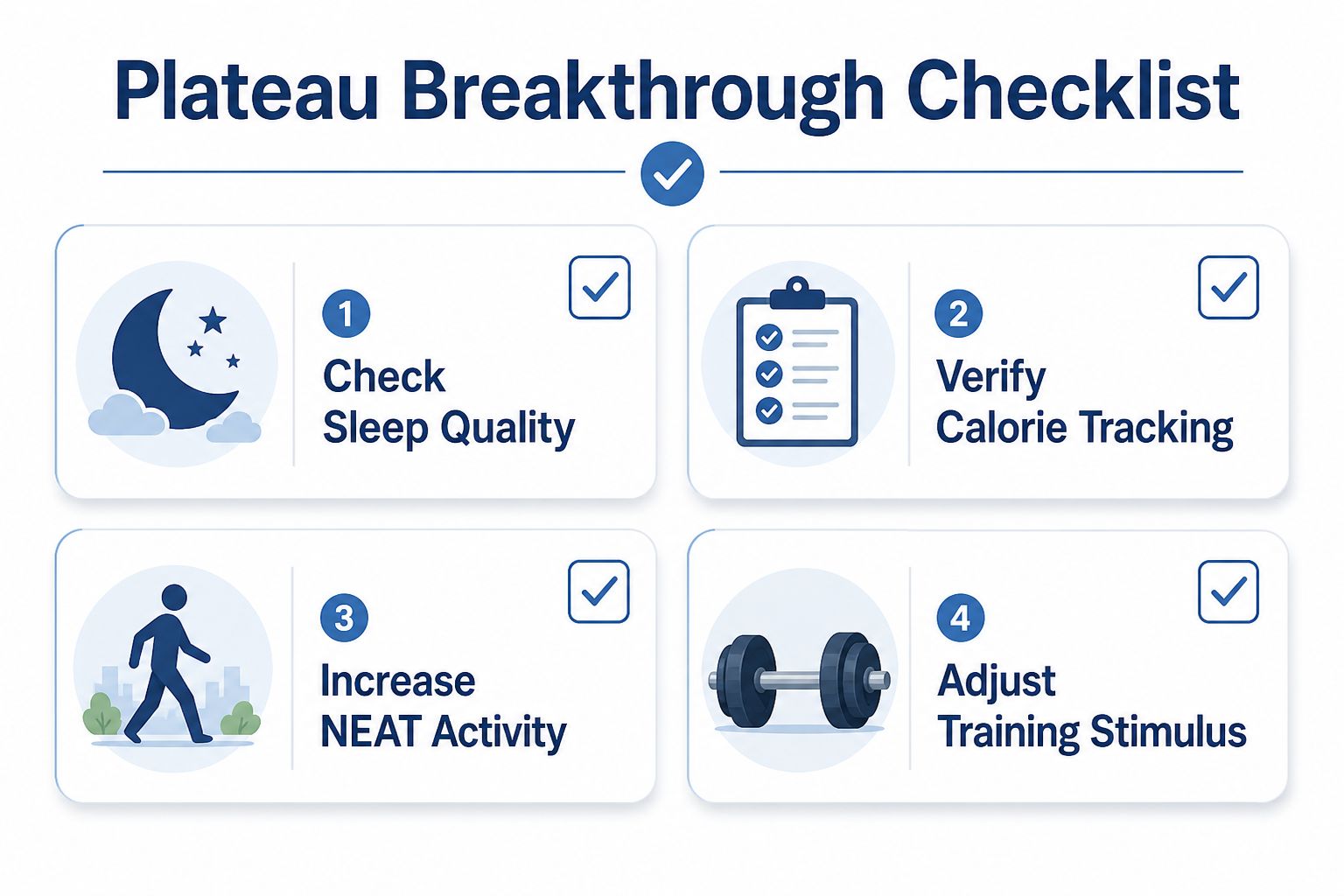
The most common problem is under-reported calories. People do not usually lie to themselves on purpose, they just stop counting cooking fats, drinks, sauces, tasting, and weekend extras with the same discipline they used at the start. Run a three-day audit, log everything carefully, and stop guessing portions.
A second issue is a lower TDEE after weight loss. A smaller body burns less at rest and during movement, so the intake target that worked early on may now be too generous. Recalculate from your current weight instead of treating the old number like it still applies.
Water retention can also hide fat loss for several days or longer. Hard training, higher salt intake, poor sleep, and daily stress all make the scale less reliable. That is why weekly averages matter more than a single weigh-in.
Adjust the plan before you slash calories
If you hit a real plateau, do not immediately cut another 200 kcal and make the cut miserable. Tighten sleep, clean up logging, and check how much you move each day. If your schedule allows it, add more walking or resistance work before you take food even lower.
Stress matters too. When life gets messy, people usually train less, snack more, and sleep badly at the same time. That combination can make a sensible plan look broken when the core issue is recovery and adherence.
For a useful external check, the Weight Method plateau guide gives a straightforward way to look at stalls without turning them into disasters. If you want another practical angle, the BionicGym plateau article covers the training side of the same problem.
Sometimes the right move is maintenance for two to four weeks before you cut again. That pause can settle things down, make adherence easier, and stop you from digging a deeper hole. Treat the plateau like a diagnosis, not a reason to starve harder.
Your simple reset plan
- Check the log and tighten food tracking for three days.
- Recalculate TDEE using your current bodyweight.
- Add movement before cutting food again.
- Hold maintenance briefly if stress and fatigue are high.
If you want a clearer number to work from, use the BionicGym Weight Loss Calculator and model your own timeline before you trim another calorie. Then build the plan around diet plus exercise, not wishful thinking. That is how you lose 5kg and keep it off instead of crawling back to square one.