

How to Get Lean: A Sustainable Roadmap for Desk
Most advice on how to get lean starts in the wrong place. It pushes people toward harsher dieting, longer gym sessions, and a fantasy version of discipline that doesn't survive real workdays, family demands, or fatigue. The more useful approach is simpler and harder at the same time, create a small, sustained energy deficit, keep enough movement in the day to protect muscle, and use a plan you can repeat.
That's the part people miss. In a 12-month randomized trial of adults with obesity, severe energy restriction did not produce worse relative whole-body lean mass or handgrip strength than moderate restriction, and it produced 2-fold greater weight and fat loss over the year PubMed. In other words, leanness is not just about losing scale weight, it's about losing fat while keeping the body functional enough to maintain the result.
Rethinking the Caloric Deficit for Long-Term Leanness
The first mistake is treating fat loss like a short punishment. That usually backfires because people can force a deficit for a few days, then rebound hard, especially when work stress, hunger, and social eating pile up. A plan for how to get lean has to survive ordinary life, which is why a structured diet plus movement beats a dramatic “cleanse” every time.
Why extreme restriction breaks down
A moderate, consistent deficit is easier to keep when your days are already full. The CDC's behaviour data show that 47% of women and 44% of men trying to lose weight said they were combining dietary restriction and exercise, which reflects how people succeed in the world PubMed. That matters because the common split between “eat less” and “move more” is a false choice; people need both.
Practical rule: if a diet plan feels impressive but collapses by Friday, it isn't a plan, it's a preview of a relapse.
The body also adapts to hardship. When calories get too low for too long, hunger rises, training quality drops, and daily movement often falls without people noticing. That's why the goal is not to win a willpower contest, it's to build a calorie deficit that stays intact long enough to matter.
Small, sustained deficits beat dramatic restriction for most people because they're easier to repeat, and repetition is what changes body composition.
For a more detailed breakdown of the mechanics, the article on calorie deficit for weight loss lays out the logic clearly. The key point is still the same, if the deficit is so aggressive that adherence falls apart, the method fails even if the maths looked perfect on paper.
Setting Your Protein and Calorie Targets
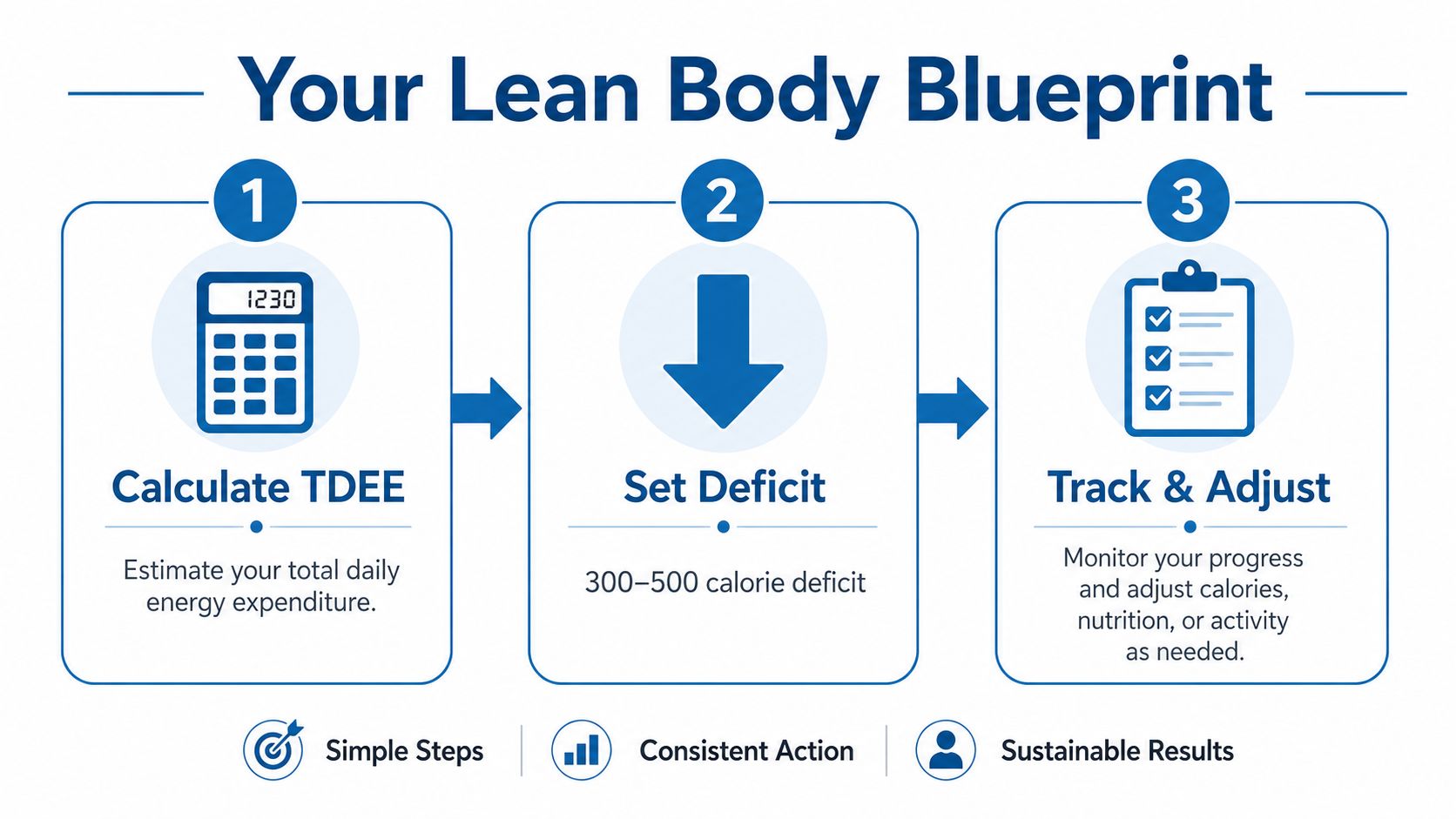
Precision helps, guesswork wastes time. If you want to get lean without feeling like you're constantly recovering from your own plan, start with your TDEE, then create a moderate deficit you can live with. That gives you a target instead of a vague intention.
Build the target, then protect the muscle
A practical workflow looks like this:
- Estimate your TDEE. Use body size, activity, and routine to get a realistic maintenance estimate, then treat it as a starting point, not a prophecy.
- Create a moderate deficit. A range like 300 to 500 calories is usually workable for busy adults who still need to perform at work.
- Set protein high enough to preserve lean mass. That matters more during rapid loss, and it matters even more if you're using appetite-suppressing tools or medications that can make meals smaller.
The reason protein stays central is simple, weight loss is not automatically fat loss. People can lose muscle if the plan is too thin on protein, too aggressive on calories, or too inconsistent to support training. The 12-month trial above supports the broader principle that structured restriction can work without automatically harming lean mass PubMed, but it still has to be paired with enough protein and enough movement.
If you like to keep your nutrition ideas organised, even something as simple as comparing print vs digital recipe magazines can make meal planning less chaotic. The format matters less than the habit, because the best calorie target is the one you can cook from.
For a practical tool, the BionicGym weight loss calculator targets page is useful for translating a goal into a usable routine. If you're cutting while trying to keep strength, think in terms of repeatable meals, protein anchors, and a calorie range you can hit most days, not a perfect day that never arrives.
Leveraging NEAT to Combat a Sedentary Lifestyle
NEAT, non-exercise activity thermogenesis, is the hidden lever most desk workers ignore. It's the movement you do outside workouts, standing, pacing, tidying, shifting posture, walking during calls. For people who sit most of the day, it can matter as much as the formal training block because it changes the size of the daily energy gap.
The movement gap is real
In research on NEAT, the strongest lean-vs-fat-gain resistance was linked to increases ranging from -98 to +692 kcal per day across participants GetFitCraft. That spread is huge, and it explains why two people eating similarly can still drift apart in body composition. The same line of research reported that mildly obese adults sat about 2 hours more per day than lean adults, corresponding to roughly 350 kcal/day less expenditure GetFitCraft.
That is exactly why desk-bound professionals should stop thinking in all-or-nothing gym terms. You don't need to “be athletic” all day, but you do need to interrupt stillness often enough that your body doesn't default to the lowest possible output. Over a year, that kind of daily gap can become the difference between maintaining and slowly creeping upward.
Useful standard: if your workday lets you stay seated for hours at a stretch, your leanness is being decided long before dinner.
The practical moves are boring, which is why they work. Stand during calls, walk while thinking through a problem, keep water away from the desk so you need to get up, and use transitions between tasks as movement prompts. Remote workers and gamers can also build “movement snacks” into their day without breaking concentration.
For a deeper look at passive calorie burn, the remote worker movement guide fits this problem well. The core idea is not to replace exercise, but to stop your non-work time from becoming one long sitting block.
What lean people often do without noticing
Lean people tend to fidget, shift, and pace more. That doesn't mean they're burning magic calories, it means they are less sedentary for more of the day. For desk workers, the fastest win is not a harsher diet, it's a more active default.
Multitasking Fitness and Low-Impact Cardio Options
Traditional cardio has two problems for busy people, it takes time, and it can beat up the joints. That's why the best option isn't always the hardest workout, it's the one you can repeat while staying productive and pain-free. For some people, that means walking and cycling. For others, it means a low-impact device-based approach that doesn't interfere with work.
Choosing cardio that fits a real day
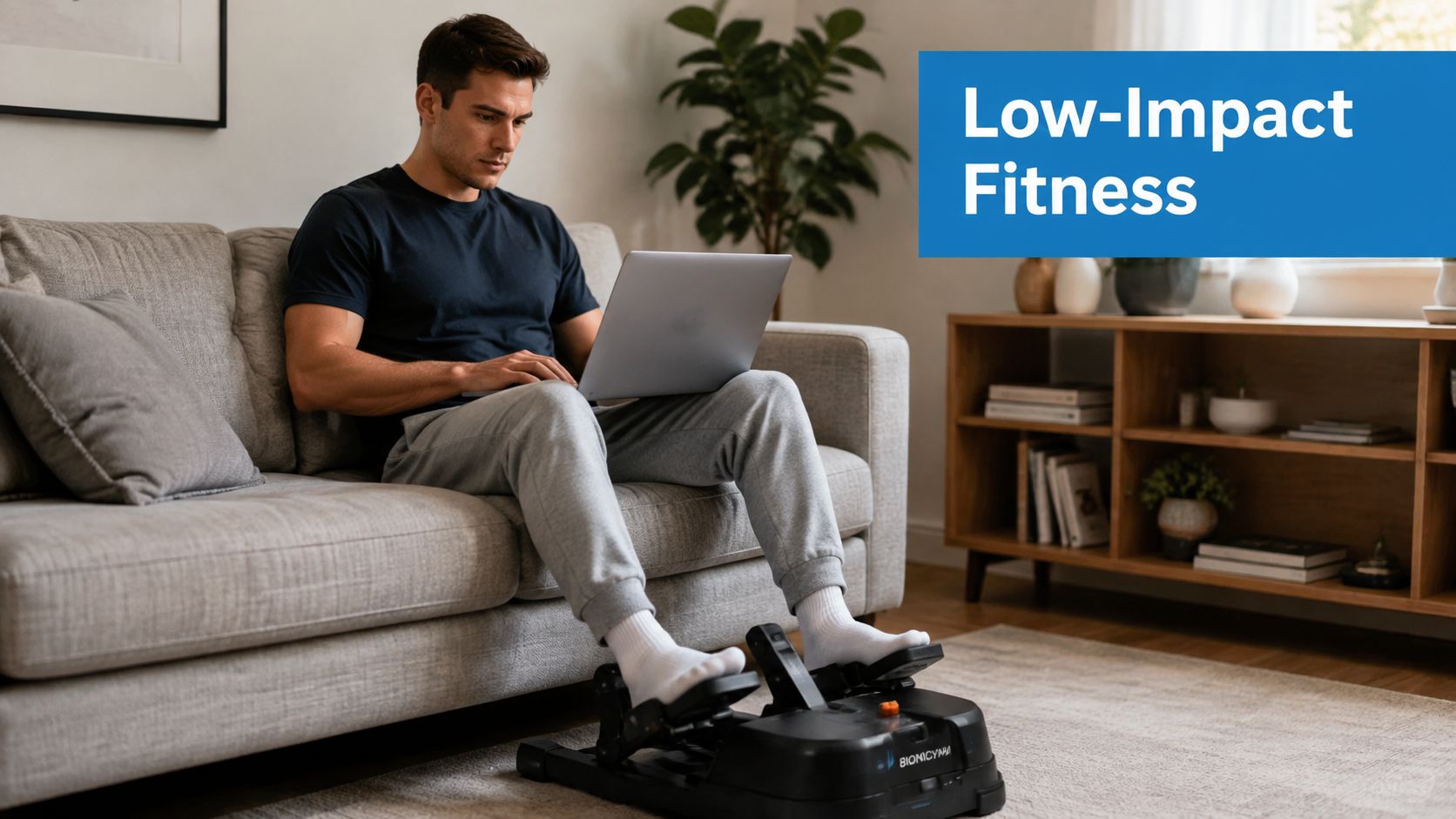
Low-impact options win when adherence is the bottleneck. If your knees, back, or schedule won't tolerate hard running, a workout that you can do while answering emails, gaming, or doing chores is more valuable than a perfect plan that never starts. BionicGym is one example of an FDA-cleared wearable cardio device that uses electrical muscle stimulation to create exercise you can do while sitting, and its design is built around making cardio compatible with ordinary tasks.
The company positions it as a sugar-hungry form of exercise, and the appeal is obvious for people who want training that doesn't require bouncing around a gym. In practical terms, this kind of multitasking fitness helps when you need a consistent deficit, a higher heart rate, and less joint loading at the same time. For people with arthritis, the key advantage is exercise without loading or flexing the joints, which is a very different proposition from pounding miles on a treadmill.
Anyone comparing low-impact exercise styles may also find the Florida paddleboarding for exercise resource useful as a reminder that fitness doesn't have to look like a standard gym session. Different tools solve different problems, and the right one is usually the one you'll repeat.
After all, the aim is not to collect workouts, it's to create a body that can sustain them. A device or modality that helps you move more while staying seated can be a legitimate bridge for desk-bound professionals.
What to expect from low-impact multitasking cardio
The sensible expectation is not magic. It's useful calorie burn, lower joint stress, and more total movement in the week. For people who struggle to keep a fitness habit alive, that combination often matters more than the exercise flavour itself.
The Role of Sleep and Recovery in Fat Loss
Poor sleep doesn't just make you tired, it makes leanness harder to maintain. When recovery is off, appetite control usually gets worse, training feels heavier, and the day's best intentions get eaten alive by stress. That's why people who chase fat loss while sleeping badly often feel like they're fighting their own physiology.
Sleep also affects how much punishment your plan can tolerate. If you're under-recovered, your body is less likely to cooperate with a steep deficit, and you're more likely to trade consistent movement for couch time. The result is not dramatic failure, it's a slow erosion of adherence that people misread as a “bad metabolism.”
A better setup is basic and unglamorous:
- Keep the room dark. Light sneaks into recovery more than people realise.
- Protect the last hour of the day. Screens, late work, and stress-heavy scrolling make it harder to downshift.
- Use an earlier cut-off for stimulating drinks. It's a simple lever with an outsized effect on sleep quality.
- Lower the social noise. Not every message needs an immediate reply after dinner.
The bigger point is that recovery supports the same leanness goals as diet and movement. A calm nervous system makes it easier to stick to the calorie target, train with purpose, and stay active the next day. That's not a luxury, it's part of the fat-loss equation.
Troubleshooting Plateaus and Tracking Progress
Plateaus are normal, and most of them aren't real plateaus at all. They're often a mix of water retention, inconsistent tracking, less movement, or a deficit that vanished when portions drifted. The fix is to inspect the process before assuming the body has stopped responding.
Review the right numbers
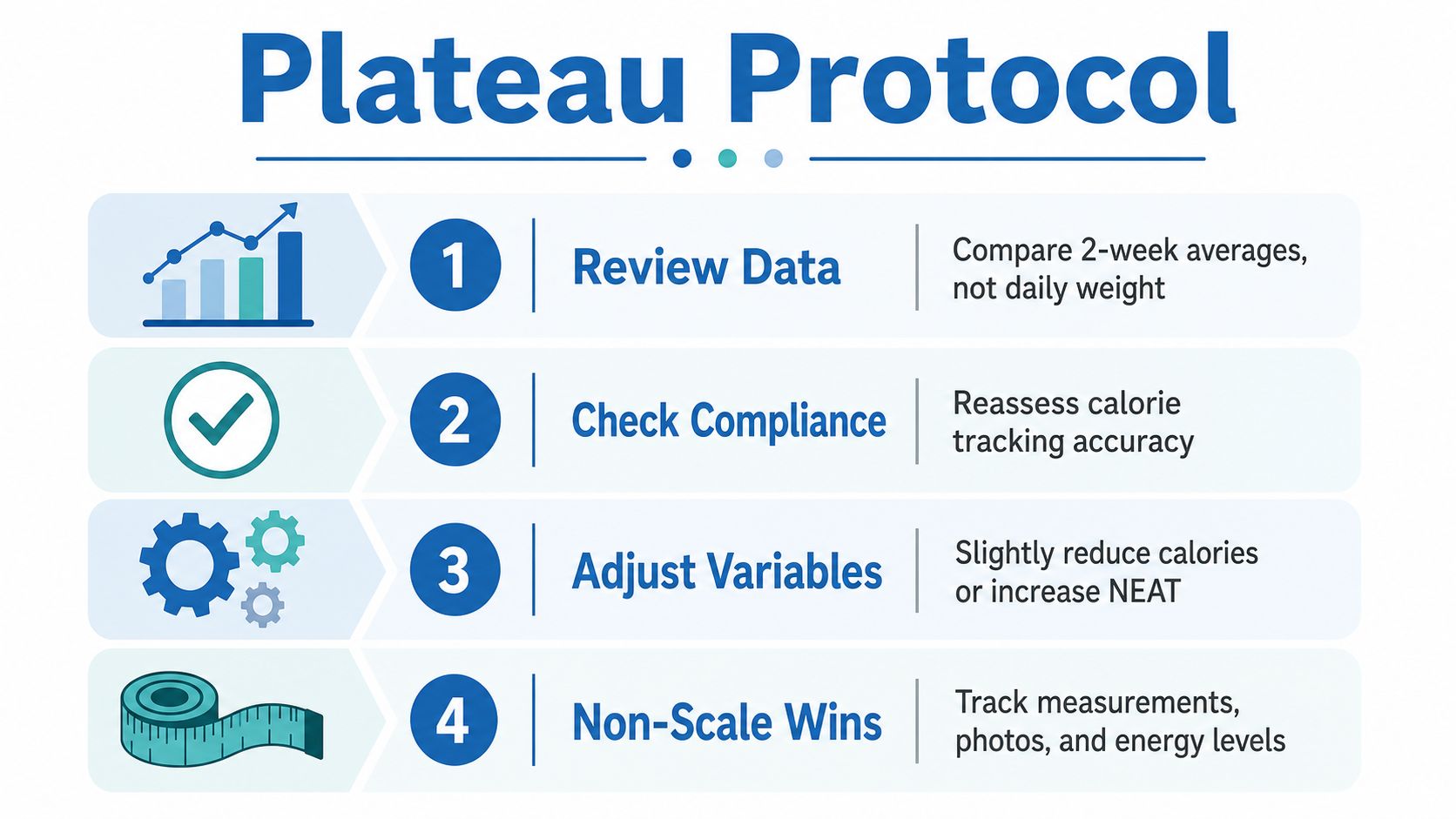
Start with two-week averages, not day-to-day scale drama. A single weigh-in can be distorted by salt, sleep, stress, training, and digestion, so the trend matters more than the moment. If the average isn't moving, check the details before changing the whole plan.
The plateau guidance for workout and weight loss stalls is a good reminder that progress often stalls because the variables drift, not because the body has stopped adapting. The first fix is usually tighter compliance, then a small adjustment to calories or activity.
Track what changed, not just what happened. If the scale stalled, look at food logging, step count, sleep, and training consistency before you blame the method.
Use non-scale wins and recalibrate
Measurements, photos, energy, and waist fit can tell you whether fat loss is still happening even when the scale behaves badly. That's especially important for people using a multitasking cardio tool or a low-impact plan, because the visible result can lag behind the day-to-day effort.
If the trend stalls, change one variable at a time. Slightly reduce calories, or increase NEAT, but don't slash everything at once. If you've been dieting hard for a long stretch, a short refeed or a maintenance phase can also help restore adherence so the next block is productive rather than miserable.
The most reliable lean physique is the one you can keep. That means tracking closely, adjusting modestly, and rejecting the idea that every pause is a failure.
If you want a practical way to add cardio without sacrificing your workday, explore BionicGym and see how its app-guided wearable approach fits a desk-bound routine. It's designed for people who need exercise on autopilot, with low-impact sessions that can sit alongside work, chores, or gaming. If your real problem is finding a sustainable deficit, a tool that helps you move more without rearranging your entire day is worth a close look.