

How to Break Weight Loss Plateau: Proven Fixes for 2026
You've been consistent for weeks. Meals are organised, workouts are scheduled, and the scale has stopped moving. You respond by trimming breakfast, adding another punishing session, and hoping the next weigh-in will finally reward the effort. Often, that approach creates more hunger, less spontaneous movement, poorer training and weaker adherence.
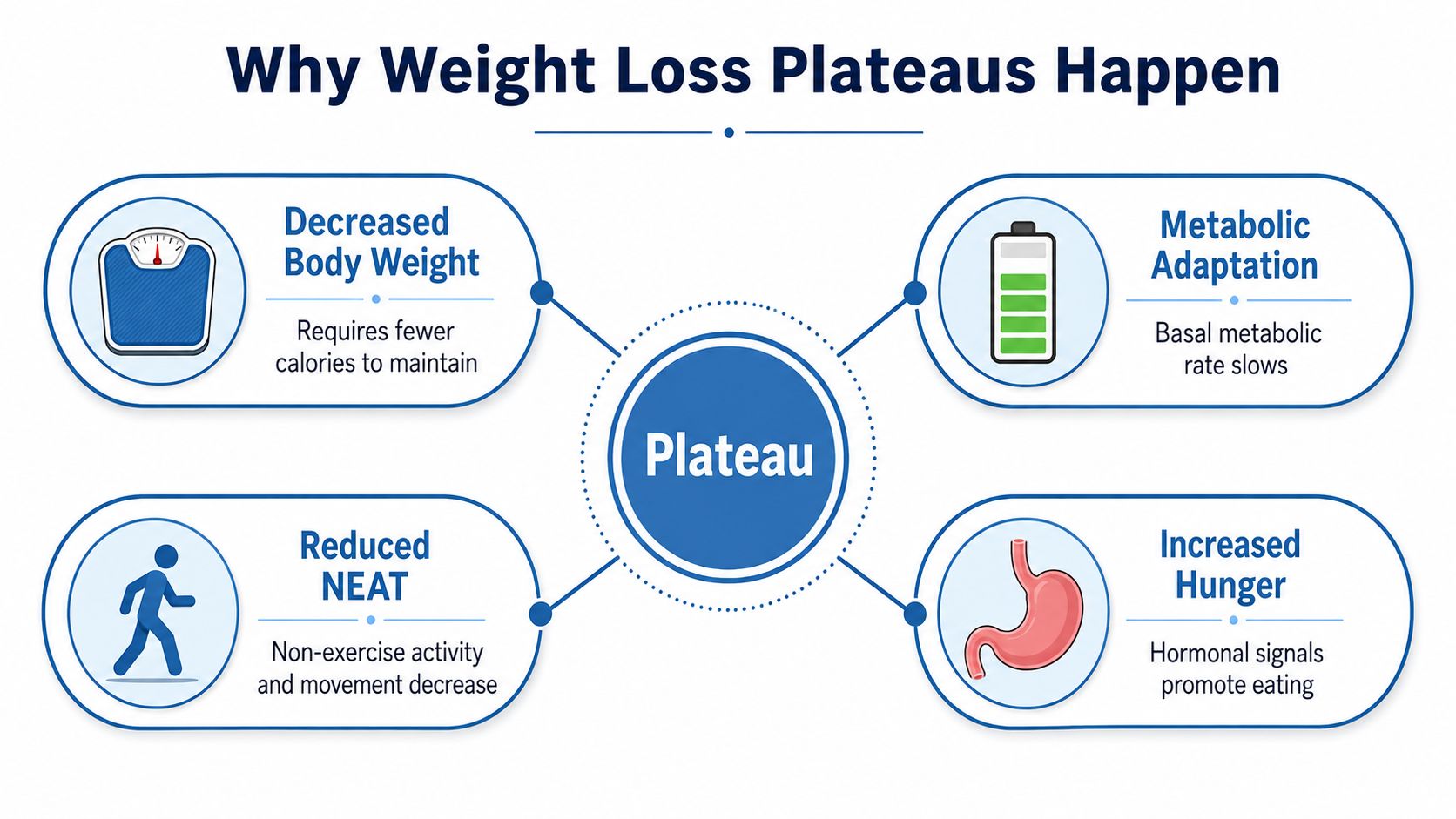
A plateau is usually a movement-and-muscle problem before it's a food problem. As body weight falls, your maintenance needs fall with it, while hunger and ordinary daily activity can shift in the opposite direction. The reliable answer isn't a miracle reset. It's a measured audit, a modest diet adjustment, more repeatable movement and a plan that protects lean mass.
Ireland's wider context makes this especially relevant. The Healthy Ireland Survey reported that 60% of adults were overweight or obese in 2019, including 37% overweight and 23% obese, while the Healthy Ireland Survey 2024 found 63% of men and 50% of women reporting overweight or obesity, unchanged from 2022. (Healthy Weight for Ireland) The latest Irish activity data also show that only 41% of people met the 150-minute weekly activity guideline in 2024, down from 46% in 2019. (Healthy Ireland Survey 2024)
Why Weight Loss Plateaus Happen
You lose weight, your clothes fit better, then the weekly average settles. That doesn't mean your body has stopped responding. It usually means your previous deficit has narrowed until intake and expenditure are now close to balance.
Confirm the stall before changing the plan
Start with consistent weigh-ins for two to three weeks. Use similar conditions, such as after waking and using the bathroom, then compare weekly averages rather than reacting to one reading. Sodium, a higher-carbohydrate meal, illness, constipation, travel, poor sleep and menstrual-cycle fluid changes can all obscure fat loss temporarily.
Measure your waist under the same conditions. If the scale average is stable but your waist is becoming smaller, resistance training performance is improving or clothes fit differently, body recomposition may be occurring. A scale plateau isn't automatically a fat-loss plateau.
Practical rule: Don't fix a single weigh-in. Fix a stable trend.
As your body becomes lighter, it needs fewer calories for basic maintenance and movement. Hunger may rise, while unconscious activity, walking pace and general restlessness can fall. This is one reason a plan that worked at the start may no longer create the same energy gap.
Why harsher restriction often backfires
The obvious response is to cut food again. That can work briefly, but a deeper restriction may increase hunger, reduce non-exercise activity, compromise resistance training and make social eating harder to manage. Losing muscle can also make later phases more difficult because lean tissue supports daily energy use and physical function.
Audit first. Protect protein, keep resistance work in place and restore a modest, repeatable deficit. The target isn't a perfect number every day. It's a downward trend sustained long enough to separate real progress from normal water noise.
Audit Your Intake Before You Cut More
Treat the next seven days as an investigation, not a new diet. Record every meal, drink and taste, including cooking oil, sauces, dressings, takeaway portions, alcohol, cream in coffee and the small bites that rarely make it into a casual food diary.
Use one tracking app consistently. Weigh calorie-dense foods with a digital scale, check package weights and compare restaurant portions with the closest available entry rather than selecting an optimistic estimate. Liquids, cooking fats, meals away from home and alcohol deserve their own review because they can change the weekly total.
A helpful macro-based weight loss plan can organise protein, carbohydrate and fat targets, but a calculator won't compensate for incomplete entries. The purpose of the audit is to discover your actual average intake, protein pattern, meal timing and likely source of drift.
The seven-day review
| Audit area | What to record | What to look for |
|---|---|---|
| Food and drinks | Meals, snacks, oils, sauces and all drinks | Unlogged extras and changing portions |
| Protein | Protein at each meal and daily total | Long gaps or consistently low intake |
| Movement | Steps, sitting time and formal exercise | Fewer ordinary movements than before |
| Alcohol | Drinks, timing and accompanying food | Social occasions that alter the weekly balance |
| Sleep and stress | Sleep quality, duration and stressful days | Hunger, cravings and reduced activity |
| Weigh-ins | Daily readings and weekly average | A trend, not a response to one high number |
Log steps, resistance sessions and cardiorespiratory exercise alongside food. Also note sleep quality, stress, travel, illness and unusual sodium or carbohydrate intake. These details help explain why a reading may rise without representing fat gain.
Find the hidden surplus
Look for patterns rather than blame. Perhaps weekday meals are controlled but weekends include restaurant food, alcohol and larger portions. Perhaps a “healthy” salad includes oil, nuts, cheese and a calorie-dense dressing. Perhaps the food plan is accurate, but daily steps have fallen since the initial weight loss.
You can weigh daily if that keeps you objective, but use the seven-day average. Don't skip meals or add exhausting training because of one high reading. Once you know the baseline, make one adjustment and hold it long enough to judge the trend. The calorie-deficit guide from BionicGym is useful for checking the relationship between intake, expenditure and sustainable progress.
Reset Your Diet With Smart Adjustments
A plateau needs a targeted correction, not dietary punishment. Start with a modest deficit of 10 to 20% below estimated maintenance, or roughly 300 to 500 calories per day, adjusted for body size, sex, activity and how well you can adhere. (Healthwave's Irish plateau guidance)
Keep protein steady while changing calories. A practical target is approximately 1.6 to 2.2 grams per kilogram of body weight per day, distributed across three to four meals. (StatPearls review of weight-loss plateaus) This supports fullness and gives resistance training the nutritional support it needs during a deficit.
Remove low-value calories first
Before reducing nutritious food, examine the extras that offer little satiety:
- Alcohol: Review both its energy contribution and the food choices that accompany drinking.
- Sweetened drinks: Replace them with water, unsweetened options or lower-energy alternatives.
- Cooking fats: Measure oil rather than pouring freely.
- Frequent snacks: Keep snacks that solve genuine hunger and remove automatic grazing.
- Large restaurant portions: Choose a portion you can track reasonably and avoid arriving excessively hungry.
Keto and low-carbohydrate plans can work when they help you sustain a calorie deficit. They're not proof that fat loss is occurring independently of total energy balance. Prioritise protein, non-starchy vegetables and minimally processed fats, or use a balanced approach with carbohydrates arranged around training.
Use cycling to support adherence
Calorie cycling is a scheduling tool. You might eat near maintenance on one or two planned training or social days, then use slightly lower-energy days to preserve the weekly deficit. It isn't permission to binge, and the weekly average still matters.
Change only one or two variables, then assess the scale trend and waist measurement after two to three weeks. If neither moves, check portions and activity before making another reduction. A useful companion resource is BionicGym's explanation of how to increase metabolism, particularly when the answer involves movement rather than another aggressive cut.
Raise Daily Energy Expenditure That Actually Sticks
Many plateaued clients don't need a harder diet first. They need to recover the movement they've gradually lost. Total daily energy expenditure includes resting energy use, the thermic effect of food, formal exercise and non-exercise activity thermogenesis, or NEAT. Resting needs and digestion aren't easy to manipulate, but walking, standing, pacing, household activity and structured exercise are practical levers.
Irish activity guidance recommends 150 to 300 minutes of moderate activity each week, or 75 to 105 minutes of vigorous activity, alongside muscle-strengthening work on at least two days. (Association for the Study of Obesity on physical activity) The HSE frames the moderate-intensity target as 2 hours and 30 minutes each week, at an intensity where breathing and heart rate rise but conversation remains possible. (HSE obesity treatment guidance)
Make NEAT measurable
Avoid promising yourself a heroic session you'll resent. Use repeatable movement instead:
- Walking: Build towards 8,000 to 10,000 steps daily if appropriate for your current ability, split between two manageable walks.
- Standing and pacing: Add active periods during calls, television, email reviews or household tasks.
- Social movement: Dancing, gardening and brisk errands can be more sustainable than formal gym work. If dance appeals to you, this guide to ballroom dancing calorie expenditure offers useful context for choosing an activity you'll repeat.
For desk workers, remote employees and gamers, low-intensity background exercise can fill gaps that a short workout can't. BionicGym uses app-guided electrical impulses through leg wraps to stimulate leg muscles while a person is seated or doing safe household tasks. It's described as a sugar-hungry form of exercise, and the company presents a typical vigorous level of about 500 calories per hour as achievable for most users, with results dependent on intensity, training and consistent use. (BionicGym's product information)
Use it while emailing, watching television, browsing or doing chores, never while driving, using dangerous objects, climbing stairs or crossing roads. A session should look like exercise when intensity is high, with a raised heart rate, breathlessness or sweat, rather than being marketed as effortless magic.
The compliance win matters more than peak output. Add two resistance sessions each week, then stack small daily activity increases around them. That's more durable than repeatedly starting a punishing reset.
For a clearer breakdown of the components you can influence, see total daily energy expenditure.
Build the Diet PLUS Exercise Protocol
A plateau often reflects a movement-and-muscle problem before it becomes a food problem. A practical protocol makes food and movement support each other. Start with a maintenance estimate from the Weight Loss Calculator, then create a 100 to 200 calorie daily deficit. Pair that adjustment with a daily steps target, two weekly resistance sessions and low-intensity movement you can repeat without exhausting yourself.
A workable weekday might look like this:
- Breakfast: A protein-centred meal with fruit or vegetables, logged before the day becomes busy.
- Workday movement: A walking break, standing calls and a seated BionicGym session during safe desk tasks.
- Lunch: A measured portion of protein, high-fibre carbohydrate and vegetables.
- Training: A short resistance session on planned days, followed by normal meals instead of compensation eating.
- Evening: A final walk or household activity, followed by a consistent sleep routine.
The diet reset should be modest enough to preserve training quality. Extra background movement can raise daily expenditure without forcing a harder workout or a severe food restriction. Judge the combined plan through the scale average, waist measurement, hunger, sleep and resistance performance. A single weigh-in cannot show whether the protocol is working.
Choose the right background option
BionicGym is an FDA-cleared wearable cardio system developed by a medical doctor. Its leg wraps deliver electrical impulses that stimulate leg muscles while you are seated or completing safe chores. The Standard version is designed for gentle, sustained sessions, while PRO+HIIT provides more intense interval options. Compare the BionicGym Standard and BionicGym PRO+HIIT formats and choose the option that fits your routine.
Anyone with a serious medical condition or injury should consult a medical practitioner before starting a new exercise program. BionicGym is an exercise device, not a medical treatment. Consult your doctor if you have a serious condition.
Run the protocol for two to three weeks before judging it. If sleep deteriorates, hunger spikes or resistance performance falls, reduce the combined load rather than cutting more food and forcing more exercise. Repetition beats a harsher plan you abandon.
Protect Lean Mass and Handle GLP-1 Plateaus
A stalled scale doesn't automatically justify another 300-calorie cut. Prolonged restriction can reduce energy output, increase hunger and make muscle loss more likely, leaving you with a lower-capacity plan that becomes harder to sustain.
Lean mass is the asset to protect. Keep protein at 1.6 to 2.2 grams per kilogram daily and complete two resistance sessions each week, using safe compound movements suited to your ability. (StatPearls plateau management review) For convenient ideas, this collection of high-protein satiety snacks can help fill gaps without relying on random grazing.
GLP-1 users need a different conversation
People using Ozempic, Wegovy or Mounjaro may experience a different plateau pattern because appetite, food volume and training tolerance can change quickly. A smaller appetite doesn't guarantee adequate protein, resistance work or overall nutrition, so a falling scale can hide an undesirable change in body composition.
Discuss persistent nausea, difficulty eating enough, marked fatigue, declining strength, dehydration concerns or a sudden change in progress with the prescribing clinician. Don't alter dose or timing independently. A clinician may need to consider medication tolerance, meal timing and training demands alongside your weight trend.
| Response lever | Standard plateau | GLP-1 plateau |
|---|---|---|
| Food review | Audit portions, drinks and extras | Check that reduced appetite hasn't lowered protein and total nourishment too far |
| Exercise | Restore steps and add resistance work | Prioritise strength, recovery and tolerable sessions |
| Progress measure | Weekly weight average and waist | Add strength, function and body-composition measures where available |
| Medication | Not applicable | Discuss dose, timing and symptoms only with the prescribing clinician |
BionicGym's guidance on preserving muscle on GLP-1 medications can provide further exercise context, but it doesn't replace medical supervision.
Your 14 Day Plateau Breaking Plan
Use the next 14 days to collect reliable information and execute a small number of behaviours. Don't change the plan every morning. Consistency makes the result interpretable.
Daily anchors
- Weigh consistently: Take the reading at the same time, before eating, and record it without judging a single result.
- Log completely: Enter meals, drinks, oils, sauces, snacks and alcohol in one app or journal.
- Move deliberately: Work towards 8,000 to 10,000 steps daily, adjusted for your current capacity, and break up long sitting periods.
- Set a protein floor: Aim for 1.6 to 2.0 grams per kilogram daily, divided across meals.
- Protect sleep: Target 7 to 9 hours and keep bedtime and wake time as regular as practical.
- Schedule background exercise: Plan 4 to 8 hours per week of BionicGym use across safe seated tasks or household activities, increasing gradually according to tolerance.
Weekly check
On Sunday, review the weekly weight average, waist measurement, consistent photographs and the calorie-cycling days you completed. Compare habits with outcomes. If the average is unchanged but waist, strength or clothing fit improves, hold the course rather than making an impulsive cut.
Day 14 decision rules
If progress resumes, keep the same inputs. If nothing changes, repeat the seven-day audit and inspect portions, alcohol, steps and sleep before reducing food. If weight is creeping upward despite accurate tracking, consider removing a further 150 to 200 calories from two non-training days, provided hunger, sleep and training remain acceptable.
Make adherence easier through environment design. Keep pre-portioned protein available, attach BionicGym sessions to existing triggers such as television or email, and set a visible sleep reminder. Share your weekly average and completed habits with a coach, friend or tracking group so progress remains observable.
BionicGym adds a seated, app-guided exercise option to a healthy diet, walking and resistance training, helping you build more repeatable movement into a plateau-breaking routine. Visit BionicGym, review the available systems and use the Weight Loss Calculator to set a realistic starting baseline before you begin.