

10 Diet and Exercise Calculator Resources
A single calorie number can't design a complete weight-loss routine. It can estimate maintenance needs, forecast a target date, approximate exercise burn, or help you log what you eat, but those are different jobs, and each one has blind spots. In Ireland, that distinction matters because activity habits have improved, obesity is still common, and people need tools that turn guidance into something they can follow day to day, not just admire on paper (European Commission Ireland profile).
The most useful diet and exercise calculator is the one that matches the decision you're trying to make. If you need a starting calorie target, use a dynamic planner. If you need a realistic exercise estimate, use a burn calculator. If you need to stick to the plan, use a food diary or a macro tool. That's why Diet PLUS exercise is the right framework, not a single magic output, and why BionicGym's own Weight Loss Calculator fits best as part of a broader routine, not as a guarantee.
Practical rule: treat any calculator as a decision aid, then verify it against your own trends for a few weeks.
For busy professionals, the bigger issue is implementation. Irish users already show strong interest in tracking and wearable-linked feedback, and calculators work best when they connect to real behaviour, not abstract targets (optimal health tips for busy professionals).
1. BionicGym
BionicGym stands out because it isn't just a calculator, it's a calculator plus a way to act on the result. The system combines app-guided sessions with leg wraps and a Weight Loss Calculator, so the user can estimate targets and then turn them into actual exercise time without needing a gym commute. BionicGym says the device was invented and developed by a medical doctor, and it positions itself as an FDA-cleared wearable cardio system that can be used while working, gaming, or doing chores, which makes it unusually relevant for desk-bound users who struggle to fit in movement.
Its strongest advantage is the link between diet plus exercise planning and low-friction execution. BionicGym also offers a weight loss recommendations and fat loss calculator that ties calorie deficit thinking to exercise inputs, which is exactly what single-number calculators often miss. The company's positioning is bold, but the practical appeal is simpler, it helps you see how calories, session length, and consistency interact before you commit to a routine.
What it can tell you
BionicGym is most useful when you want to make exercise feel measurable and repeatable. It's a good fit if you want vigorous exercise without impact, and if you prefer guided sessions over vague “move more” advice. The system also appeals to users who like quantified feedback, since the app can track intensity and progress rather than leaving you to guess whether a session was enough.
What it can't tell you
It can't guarantee weight loss, because that still depends on your diet and adherence. It also can't replace a clinician for medical questions. BionicGym is a great way to exercise. It is not a medical treatment. Consult your doctor if you have a serious condition.
Pros
- Hands-free cardio: Useful for multitasking at home or at a desk.
- Exercise plus feedback: The app and calculator make the routine more concrete.
- Joint-friendly format: Better suited to people who want low-impact movement.
Cons
- Upfront investment: It's more expensive than a basic app.
- Needs consistency: Results depend on use, not ownership.
- Not a medical claim tool: It's for exercise planning, not treatment.
You can review the product details at BionicGym, and if you want the planning side first, start with the Weight Loss Calculator.
2. NIH/NIDDK Body Weight Planner
The NIH/NIDDK Body Weight Planner is strongest when you need a starting target, not a place to log meals or workouts. Its dynamic energy-balance model updates calorie needs as body weight changes, so it is better for forecasting than a static TDEE estimate that stays fixed after week one.
Use it to answer a practical question: “If I follow this plan, what should happen over time?” It is less useful for yesterday's intake or today's training, and that separation matters. A planner can estimate the path; it cannot show whether you stayed on it.
The model is also more transparent than many generic calculators because it points users toward the research behind the estimate. That does not make the result exact, but it does make the assumptions easier to check. If you want to test those assumptions against real-world output, VO2 max fitness testing in Chester can help validate the energy-expenditure side of the equation.
The limitation is simple. It does not record meals, workouts, or habits, so it works best beside a diary or food app. If your main problem is implementation, you still need a second tool to turn the forecast into daily choices.
The useful move is to set a sensible target, then treat the result as a guide rather than a law.
For readers using BionicGym, the company's weight loss calculator goal date guide fits this planner well because it frames target dates as planning inputs, not promises. The NIDDK model is stronger on the math behind the estimate, but it still needs a follow-through tool.
3. ACE Fitness Calculators
ACE Fitness is the strongest quick-reference option when you want both calorie needs and exercise burn in one familiar place. The daily caloric needs calculator helps with the first half of the problem, while the calories-burned tool gives you a fast estimate for common activities. That combination makes it more practical than a single-purpose calorie page, especially if you're comparing several workouts before deciding what to do today.
The value here is speed. ACE gives you straightforward estimates without asking you to learn energy-balance jargon first, which is useful if you just need a ballpark number for walking, running, cycling, or a structured gym session. It's also a tidy hub for other basics like BMI and heart-rate zones, so you can keep several decision points in one place.
Where it's strong
- Quick estimates: Good when you want a number in minutes, not a lesson in physiology.
- Broad activity coverage: Helpful for comparing exercise options.
- Simple interface: Easy to check without a steep learning curve.
Where it falls short
- Generalised outputs: Device or lab measures may differ.
- No food diary: It won't help you implement the plan.
- Limited context: It tells you calories, not what to do next.
For readers using BionicGym, that “what to do next” question matters. The company's heart rate training zones guide is relevant because the same logic applies, the number only helps if you know how hard the session should feel.
ACE is a good middle ground if you want a fast sanity check, but it's not a full behaviour system. It tells you the size of the workout, not whether your food choices and weekly habits will make that workout matter.
4. ExRx.net Calculators
ExRx.net is the best choice for readers who want to know where the calorie estimate comes from. It uses exercise physiology conventions such as VO2 and MET-based calculations, which makes it more transparent than tools that just hand you a number with no explanation. If you like equation-driven planning, this is one of the cleanest exercise calculators available.
It's especially strong for treadmill work, walking, and running, where speed and grade are easy to define. That makes it useful for people who want to compare sessions precisely, or for coaches who need to separate gross effort from net effort. In other words, it's a good tool when you care about the mechanics of burn, not just the headline result.
Practical insight: the more structured your workout, the more useful an equation-based calculator becomes.
The trade-off is that the interface feels utilitarian. ExRx isn't built for casual users who want a polished coaching experience or a food diary. It gives you physiology first, convenience second, and that's exactly why some people prefer it.
For a BionicGym reader, ExRx can be a useful cross-check if you want to compare a wearable cardio session with a treadmill estimate. But BionicGym's appeal is different, it gives you the exercise context and the execution context in one place, while ExRx mainly gives you the math. That makes ExRx a better reference tool than a complete behaviour tool.
5. MyFitnessPal
MyFitnessPal is strongest as a daily execution platform, not a theory tool. It helps you log food, recipes, meals, and workouts, then anchors those entries to calorie and macro targets. If your calculator tells you what to aim for, MyFitnessPal is one of the easiest places to test whether you hit it.
The strength here is repetition. A large food database, barcode scanning, and device sync reduce friction, which matters more than people expect. A plan that takes too long to log usually dies after a few days, so the simplest logging workflow often beats the smartest one on paper.

MyFitnessPal isn't ideal if you need highly precise exercise accounting, because synced burn estimates can vary by source. It's better treated as a behavioural mirror than a lab instrument. That's a good thing if your goal is adherence, not perfection.
For readers comparing tools, a weight loss calculator app guide becomes relevant. BionicGym's planning layer makes more sense when paired with a logging system like this one, because the calculator defines the target and the diary reveals whether the target was realistic.
6. Cronometer
Cronometer is the precision choice. It stands out because it goes beyond calories and macros into detailed micronutrient analysis, which makes it useful if you care about nutrient quality as much as weight change. That's especially helpful when your goal isn't just smaller portions, but a tighter view of what your food pattern is doing.
Its exercise import also makes it a better fit for people who want baseline activity separated from added exercise. That distinction matters. A sedentary desk day and a structured workout don't mean the same thing, even if the total steps look similar, and Cronometer is built to keep those categories clearer than many casual apps.
The downside is that quality-focused systems can feel narrower than mainstream trackers. Some users will find the food database smaller, and the depth of analysis may be more than they need. If you just want a simple calorie target, Cronometer can feel like more dashboard than you asked for.
For a diet and exercise calculator workflow, Cronometer works best after you've already set your target elsewhere. It's the tool you use when you want to inspect the details, not merely collect them. That makes it a strong second step after a planner, especially for users who care about micronutrients or wearable imports.
7. Lose It!
Lose It! is the friendliest option for people who want a low-friction start. The setup wizard makes the first decision easier, and the photo-based logging keeps the process lighter than typing every ingredient. That matters because the best plan is the one you'll keep using on a busy Tuesday, not the one that looks elegant in a review article.
Its habit tracking and trend views are useful because they shift attention from one-off entries to patterns. If your weight or intake is drifting in the wrong direction, trends are easier to act on than isolated meals. That's a more realistic way to manage a diet and exercise calculator output, because long-term consistency beats daily obsession.
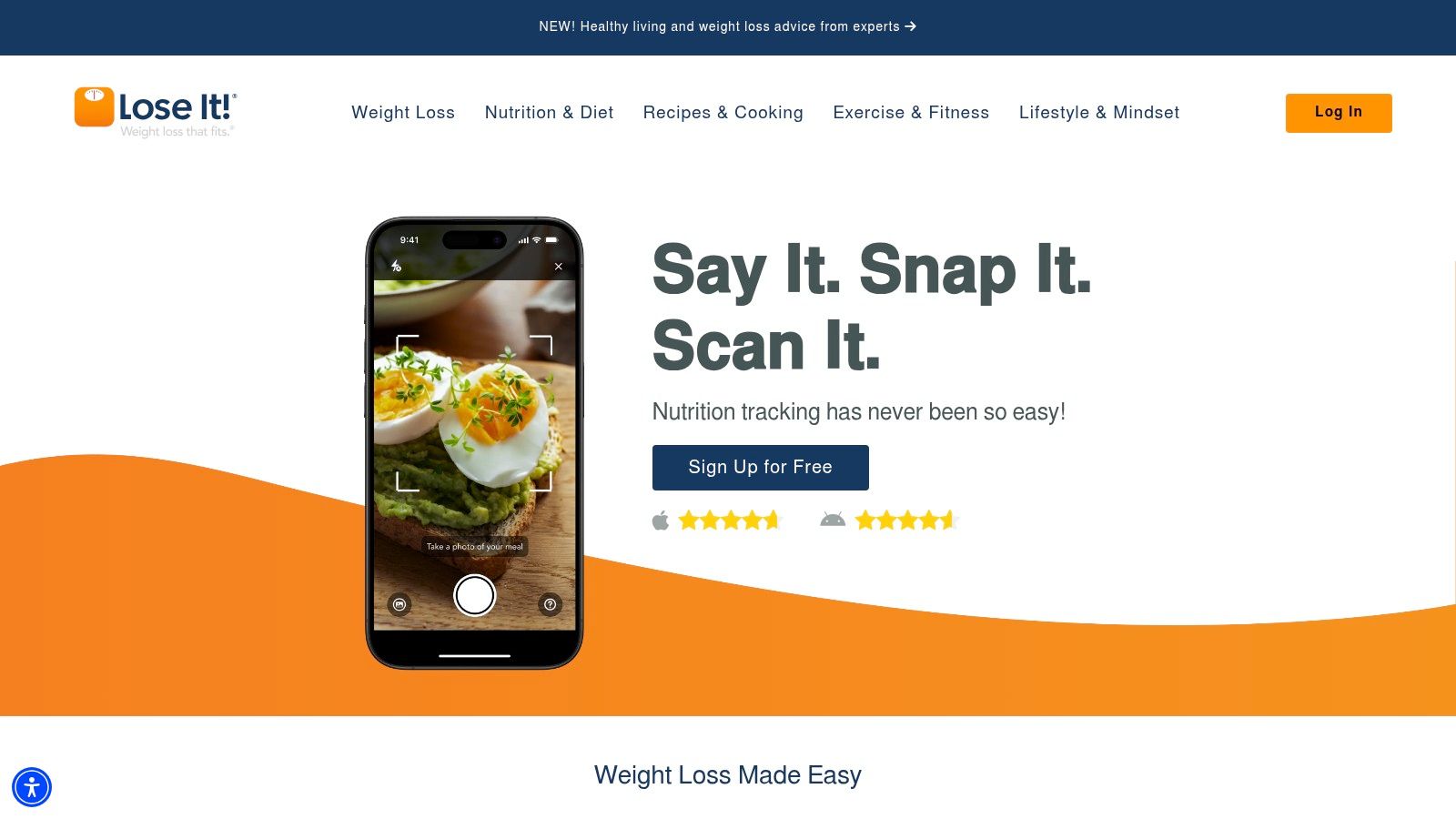
The weak point is that some of the most useful features sit behind Premium. That's not unusual, but it does matter if you're comparing tools purely on access. If you want maximum depth, a more analytical tracker may suit you better.
For BionicGym-style users, Lose It! is a decent companion because it supports the accountability side of the routine. The calculator tells you what should happen, the diary shows what did happen, and the gap between those two is where most plans succeed or fail.
8. Precision Nutrition Macro Calculator
The Precision Nutrition Macro Calculator is useful because it turns energy math into food choices. It builds on the NIH Body Weight Planner methodology and adds coaching-style guidance, so the result is more usable than a bare calorie estimate. That makes it a practical bridge between forecasting and daily meals.
Its main value is portion guidance. Many calculators stop at calorie and macro totals, which is informative but thin once you have to decide what to eat. Precision Nutrition is stronger on that implementation step, which is often the bottleneck after the numbers are set.
It still has limits. It is not a diary, so it cannot track adherence on its own, and it works more like a template than a personal coach. Readers who want a more step-by-step meal plan macro breakdown can use that kind of output alongside it, while the calculator gives the target ranges.
For Irish readers, the macro format fits local meal planning because it turns a weekly target into something closer to a plate-level routine. If you are pairing it with a BionicGym plan, keep the calorie side honest by using the calorie deficit for weight loss guide as the check on whether your intake and activity are still aligned. The calculator defines the target, but the routine decides whether it works.
9. Safefood Healthy Weight for You
Safefood's Healthy Weight for You is the most locally relevant choice for Irish users who want public-sector guidance rather than a commercial app. It combines BMI checks with structured weekly meal plans, which makes it practical for people who want a clear food pattern built around local context. That local grounding matters more than it sounds like it should, because adherence often improves when meals feel familiar.
The main strength is simplicity. Instead of giving users a vague calorie target and leaving them to improvise, it offers a more concrete weekly structure. That makes it easier to move from intention to action, especially for readers who don't want to design meals from scratch.
Its limitation is also clear. It isn't an exercise burn calculator, so it doesn't solve the movement side of the equation. It's best paired with a separate exercise tool if you want a full diet and exercise plan.
For Ireland, that pairing is sensible. Public meal guidance tells you what to eat, then a separate calculator tells you how activity changes the picture. That's a much better setup than trying to make one tool do everything.
10. Calculator.net Calorie and Calories Burned Calculators
Calculator.net is the fastest sanity-check tool in this list. It gives you a daily calorie calculator for maintenance and weight-change goals, plus a calories-burned calculator that uses MET values across a wide activity list. If you want a quick second opinion on a wearable reading or a rough estimate before lunch, this is the kind of tool that gets you there quickly.
Its biggest advantage is frictionless access. No account, no onboarding, no complicated setup. That makes it ideal for a “does this number look reasonable?” check rather than a long-term management system.
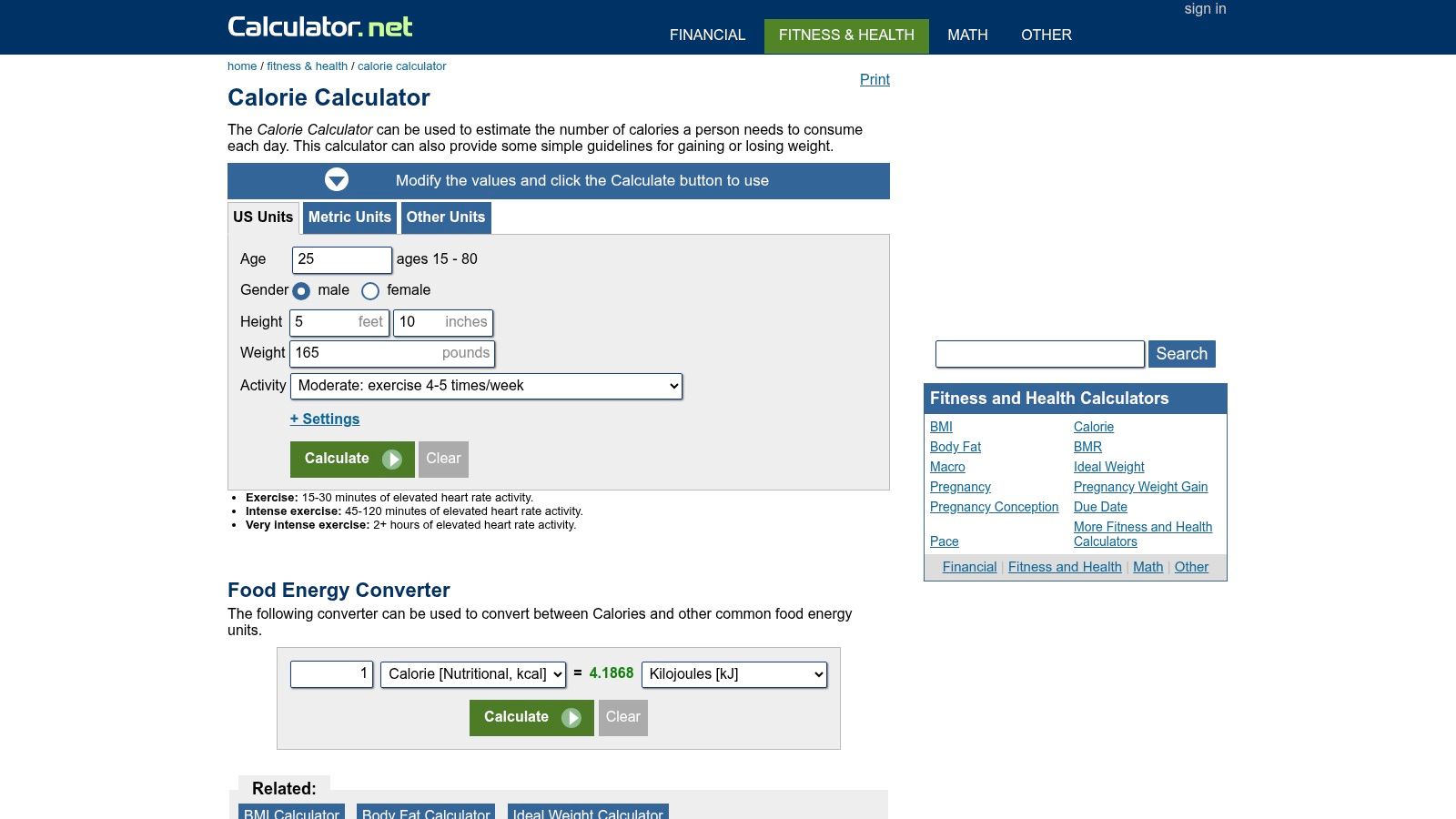
The trade-off is predictably simple: speed comes with generalisation. It's educational, not personalised, and it doesn't help you log habits. That makes it useful as a reference point, but not as the main system.
For BionicGym users, this is a sensible cross-check alongside the basal metabolic rate calculator guide. If your target seems wildly different from your wearable or diary output, Calculator.net helps you test whether the problem is the plan or the assumptions.
Top 10 Diet & Exercise Calculators Comparison
| Product | Core features | Quality & evidence ★ | Price & value 💰 | Target audience 👥 | Unique selling points ✨ |
|---|---|---|---|---|---|
| BionicGym 🏆 | Wearable leg wraps + app; Standard & PRO+HIIT programs; Weight Loss Calculator | ★★★★☆ 4.8/5 (600+); 20+ yrs peer‑review; ESA-tested; FDA‑cleared | 💰 $749 (site); HSA/FSA eligible; payment plans | 👥 Busy adults, low‑impact seekers, Keto/Low‑Carb & GLP‑1 users wanting to preserve lean mass | ✨ Only EMS system proven to deliver genuine vigorous cardio; targets “sugar‑hungry” fibers; 500+ kcal/hr (trained users). Not a medical treatment. Consult your doctor if you have a serious condition. |
| NIH / NIDDK Body Weight Planner | Dynamic energy‑balance model; personalized calorie & activity targets | ★★★★ Research-driven (U.S. institute); validated model | 💰 Free; ideal for goal timelines | 👥 People planning realistic weight‑loss timelines | ✨ Adjusts energy needs as weight changes; target‑date planning |
| ACE Fitness Calculators | Calorie needs, calories‑burned, BMI, HR zones | ★★★ Well‑regarded education org; practical estimates | 💰 Free; easy quick checks | 👥 Trainers & general users needing fast estimates | ✨ Broad activity list; simple tools hub |
| ExRx.net Calculators | ACSM equation‑based VO2/METs & calorie estimators | ★★★★ Transparent, equation‑based (clinicians/coaches) | 💰 Free; clinician‑focused accuracy | 👥 Coaches, clinicians, treadmill users | ✨ Outputs VO2, METs, net/gross calories with clear formulas |
| MyFitnessPal | Extensive food DB, barcode scan, logging, device sync | ★★★★ Widely used; variable exercise estimates | 💰 Free + Premium for advanced features | 👥 Daily trackers who want easy logging | ✨ Massive food DB, recipe import, wearable sync |
| Cronometer | Precision nutrition (80+ micronutrients), wearable import | ★★★★ High data fidelity; USDA‑verified entries | 💰 Free + Gold for advanced reports | 👥 Detail‑oriented users (Keto/Low‑Carb, clinicians) | ✨ Deep micronutrient tracking; clear exercise vs baseline handling |
| Lose It! | Simple diary, photo logging (“Snap It”), habit tools | ★★★ Motivating UX; easy onboarding | 💰 Free + Premium; frequent promotions | 👥 Beginners seeking simple, motivating UX | ✨ Photo‑based logging, habit challenges, onboarding wizard |
| Precision Nutrition Macro Calculator | Calorie + macro targets built on NIH model + PN coaching | ★★★★ Coaching‑backed; transparent methodology | 💰 Free; practical portion guidance | 👥 People wanting macro plans tied to evidence | ✨ Macro targets + hand‑portion guidance; coaching layer |
| Safefood “Healthy Weight for You” | BMI checks; calorie‑banded weekly meal plans (Ireland) | ★★★ Trusted public health resource (Ireland) | 💰 Free; locally tailored plans | 👥 Residents in Ireland seeking vetted meal plans | ✨ Local food choices, helplines and practical weekly menus |
| Calculator.net (Calorie + Burn) | Maintenance calorie calculator & MET‑based burn tool | ★★★ Fast sanity‑check tool; simple outputs | 💰 Free; no account required | 👥 Users wanting quick, no‑signup checks | ✨ Large activity list, fast MET‑based estimates |
Turn Estimates Into a Routine You Can Keep
A good diet and exercise plan usually needs three tools, not one. Start with a dynamic planner if you want a realistic starting target, use an exercise calculator if you want a consistent burn estimate, and then choose a food diary or macro tool to implement meals. That sequence is more honest than chasing one perfect number, because your body changes, your routines change, and the calculator output has to be tested in real life.
The most useful habit is trend review. Check your average intake, your average activity, and your weight pattern over time, then adjust gradually instead of reacting to one day's log. That's especially important in Ireland, where public guidance still points people toward regular weekly activity rather than dramatic one-off bursts, and where obesity remains a real backdrop for any weight-loss tool (Irish physical activity guidance, National Dairy Council weight guidance).
If you want a planning tool that ties the numbers to actual exercise, BionicGym is worth a look because it links calculator thinking to a wearable cardio routine. Its Weight Loss Calculator is the clearest place to start if you want to see how diet plus exercise fits together, and the product pages at BionicGym explain how the system is meant to be used.
Weight loss can't be guaranteed, because it still depends on diet, adherence, and the size of the calorie deficit. The better promise is more practical than that, build a plan you can repeat, use a calculator to set it, and use your own data to refine it. BionicGym is a great way to exercise. It is not a medical treatment. Consult your doctor if you have a serious condition.
BionicGym turns exercise planning into something you can do at home, at your desk, or while you're moving through a busy day. If you're comparing diet and exercise calculator tools, it gives you a way to connect the estimate to a real cardio routine and keep the plan concrete. Visit BionicGym to see how the system, the app, and the Weight Loss Calculator fit together.