

Best Diet and Exercise Plan: A Practical Ireland Guide
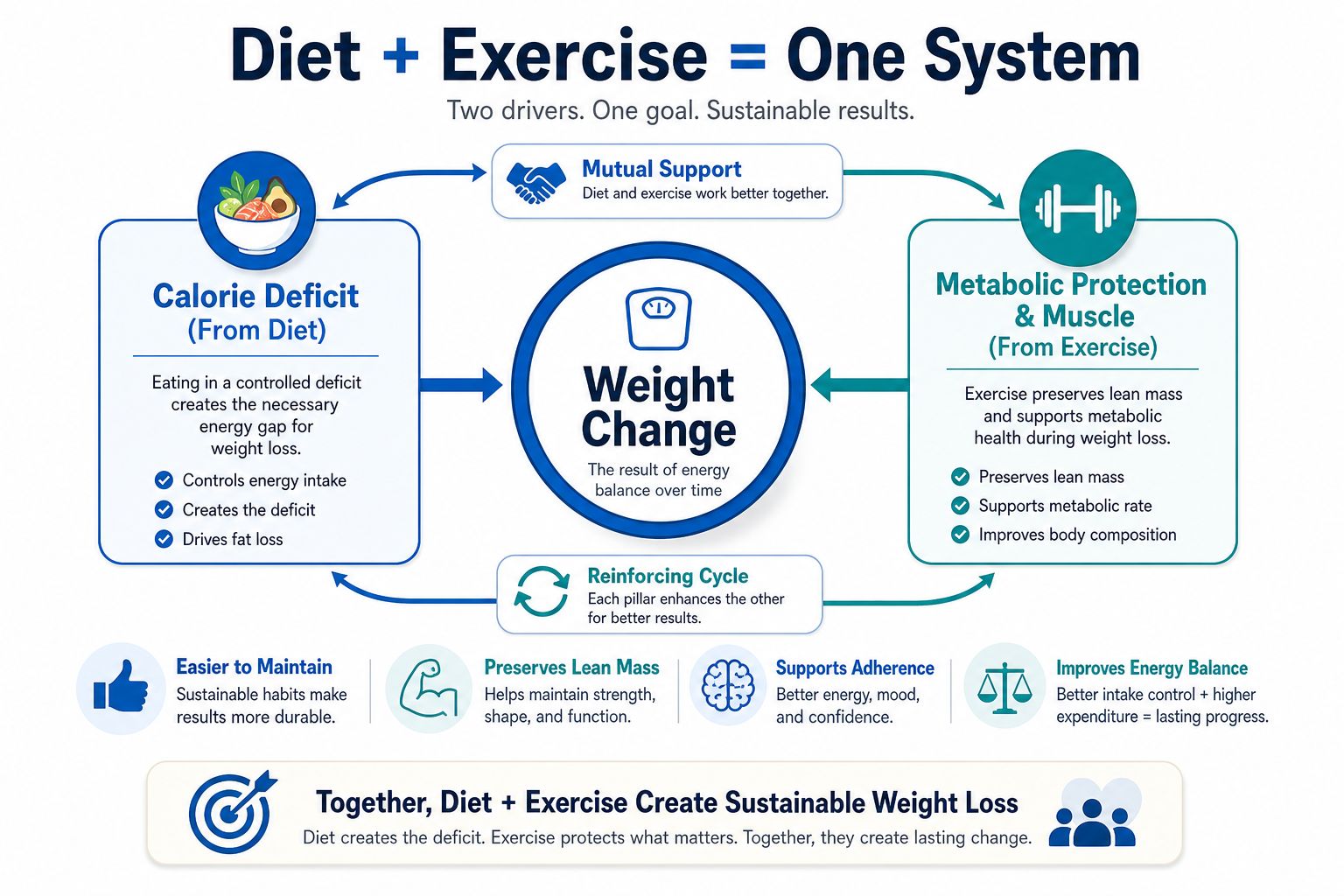
Most advice on the best diet and exercise plan starts in the wrong place. It tells you to pick a diet, then bolt on a workout, as if your body keeps nutrition and movement in separate departments. It doesn't. Your food controls the calorie deficit, while exercise helps determine what that weight loss is made of and whether you can keep following the plan when work, weather and hunger get in the way.
Ireland's numbers make the adherence problem hard to ignore. The Healthy Ireland Survey 2024 found that 41% of people reported meeting the national activity guideline, while 8% reported no physical activity in the previous seven days. The same survey recorded overweight or obese weight measurements for 63% of men and 50% of women, with activity last measured at 46% meeting the guideline in 2019, compared with 41% in 2024. Healthy Ireland Survey 2024
The answer isn't a punishing gym routine or a fashionable menu that collapses after a fortnight. It's a joined-up system for ordinary Irish lives, particularly if you spend most of the day at a desk, work remotely, game for long stretches or can't tolerate high-impact exercise. Here's the practical version.
Why Diet and Exercise Must Work Together
The popular approach says, “Choose keto, calorie counting or fasting, then add some cardio.” That's backwards. A sustainable plan starts with two linked jobs: food creates the deficit, and exercise gives your body a reason to retain useful muscle while improving fitness and routine.
The calorie deficit still matters most for weight change. If your meals consistently provide more energy than you use, extra walks won't rescue the plan. But cutting food without resistance work and regular movement can leave you lighter without improving your strength, fitness or confidence. Exercise won't guarantee weight loss, and no device can override an inconsistent diet, but it can make the overall system more resilient.
A 90 kg Dublin office worker won't out-run a daily caramel latte if the rest of the day is unplanned. Equally, he can't sensibly starve away the last few kilograms while ignoring strength work and recovery. The useful question is not “Which diet is best?” or “Which workout burns the most?” It's “Which combination can I repeat through a wet Tuesday, a late meeting and a weekend visit to family?”
Practical rule: Let food set a moderate deficit. Let exercise protect your capacity to move, train and stay consistent.
The Irish Healthy Eating Active Living implementation plan says 59% of adults aren't meeting the national activity guidelines and 66% aren't eating in line with healthy eating guidance. It also reports that 83% of children and 90% of young people aren't meeting activity guidelines, so this isn't merely a personal failure of willpower. Healthy Eating Active Living implementation plan
That leaves three sensible eating routes, calorie control, low-carbohydrate eating and time-restricted eating. On the exercise side, you'll choose between steady cardio, strength training and low-impact options that fit around your actual day. The best combination is the one that controls intake without making you ravenous and provides enough training stimulus without making you dread tomorrow.
For a sharper explanation of why food-only strategies routinely unravel, read why dieting alone fails and why weight loss needs a smarter approach. If you want an easy protein-based option for busy mornings, these matcha protein shake recipes are useful inspiration, particularly when a sit-down breakfast isn't realistic.
Choosing the Eating Approach That Fits Your Life
There is no prize for choosing the most restrictive diet. The winning approach is the one that gives you a manageable deficit, enough protein and fibre, and meals you can organise when the supermarket trip happens after work.
Three workable routes
Calorie control is the baseline. You can eat carbohydrates, dairy and occasional treats, provided the overall intake supports your goal. Tracking with an app such as MyFitnessPal for a short period can expose the portions that derail progress, while the HSE food guidance gives you a practical framework for building meals around nutritious foods.
Low-carbohydrate or keto eating can suit people who prefer eggs, salmon, meat, full-fat dairy and vegetables over bread, pasta and porridge. Early scale movement can be rapid because water stores change, but that isn't the same as rapid fat loss. The trade-off is social friction, careful meal planning and the possibility of under-fuelling harder training. If you choose this route, don't pretend a demanding interval session feels identical without carbohydrate availability.
Intermittent fasting, often structured around a 16:8 eating window, suits a desk worker who naturally prefers a later first meal and wants lunch and dinner to remain substantial. It can be awkward for rotating shift workers, nurses or anyone whose hunger arrives during the fasting window. Fasting is a scheduling tool, not a metabolic exemption from calorie balance.
| Approach | Best For | Main Trade-Off | Ireland Tip |
|---|---|---|---|
| Calorie deficit | People who want flexibility | Requires honest portion awareness | Weigh common portions briefly, then build repeatable meals |
| Keto or low-carb | People who prefer fewer starchy foods | Can complicate social eating and harder sessions | Use eggs, salmon, vegetables and planned snacks rather than relying on willpower |
| Intermittent fasting | People with a stable daily timetable | Less suitable for rotating rosters | Keep protein-rich lunch and dinner ready before the eating window opens |
Whichever route you pick, build meals around a reliable protein source, vegetables or fruit, a sensible carbohydrate choice if you tolerate it, and enough fluid. Don't turn the plan into a list of forbidden foods. A diet that makes one takeaway feel like failure usually produces a full weekend of “starting again Monday”.
The useful diet is the one you can follow after motivation has left the room.
For broader Irish reading on healthy lifestyle and CBD, keep the same standard: separate general lifestyle information from medical advice, and don't assume a product replaces food, activity or professional care. The diet-plus-exercise approach is laid out in sustainable weight loss through diet plus exercise, which is a better starting point than chasing a new restriction every few weeks.
What Vigorous Activity Actually Looks Like in Numbers
“Be more active” is too vague to plan around. Ireland's updated guidance gives adults a usable range: 2 hours 30 minutes to 5 hours of moderate aerobic activity weekly, or 1 hour 15 minutes to 2 hours 30 minutes of vigorous aerobic activity, plus muscle-strengthening work on 2 or more days. Every Move Counts national physical activity and sedentary behaviour guidelines
METs in plain English
A MET, or metabolic equivalent of task, compares activity intensity with resting energy use. Irish guidance defines light activity as 1.5 to 3 METs, moderate activity as 3 to 6 METs, and vigorous activity as 6.0 or more METs. Irish national physical activity and sedentary behaviour guidance
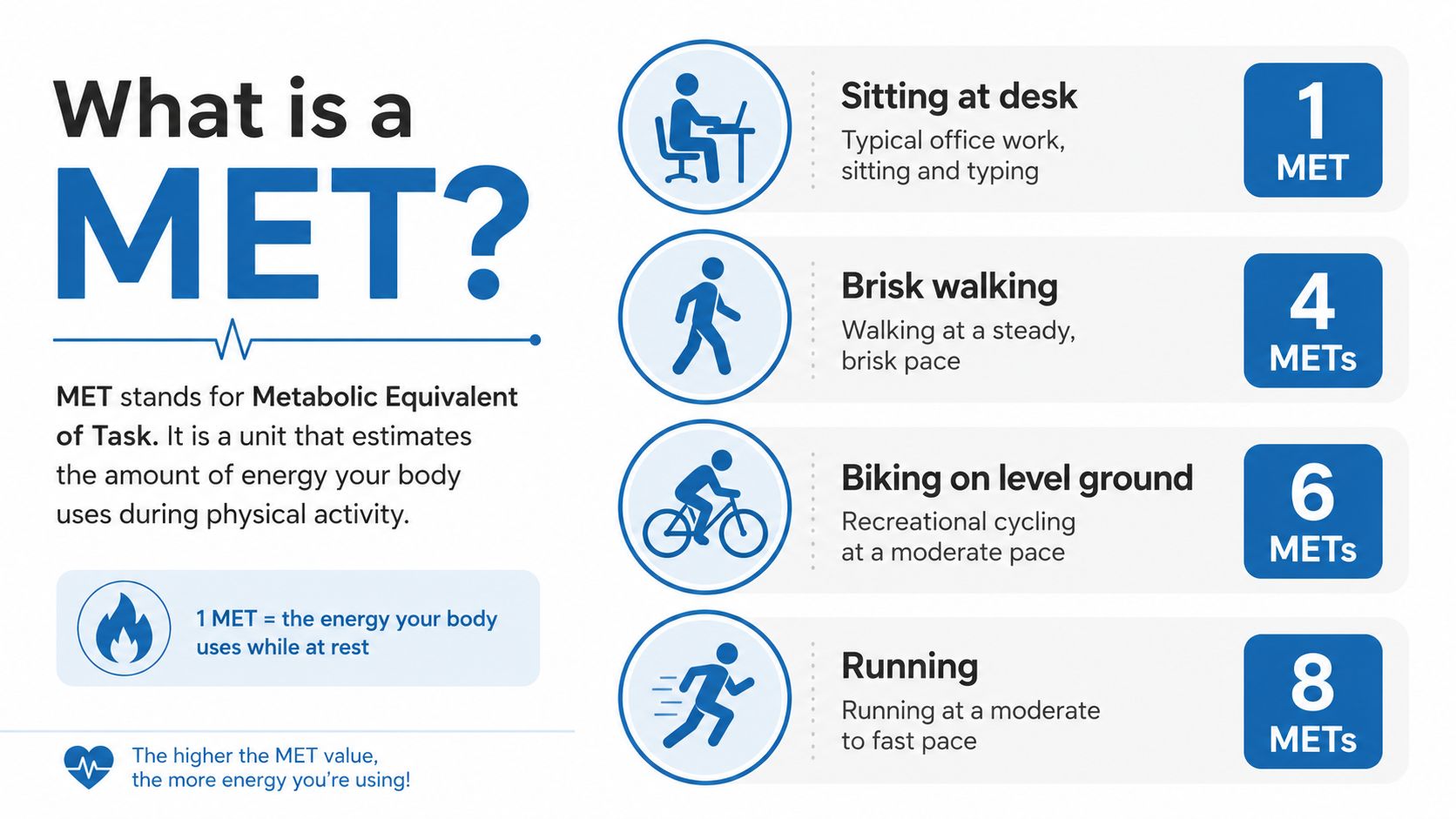
You don't need to calculate METs during every session. Use the talk test. Moderate work lets you speak in sentences. Vigorous work makes conversation broken and singing unrealistic. Ten-minute bouts can be useful building blocks, especially for people returning from inactivity. The HSE advises adults with diabetes to start with 10 minutes and build towards 30 minutes per day, with activity spread through the week. HSE advice on being active with diabetes
A time-poor week might contain four brisk walks, three short vigorous sessions, or a combination of walking, cycling and strengthening. Don't treat the upper guideline as a minimum for everyone. Treat it as a ceiling you can approach when weight loss, fitness or routine demands more work, while starting at a level you can recover from.
The vigorous exercise guide from BionicGym can help clarify the difference between general movement and a demanding session. If your heart rate, breathing and perceived effort never rise, you may be moving, but you aren't necessarily training vigorously.
Matching the Exercise Style to Your Body and Routine
The right exercise isn't the one that looks impressive on Instagram. It's the one you can repeat when your knees are temperamental, your commute runs late and the Irish weather has turned a short walk into a negotiation.
Compare the options
| Style | Typical METs | Time Per Session | Joint Load | Best For |
|---|---|---|---|---|
| Steady cardio, such as walking, cycling or swimming | Varies by pace and activity | Flexible, from short bouts to longer sessions | Low to moderate | Building aerobic fitness and daily activity |
| Strength training | Not best judged by METs | Short, focused sessions | Depends on exercise and technique | Preserving and developing muscle during a deficit |
| Low-impact electrical stimulation, such as BionicGym | Use the product's measured intensity and programme guidance | Flexible, including seated sessions | Designed to avoid loading or flexing the joints | Desk-bound or joint-sensitive adults who need a repeatable option |
Walking, cycling and swimming are straightforward choices. They let you control pace, duration and terrain, and they can become part of commuting or family life. Running gives more intensity in less time, but it also demands more from joints and connective tissue, so it isn't automatically the right answer for a heavier, deconditioned or pain-limited person.
Strength training earns two weekly slots because a calorie deficit should not be paired with total inactivity. Use a chair squat, a resistance-band row, a press, a hinge pattern and a loaded carry if you have the space and ability. The load should be challenging while your technique remains controlled. If you have never trained, a qualified coach or physiotherapist can help you choose safe movements.
Where a low-impact option fits
A low-impact electrical stimulation system can deliver muscle contractions while you sit or carry out safe household tasks. BionicGym is an FDA-cleared medical device, invented and developed by a medical doctor, and it uses app-guided programmes with leg wraps that deliver electrical impulses to stimulate the leg muscles. It should be presented truthfully: results depend on how consistently and appropriately you use it, and the session still needs to feel like exercise.
For people with arthritis, the HSE recommends progressing towards 2 hours 30 minutes of moderate activity each week, beginning with as little as 10 minutes per day when regular activity is unfamiliar. It also supports breaking movement into manageable tasks. HSE arthritis activity guidance Anybody with a serious medical condition or injury should consult with their medical practitioner before starting any new exercise program. BionicGym is a great way to exercise. It is not a medical treatment. Consult your doctor if you have a serious condition.
A practical blend is two brief strength sessions, several low-impact or steady-cardio sessions, and regular movement breaks. You don't need all three styles at high intensity. You need enough variety to keep your body capable and your routine repeatable.
Adapting the Plan to Different Real Lives
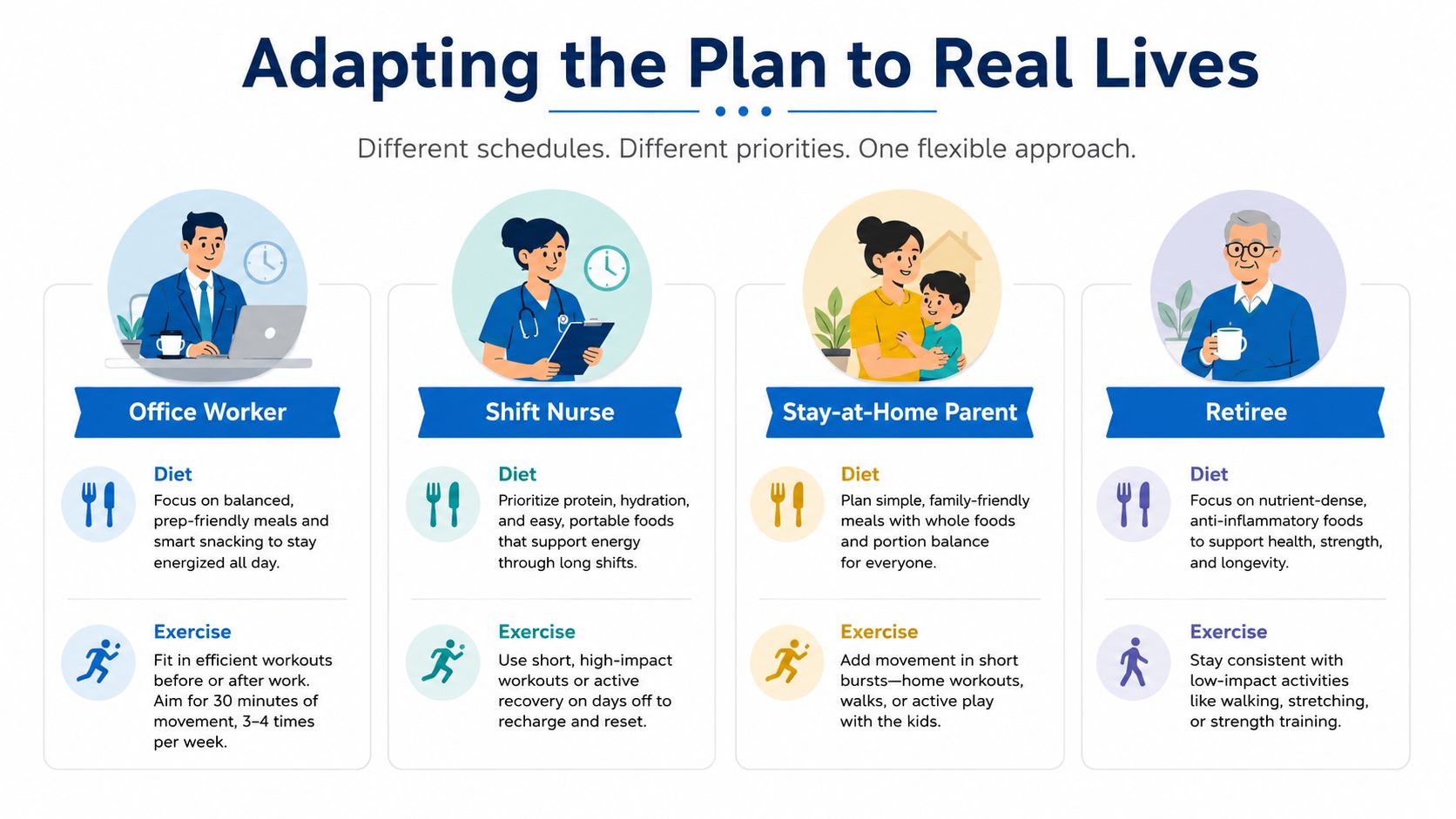
The same plan won't suit a remote software worker, a night-shift nurse, a new parent and a retiree. The principles stay fixed, but the timing must bend.
The Dublin office worker
A desk-bound worker can create a modest calorie deficit, prepare lunch before leaving the kitchen in the morning, and place movement around existing calls. Two seated electrical stimulation sessions during safe work calls, plus a brisk lunchtime walk, may be more realistic than promising to attend a gym after a draining commute. Add two short strength sessions on non-consecutive days, using home equipment or bodyweight movements.
Don't use any exercise system while driving, handling hot objects, climbing stairs or doing anything that demands immediate physical control. Sitting for a planned session is one thing. Turning exercise into a distraction during a risky task is another.
The keto or fasting reader
If low-carbohydrate eating or time-restricted eating suits you, place demanding strength work inside the eating window when possible. A gentle session during a fast may feel manageable, but don't force intensity through dizziness, unusual weakness or poor concentration. Plan the first meal rather than “earning” it through exercise, and include enough protein and fluid.
The person using Mounjaro or Ozempic
Medication users need individual medical guidance, not an internet prescription. Appetite may be lower, meals may be smaller and maintaining adequate protein, fluid and strength work can become more important. Don't use the unverified figure of 1.6 g per kilogram as a universal rule. Discuss protein needs, training and side effects with the clinician who prescribed the medicine. Anybody with a serious medical condition or injury should consult with their medical practitioner before starting any new exercise program. BionicGym is a great way to exercise. It is not a medical treatment. Consult your doctor if you have a serious condition.
The joint-sensitive reader
A person with knee or back pain doesn't need to prove anything by running. Swimming, cycling, controlled strength work and low-impact electrical stimulation can provide routes to regular exercise without the same pounding. Arthritis Ireland also supports the national activity benchmark and strengthening work, while recognising that walking, housework, gardening and water aerobics can all contribute.
Stacking Sessions for Bigger Cumulative Calorie Burn
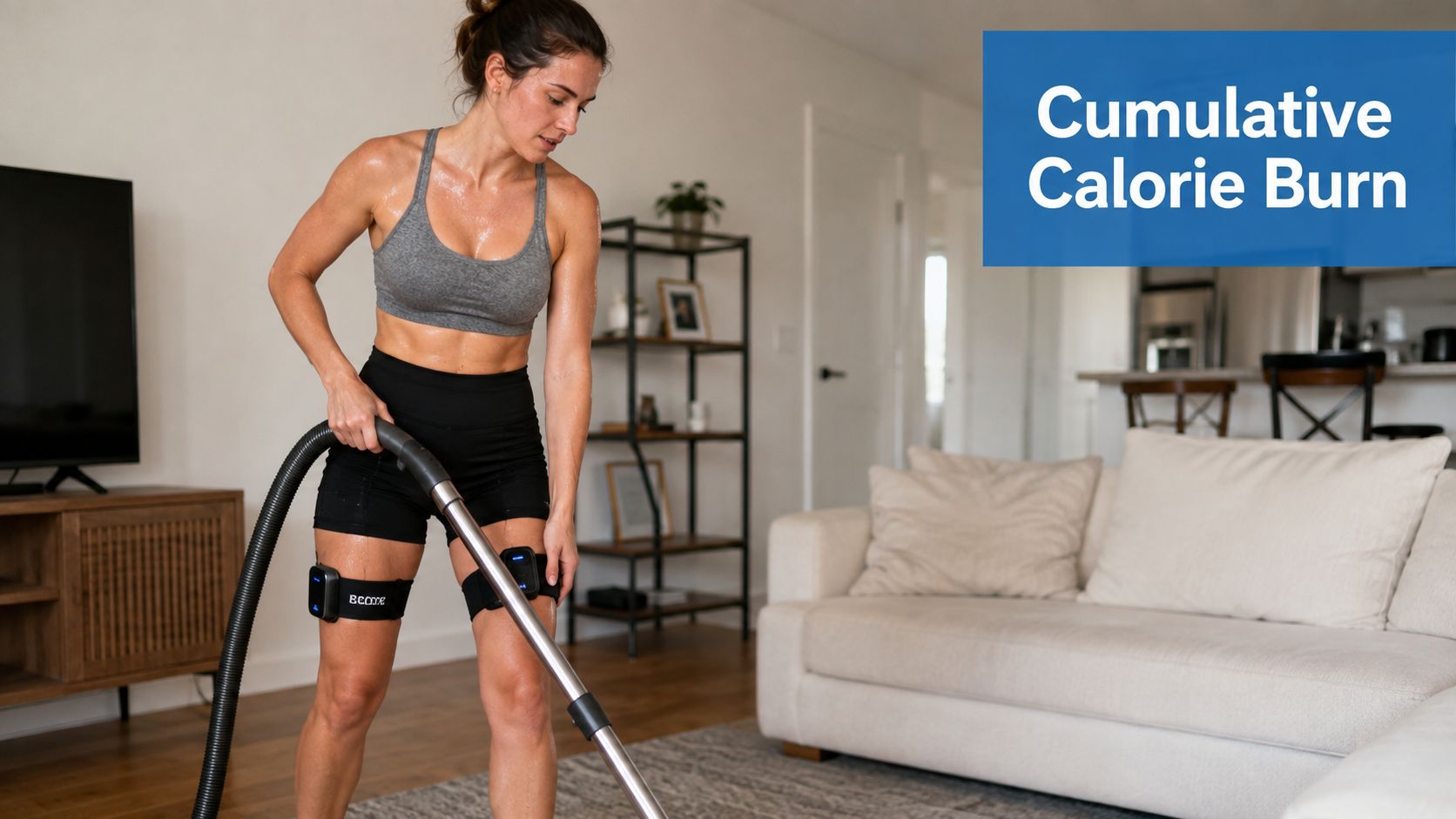
One heroic workout will not rescue a packed working week. Stacking short, manageable bouts across the day raises total movement without requiring a single long session. That suits desk-bound Irish adults far better than building a plan around gym perfection.
Walk before work, use a seated session during lunch and take the dog out after dinner. Several repeatable opportunities are easier to recover from than one exhausting workout. Calorie expenditure changes with body size, intensity, duration and activity, so treat a watch estimate as a rough guide, not a promise. The win is creating movement slots you can repeat.
The National Dairy Council describes a daily deficit of about 500 kcal, combined with exercise, as a practical weight-loss target, with a general rate of 0.5 to 1 kg per week. It also recommends progressing towards 60 minutes per day on 5 days per week for weight loss. National Dairy Council guidance on losing weight Use these as planning benchmarks, not guarantees. More activity can increase appetite, which makes consistent meals the control point.
Read the cumulative calorie burn guide for the case for accumulating longer, lower-intensity work. A low-intensity system may suit several hours of television viewing or safe household chores, but build gradually and monitor how you feel. Background movement does not cancel an uncontrolled surplus.
Use the Weight Loss Calculator to test your planned intake and activity. Its projection is not a guarantee. If the routine demands hours you do not have or leaves you constantly hungry, reduce the target and choose a plan you can repeat.
A Simple Weekly Template You Can Start Tomorrow
Forget the perfect seven-day challenge. Use a repeatable template with three daily anchors: a protein-led first meal or planned breakfast, a midday movement window, and an evening choice between strength work, a walk or recovery.
The exact calorie requirement depends on the person, so don't treat a generic intake as a prescription. A starting example might use 1,800 kcal for men or 1,500 kcal for women, with a daily deficit of 300 to 500 kcal, but a clinician or registered dietitian should help if you have a medical condition, a history of disordered eating or medication that affects appetite.
| Day | Food anchor | Midday movement | Evening plan |
|---|---|---|---|
| Monday | Protein-rich meal prepared in advance | 20 to 45 minutes of walking or a seated session | Strength session |
| Tuesday | Fibre-rich lunch and planned snack | Movement break between work blocks | Easy walk |
| Wednesday | Repeat a reliable meal rather than improvising | Moderate activity in manageable bouts | Recovery or mobility |
| Thursday | Protein included at each main meal | Brisk walk or low-impact session | Strength session |
| Friday | Pre-plan the meal that usually becomes takeaway | Short movement block | Easy activity or rest |
| Saturday | Flexible meals with portions decided beforehand | Longer aerobic block | Optional gentle movement |
| Sunday | Shop and prep for the week | Light walk | Full rest day |
Aim towards Ireland's weekly aerobic guidance, then add 2 strength sessions. If you use BionicGym, the low-impact cardio workout for beginners can help you choose an easier starting point rather than jumping straight into the hardest programme.
Three adjustments keep the plan alive. On a travel day, use walking and a short hotel-room strength circuit. During illness, stop training hard and recover rather than trying to protect a streak. On a late work night, reduce the session to a brief walk or mobility routine, prepare the next meal and return to the schedule without punishment.
Realistic Results, Safety Notes, and When to See a Doctor
Aim for a steady, sustainable loss rather than a dramatic first week. Scale changes can pause because of fluid, digestion, training stress or an inaccurate food log. Review your eating and movement routine after a consistent period, not after one weigh-in. Cutting food again every time the scale stalls is a reliable way to make a desk-bound plan harder to follow.
Stop exercising and seek medical advice for chest pain, faintness, severe dizziness, unusual breathlessness, joint swelling or rapid, unintentional weight loss. Get professional support if food rules become obsessive, you compensate for meals with exercise or you feel afraid to eat.
People with diabetes or arthritis should begin gradually and follow condition-specific guidance. Anyone with a serious medical condition or injury should consult a medical practitioner before starting a new exercise programme. BionicGym can support seated activity, but it is not a medical treatment. Ask your doctor before using it if you have a serious condition.
FAQ: If progress stalls, check portions, activity and recovery before reducing food further. If you are pregnant or breastfeeding, do not use a calorie-restriction template without advice from your maternity or healthcare team. If you take Mounjaro or Ozempic, ask your prescriber about hydration, nutrition and strength training. A calculator can model a plan, but it cannot guarantee the result.
BionicGym offers wearable, app-guided leg-muscle stimulation during seated activity, which suits a desk-compatible routine. Visit BionicGym to review the device and training options, then choose a schedule you can repeat.