

Best Cardio Machine for Home: 2026 Buyer Guide
Most buyer guides start with the wrong question. They ask which machine burns the most calories, then pretend that answer decides the outcome. In real homes, the winner is the machine, or system, that people use on tired mornings, busy evenings, and desk-bound days when motivation is thin.
Ireland's activity picture makes that practical view matter. The WHO/European Commission Ireland factsheet says only 12.6% of people were meeting the physical-activity guideline in the referenced indicator set, and the Global Observatory for Physical Activity country card cites 46% physical-activity prevalence tied to Healthy Ireland reporting, which means a lot of adults still need a low-friction way to move (WHO Ireland factsheet). That's why the best cardio machine for home is usually the one that removes excuses, not the one with the flashiest spec sheet.
| Home Option | Best For | Main Trade-Off |
|---|---|---|
| Treadmill | Walking, running progression | More space, more noise |
| Exercise bike | Quiet, low-impact sessions | Less whole-body loading |
| Rower | Full-body conditioning | Technique matters |
| Elliptical | Gentle, low-impact movement | Can feel repetitive |
| Wearable EMS system | Multitasking, low-setup use | Not a conventional machine |
Rethinking What Makes a Cardio Machine the Best
People make the wrong call when they shop for cardio like it is a trophy. They buy for the version of themselves who trains every day, not the version who needs something easy to use after work, between meetings, or while the kids are around. That is why so many expensive units end up holding clothes instead of getting used.
Compliance beats spec sheets
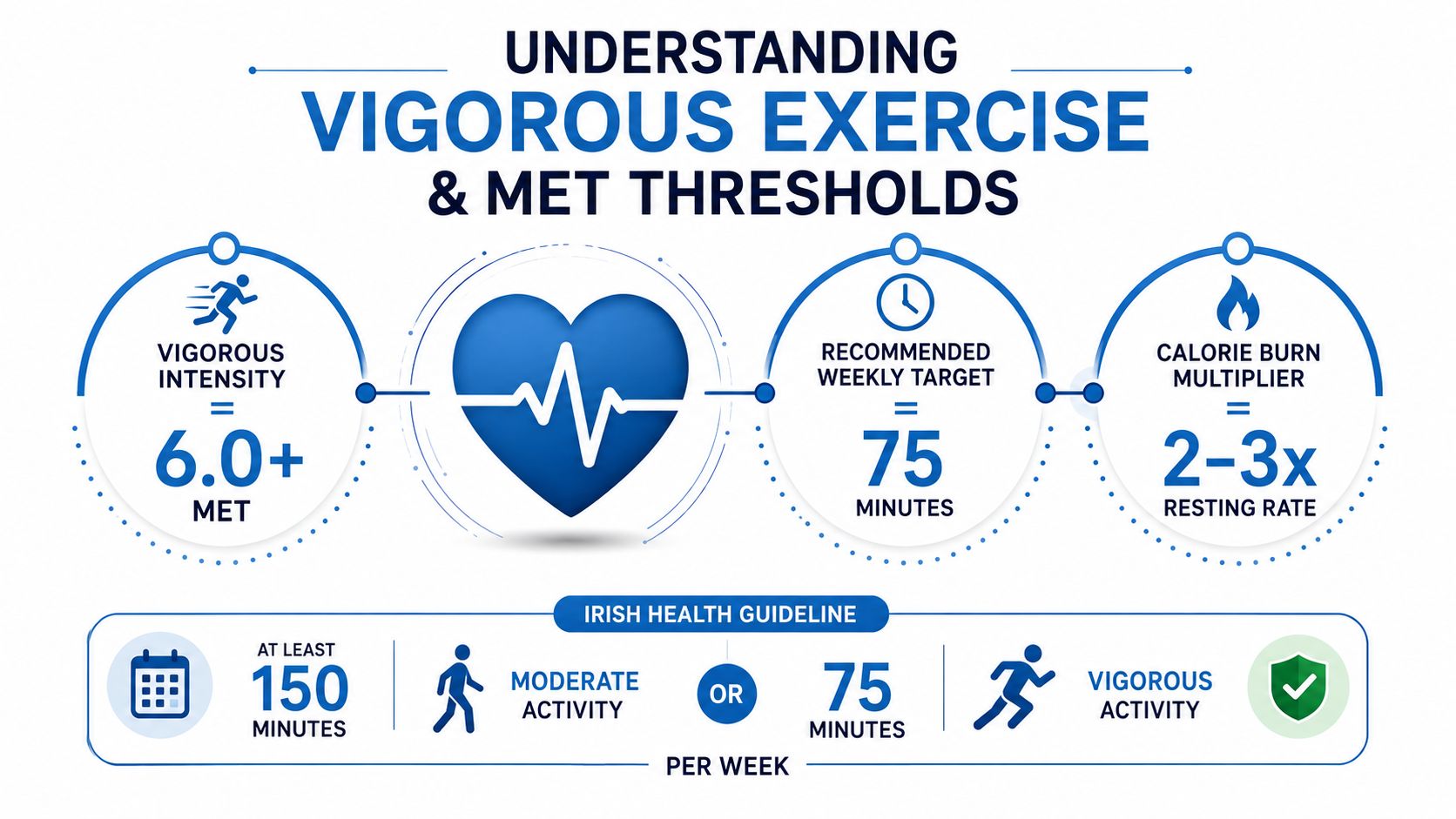
Ireland's national guidance focuses on weekly movement targets and less sitting, not on owning a particular machine. Adults are advised to aim for 2 hours 30 minutes to 5 hours of moderate activity, or 1 hour 15 minutes to 2 hours 30 minutes of vigorous activity each week, plus less sedentary time (HSE national guidelines). That changes the buying decision. The right home cardio choice is the one that fits your routine so naturally that you stop negotiating with yourself.
Practical rule: If a machine needs a special mood, special clothes, and a free hour, it is awkward for home use.
Multitasking-friendly options deserve attention. A setup that lets you answer emails, watch TV, or break up sitting time has a built-in adherence advantage over one that demands a full workout block. That matters in a market where many adults still are not consistently active.
What usually gets used, not admired
A rower, bike, treadmill, or elliptical can all be useful tools. None of them wins automatically. If your daily life is cramped, noisy, or unpredictable, the machine that looks less serious on paper can be the one that gets used for months instead of days.
Wearable EMS belongs in the same conversation because it fits real routines without taking over the room. BionicGym's proven cardio approach reflects that same logic. People do not need another monument in the spare room. They need a tool that fits the life they live.
Comparing Traditional Home Cardio Equipment
A serious comparison starts with what people keep using. The machine that fits the room, the routine, and the level of effort you can repeat will beat a flashier option that looks impressive for two weeks. In practice, that means judging each machine by workload, comfort, and whether it supports real adherence.
Ireland's own physical-activity explainer is useful here. Vigorous intensity means hard effort, heavy breathing, and a talk test that quickly breaks down (HSE physical-activity explanation). That is the standard to keep in mind when you compare machines, because the point is not just movement, it is movement that you will repeat.
Home Cardio Equipment Comparison
| Equipment Type | Calorie Burn (METs) | Joint Impact | Space Required | Multitasking Ability |
|---|---|---|---|---|
| Treadmill | Can reach vigorous ranges, especially when running | Higher impact | Larger footprint | Limited while running |
| Exercise bike | Can work from moderate to vigorous effort | Low impact | Compact to moderate | Good for TV or reading |
| Rower | Can combine cardio and strength-endurance work | Low impact when technique is sound | Moderate footprint | Limited during harder sessions |
| Elliptical | Often sits in moderate to vigorous territory | Low impact | Moderate footprint | Fair, but still workout-focused |
| Stair-climber style machine | About 9.3 METs in independent reference data (GymGear) | High effort, more load | Usually compact to moderate | Poor for multitasking |
The hierarchy is simple. Treadmills suit people who want walking or running progression and have the space to support it, but they are loud, bulky, and easy to neglect if your schedule is inconsistent. Irish home guides list a foldable Bolt T80i treadmill at €895 for space-conscious buyers, while a Concept2 Model D rower is listed at €1,220 and described as a serious cardio pick (Irish expert-tested guide).
Exercise bikes make the strongest case in smaller homes where quiet matters. They are low impact, easy to sit on, and simple to use while watching TV or reading. Rowers are the better full-body tool if you will learn the stroke properly and have room for the movement.
Ellipticals sit between the two. They ask more of the whole body than a bike, but they still keep impact low. If you want a direct head-to-head view, the exercise bike versus elliptical comparison is the cleanest way to weigh the trade-offs.
Wearable EMS belongs in this category too because it solves a different problem. It takes up almost no room, fits around other tasks, and can suit people who want a cardio option that does not dominate the house. For most small homes, start with the bike. Add a rower only if you have the floor space and the patience to learn the stroke.
Understanding Vigorous Exercise and Metabolic Benefits
The number that matters most in hard cardio is 6.0 METs. At that level, breathing turns heavy, talking becomes difficult, and the effort is no longer casual. If it looks easy, it is not vigorous.
What vigorous work feels like
Vigorous activity feels like jogging, football, or energetic dancing, and it drives a faster heart rate and harder breathing (HSE activity guide). A session counts as vigorous when full sentences become hard to sustain. That is a better test than calorie counters or vague effort claims.
Simple check: if you can chat in full sentences without effort, the session probably isn't vigorous.
Calorie burn still depends on workload. The standard estimate is MET × body weight × hours, so intensity and duration both shape the result (Compendium of Physical Activities). Short, punishing sessions and longer steady ones can both have a place, depending on the goal and the time available.
Why metabolism changes the equation
Some forms of cardio matter because they push glucose use and demand fast fuel turnover. That is the practical value of sugar-hungry exercise. It describes a session that pulls hard on working muscle, which is one reason some people pair intense cardio with low-carb or fasting routines.
Ireland's guidance is simple. Move enough, sit less, and choose the method that gets used. A machine that gathers dust has no metabolic value, no matter how good the label looks. Real-world adherence beats showroom appeal every time.
Wearable EMS belongs in the conversation because it solves a different problem. It uses almost no room, fits around other tasks, and gives home users a cardio option that does not take over the house. For a clearer explanation of how hard a session should feel, see BionicGym's vigorous exercise guide.
Matching Cardio Solutions to Your Specific Situation
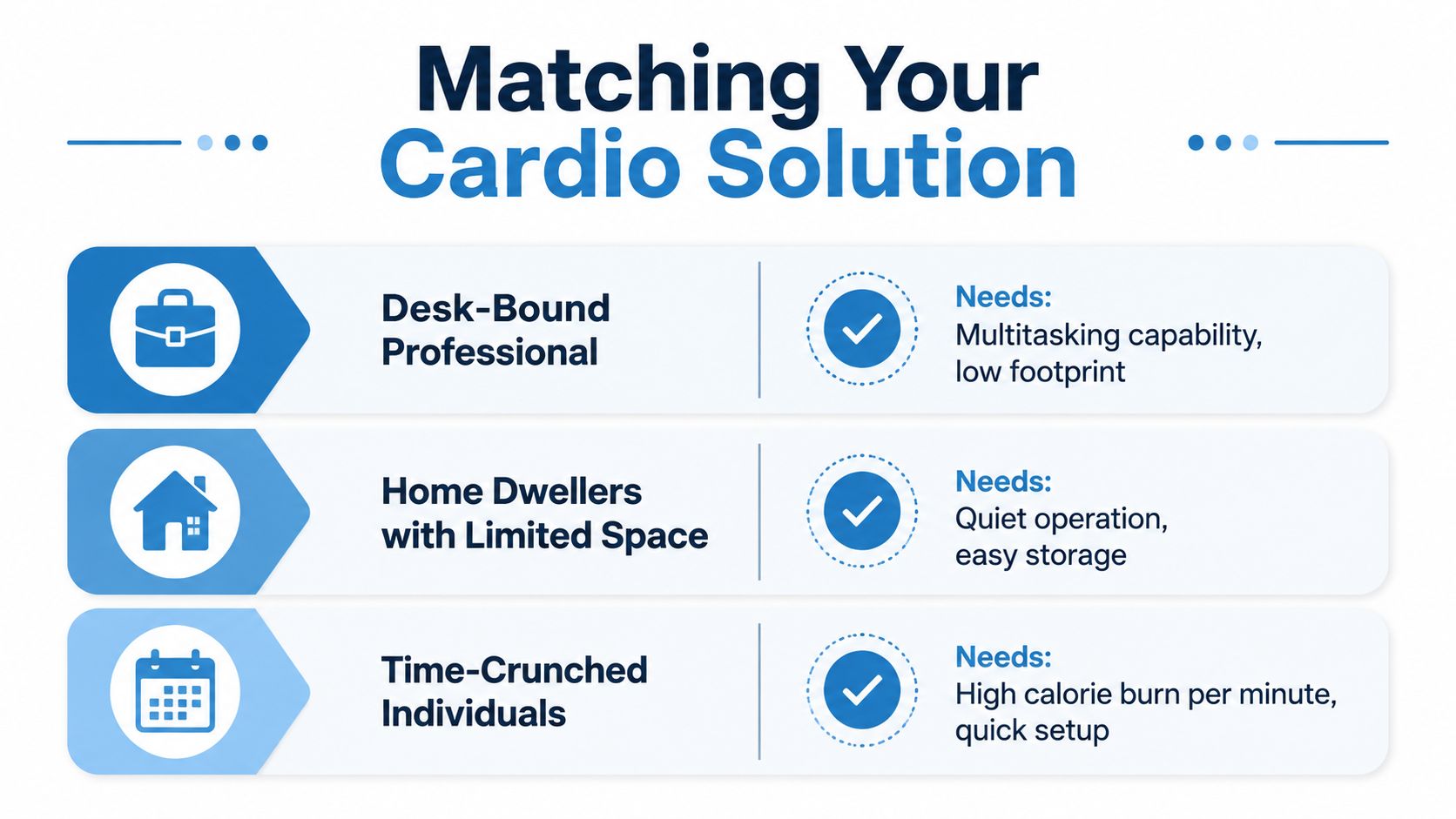
Start with the part that gets overlooked: what gets used. A machine that matches your room, your schedule, and your joints will beat a fancier option that stays idle. Desk-bound professionals, individuals with sensitive joints, and users chasing a metabolic payoff all need a different setup.
Start with your real constraint
If time is the problem, pick the option with the fewest steps between you and a session. If impact is the problem, choose the lowest-load format you can tolerate. If boredom is the problem, use the setup that lets you do something else while moving.
Home layout matters too. For a setup that fits a real room instead of fighting it, see Evermost LLC on home gym layout. A good choice still fails if it blocks a doorway, crowds your desk, or needs a full reset before every workout.
Who should lean where
- Desk-bound professionals: Choose something that fits into work time without a big setup. A bike, a rower used in short bouts, or a wearable option works when your main need is to keep moving while the day keeps going.
- People with arthritis or joint sensitivity: Keep impact low and stop chasing punishment. The HSE advises people with arthritis to start slowly, listen to their body, and avoid vigorous activity during flare-ups, while using low-impact options such as walking, swimming, water walking, or aqua aerobics (HSE arthritis guidance). Anybody with a serious medical condition or injury should consult with their medical practitioner before starting any new exercise program.
- Metabolic health proactives: Choose the format you can repeat often enough to matter. A session that happens beats a harder session you keep postponing.
- People during recovery or with non-weight-bearing needs: Use a no-impact option. Non-weight-bearing cardio equipment keeps activity alive without forcing joint loading.
- Biohacker types using low-carb or fasting approaches: Pick something you can track and repeat without turning it into a performance. The goal is controlled effort, not one dramatic day.
- Users who want passive movement during chores or seated time: A wearable EMS system fits that use case well. It gives you a cardio option without tying the whole routine to a fixed machine.
Traditional equipment works well when you have a dedicated block and a clear place to train. Wearable cardio systems make more sense when your only free time happens at a desk, in a living room, or between other tasks. That is the core decision.
Wearable EMS belongs in the same conversation because it solves a different adherence problem, and for some households that matters more than machine specs. A small, repeatable option can beat a large, impressive one every time. Pick the option with the fewest steps between you and starting a session.
Integrating Diet and Exercise for Sustainable Results
Exercise alone doesn't fix body composition. If your intake outruns your output, the math won't cooperate, no matter how good the machine is. The most durable results come from diet plus exercise, and you should think about cardio as the tool that helps create a sustainable energy deficit, not as a magic fix.
Use cardio to support the plan, not replace it
That's why weight-loss discussions should always stay grounded. You can't guarantee fat loss without a calorie deficit, and you shouldn't pretend otherwise. A smarter approach is to combine a realistic eating pattern with a cardio habit you can repeat for months, then adjust based on actual progress.
The Weight Loss Calculator is a sensible place to sanity-check expectations before you buy anything. It helps turn vague enthusiasm into a practical plan, which is exactly what you need before you commit to a device or routine.
Real-world rule: the plan that survives travel, stress, and low motivation beats the plan that only works on perfect weeks.
That matters even more if you're trying to protect lean mass while losing weight. Fast, aggressive cuts often feel exciting at the start, then collapse when hunger, fatigue, or training drop-off catches up. A steadier approach usually gives you a better chance of staying active enough to keep your metabolism and your habits intact.
Match food, effort, and recovery
Cardio is easier to sustain when your nutrition isn't fighting it. If you eat in a way that supports training, you're more likely to repeat the sessions that move the needle. If you're on a medication that changes appetite, or you're recovering from a period of inactivity, the priority stays the same, steady movement plus a diet you can live with.
The sustainable weight loss guide is worth a look if you want the blunt version. The point isn't to train harder forever. The point is to build a routine that doesn't fall apart.
Making Your Final Decision and Getting Started
Choose the tool that solves your biggest problem first. If you want running-specific conditioning, pick the treadmill. If you want quieter low-impact work, choose the bike. If you want the most complete traditional machine, the rower still makes the strongest case. If you need a format that fits sitting, chores, or work time, a wearable cardio option deserves serious consideration.
If you're comparing treadmills, a useful perspective on curved treadmill advantages from MedEq Fitness is that they mimic a more natural running feel, but they still ask for space and commitment. That's the actual test, not whether the machine looks hardcore on launch day.
If you've got a serious medical condition or injury, speak with your clinician before starting a new programme. That's not a box to tick, it's basic judgement. For everyone else, the next step is simpler than people make it.
Buy the option you'll use in your actual home, then schedule it the way you would any other essential appointment. Set the machine up where it's easy to reach, keep the routine short enough to repeat, and judge success by consistency, not excitement.
BionicGym gives you a different route if traditional machines don't fit your routine. It's a wearable cardio system designed for home use, so you can get movement into the gaps of your day instead of waiting for a perfect workout window. If you want a practical option that fits this decision, visit BionicGym and see whether it matches the way you live.